
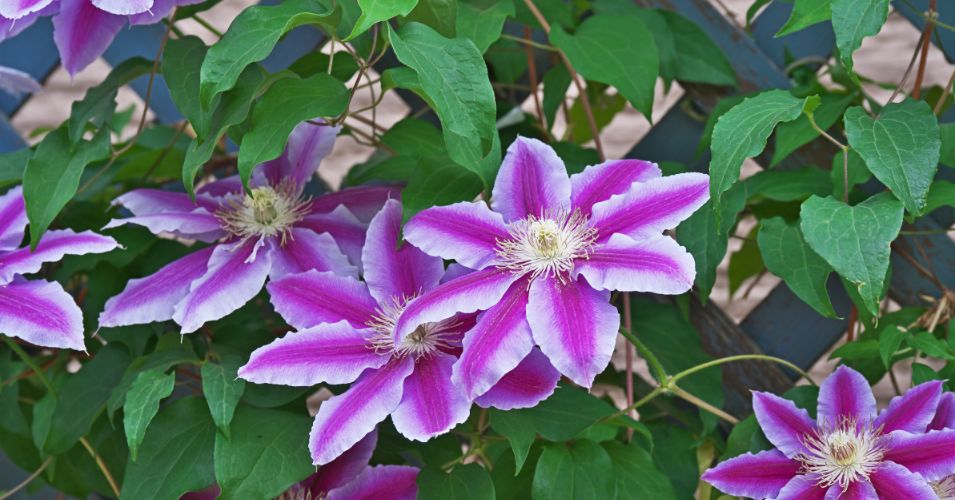
Clematis has a habit of putting on a spectacular show in summer, but it can also become a little unruly as the season goes on. Long shoots, faded flowers, and tangled stems often leave gardeners wondering whether it’s time to reach for the secateurs.
The good news is that most clematis only need a light trim during summer, provided you know what you’re cutting. A few careful snips can help keep the plant tidy, encourage more blooms on certain varieties, and support healthy growth without causing unnecessary stress.
Here’s how to prune your clematis with confidence and avoid the most common mistakes.
Know Which Clematis You Have Before Picking Up the Pruners
One of the biggest mistakes gardeners make is treating every clematis the same. It is easy to assume they all need a quick trim in summer, but that can lead to fewer flowers or slow down healthy growth. A few minutes spent identifying your clematis will help you avoid unnecessary pruning.
The easiest way to tell the difference is by looking at when the plant flowers. Clematis are generally divided into three pruning groups, and each one responds differently to a pair of secateurs.
Group 1 varieties bloom in spring using stems that grew the previous year. By summer, they have already finished flowering, so there is very little to do. If the plant looks untidy, remove faded flowers, trim back damaged stems, or shorten any growth that has become too long. There is no need for anything more severe.
Group 2 clematis are a little different. They often reward gardeners with flowers in late spring before producing another display later in summer. A light trim after the first flush encourages fresh buds to develop. Simply cutting away spent blooms and lightly shortening a few stems is usually enough to keep the plant performing well.
Group 3 varieties are the easiest to manage during summer. They bloom on fresh growth produced that same year, and they are normally pruned hard before the growing season begins. By summer, most only need a quick tidy. Remove dead stems, guide wandering shoots back onto their support, and leave the healthy growth alone.
If you inherited the plant or lost the label years ago, do not panic. Watch how it behaves instead. A clematis covered in flowers during spring is unlikely to need much summer pruning. One that blooms later in the season usually belongs to Group 3. After a year or two of watching its growth, the right approach becomes much clearer.
Getting this first step right makes every subsequent cut far easier. Instead of guessing, you will know exactly how much to prune and when to leave the plant alone.
The Best Time to Trim Clematis During Summer
There is no single date that suits every clematis. The best time to prune depends far more on what the plant is doing than what the calendar says. A quick look at the flowers and stems will tell you much more than the month ever could.
For many varieties, the perfect opportunity comes once the first display of flowers begins to fade. Deadheading at this point keeps the plant looking fresh and encourages certain clematis to produce another flush of blooms. It also prevents the plant from investing energy in seed production when that energy could be used for new growth.
Summer is also a good time to deal with stems that seem determined to grow in every direction. Clematis can put on surprising amounts of growth over just a few weeks, especially during warm weather. A few careful cuts can keep the vine within its space without changing its natural shape.
Choose a cooler part of the day if possible. Pruning in the early morning or later in the evening is easier on both you and the plant. Fresh cuts are less likely to dry out quickly, particularly during hot spells. If the soil feels dry, give the clematis a thorough watering once you have finished.
Do not wait to remove damaged or unhealthy growth. Broken stems, diseased leaves, and dead material can be cut away whenever you notice them. Clearing these out improves airflow through the plant and reduces the risk of fungal problems later in the season.
Think of summer pruning as regular maintenance rather than a major job. Small, timely cuts are usually all that is needed. By responding to the plant as it grows instead of following a rigid schedule, you can keep your clematis healthy, tidy, and ready to produce beautiful flowers for weeks to come.
How to Prune Without Damaging Healthy Growth
The goal of summer pruning is to improve the plant, not reduce its size. Most clematis only need a light touch during the growing season, so there is rarely a reason to cut large sections away.
Before making any cuts, spend a minute looking over the vine. Healthy stems are firm and flexible, while dead ones are often dry, brittle, and brown. Starting with damaged growth makes the rest of the job much easier because you can clearly see what is left to work with.
Whenever you shorten a stem, cut just above a pair of healthy leaves or buds. New shoots are much more likely to develop from that point, helping the vine stay full instead of leaving long bare sections. Sharp secateurs are just as important. A clean cut heals quickly, while crushed stems can take much longer to recover.
If your clematis has become a tangled mass, avoid pulling vines apart to see where they lead. Older stems can snap with surprisingly little force. Instead, follow each one carefully until you find the point where it joins the rest of the plant. It takes a little longer, but you are far less likely to remove a healthy, flowering stem accidentally.
Try not to stand in the same spot throughout the job. Walk around the plant every so often and look at it from different angles. What seems like an untidy stem up close may actually be filling a space on the opposite side of the support.
Many gardeners make the mistake of pruning until everything looks perfectly even. Clematis rarely grows that way in nature. A slightly uneven shape often looks fuller and more attractive once the plant settles back into growth.
When you finish, the difference should be quite subtle. The vine should look cleaner, healthier, and easier to manage, while still keeping most of the growth that will support flowers through the rest of summer.
Common Summer Pruning Mistakes You Should Avoid
Most pruning mistakes happen because gardeners try to do too much. Clematis can look wild by the middle of summer, but appearances can be misleading. A plant covered with long shoots does not necessarily need a heavy trim.
The biggest problem is cutting without knowing which pruning group the plant belongs to. Removing the wrong stems can mean losing next year’s flowers or cutting away buds that were only days from opening. If you are unsure, it is usually safer to prune lightly until you can identify the variety.
Another mistake is treating every stem as if it needs attention. Healthy vines that are growing in the right direction are best left alone. Focus on dead growth, broken stems, and shoots that have wandered well beyond their support.
Some gardeners wait until the plant looks neglected before picking up the secateurs. Small jobs carried out every few weeks are much easier than tackling an overgrown climber all at once. A little maintenance during summer also puts less stress on the plant.
Tool care is often overlooked. Sticky blades coated with old sap do not make the cleanest cuts, and blunt secateurs can damage stems rather than slice through them. Keeping your tools sharp and clean is one of the simplest ways to encourage healthy growth.
One final mistake is expecting instant results. Clematis does not respond overnight. Give the plant time to produce fresh shoots and settle after pruning. Within a few weeks, the vine will usually fill out again, often looking healthier than it did before you started.
A careful approach nearly always pays off. Rather than trying to reshape the entire plant in one afternoon, think of summer pruning as a series of small adjustments that keep your clematis thriving throughout the season.
Care After Pruning for Bigger and Better Blooms
Once the pruning is finished, the plant should not be forgotten. Summer is when clematis puts a lot of energy into fresh growth, so a little attention afterward can make a noticeable difference to how it flowers over the coming weeks.
The first thing to check is the soil. Warm weather can dry it out surprisingly quickly, especially if the plant is growing against a sunny wall or fence. A deep soak is much more beneficial than frequent light watering because it encourages the roots to grow deeper into the soil, where moisture lasts longer.
Mulch is another simple way to help your clematis through the hottest part of the season. A layer of compost, bark, or well-rotted organic matter helps keep the roots cool while slowing moisture loss. Leave a small gap around the base of the stems so air can circulate freely.
After pruning, fresh shoots often appear sooner than expected. These young stems are flexible and easy to train, making it the perfect time to spread them across a trellis, arch, or wires. Taking a few minutes to guide them now creates a much fuller display later in the season and helps prevent a tangled mass of growth.
Keep an eye on the foliage as the weeks pass. Leaves should stay green and healthy, while new buds should continue to develop if the plant is happy. Yellowing leaves, black patches, or wilting stems are worth investigating before the problem spreads.
Feeding can also help, but there is no need to overdo it. A balanced fertilizer applied according to the instructions will usually provide everything the plant needs. Too much feed often produces plenty of leaves but fewer flowers, which is the opposite of what most gardeners want.
Clematis rarely asks for constant attention. Regular watering during dry spells, the occasional check for problems, and a little guidance for new stems are usually enough. Those small jobs soon add up, leaving you with a stronger plant and a longer season of colorful blooms.
Final Thoughts
Summer pruning is less about cutting back and more about knowing what to leave behind. Once you understand how your clematis grows, the decisions become much easier, and there is far less chance of removing growth that would otherwise produce beautiful flowers.
A few well-placed cuts, combined with regular watering and simple aftercare, are often all that is needed to keep the plant looking its best. There is no need to rush or remove large amounts of growth. Clematis responds much better to small adjustments made at the right time.
Give the plant what it needs, pay attention to the way it grows, and it will reward you with healthy foliage and an abundance of blooms for many summers to come.