
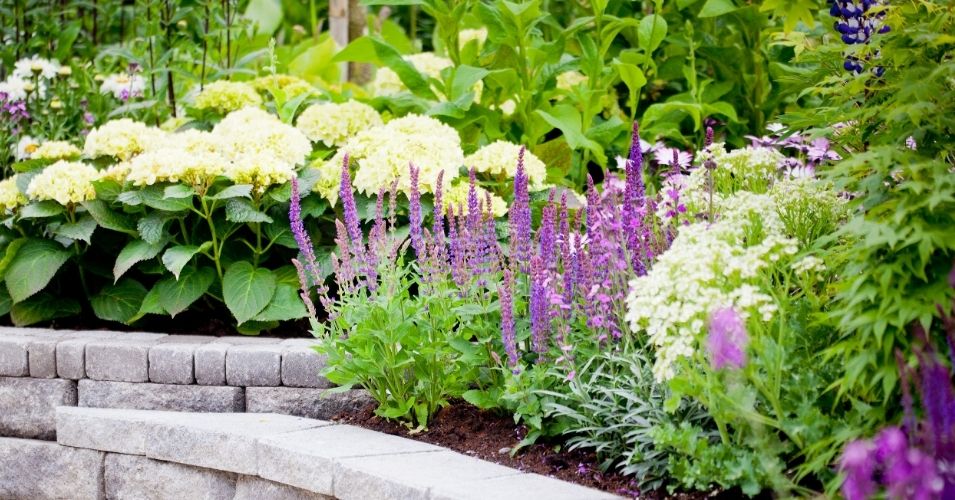
Hydrangeas are admired for their clusters of soft blooms that bring charm and elegance to any garden.
Their wide range of colors and impressive presence make them a favorite among gardeners who want a display that feels both classic and lively.
Yet hydrangeas do not have to stand alone. They shine even brighter when paired with the right companion plants that add texture, contrast, and seasonal interest.
Choosing companions carefully ensures healthier growth, better balance, and a garden that stays vibrant from spring through fall. The right pairings create harmony that feels almost effortless.
Ferns
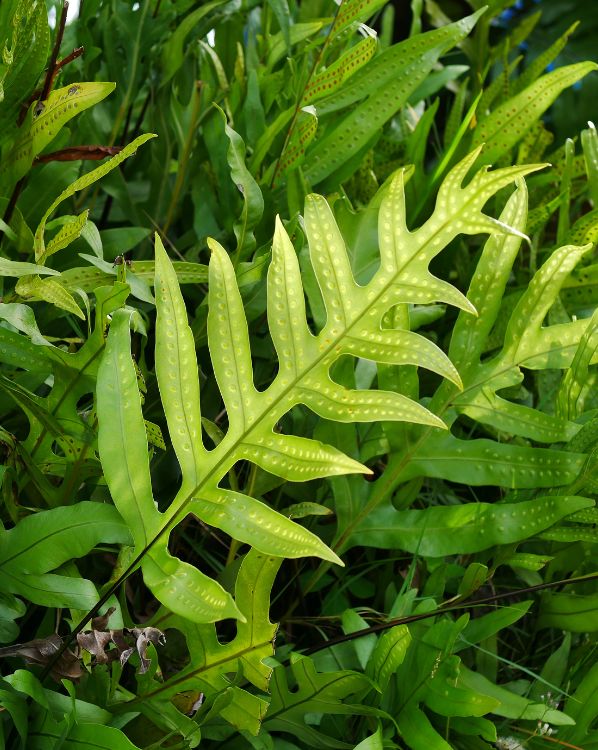
Ferns are a natural match for hydrangeas because their feathery leaves bring soft texture that balances the large flower heads. The delicate green fronds weave between the hydrangea shrubs and create a backdrop that highlights every bloom.
When placed together, the hydrangeas provide bursts of color while the ferns fill empty spaces with gentle movement and a carpet of green. This pairing adds depth to a shaded corner of the garden and creates a calm feeling that feels timeless.
The love of shade is another reason ferns work so well beside hydrangeas. Both plants thrive in dappled light where the soil stays cool and moist.
Ferns adapt easily to conditions under trees or along the north side of the home where sunlight is softer. Hydrangeas appreciate the same environment, so there is no competition for light. This makes planning a shade garden much simpler since both plants ask for similar care.
Moisture is important for both hydrangeas and ferns, which means they can be watered on the same schedule. Ferns help keep the soil evenly damp by spreading their fronds wide and sheltering the ground from quick drying.
The layer of organic matter they create when leaves drop also enriches the soil and improves its texture. This natural cycle supports the hydrangeas, allowing them to grow with stronger stems and fuller blossoms.
The variety of ferns available gives gardeners many choices to pair with hydrangeas. Japanese painted ferns bring silver and purple tones that echo or contrast with hydrangea flowers.
Lady ferns offer a classic, soft green look that makes blooms appear even brighter. Ostrich ferns add bold, upright fronds that stand like tall guardians around the base of hydrangea shrubs. Each type has its own charm and can be chosen to suit the mood of the garden.
Together, ferns and hydrangeas create gardens that feel balanced, layered, and lush. The simple beauty of this pairing lies in how naturally the two plants grow together, almost as if they were meant to share the same ground. The result is a scene that feels peaceful while still bursting with life and color.
Astilbes
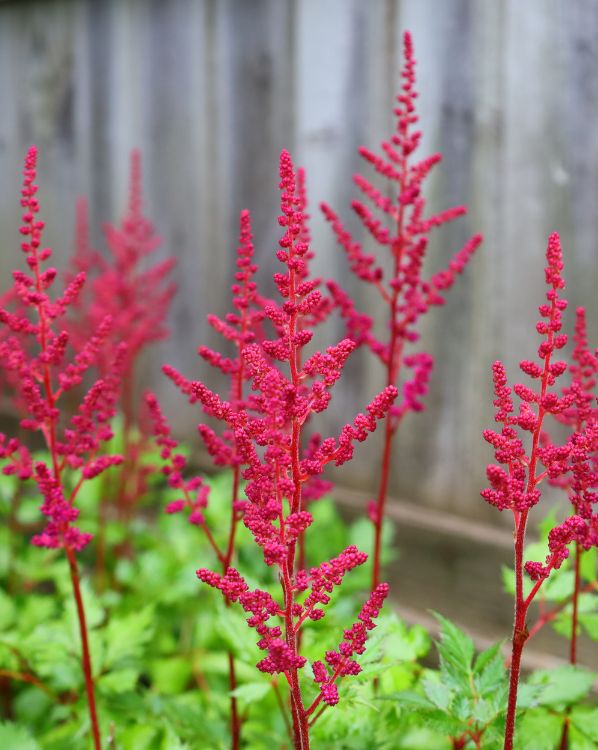
Astilbes bring a light, feathery plume of flowers that pair beautifully with the rounded clusters of hydrangeas. Their tall, upright blossoms rise above the ground like gentle fireworks, and the bright shades of pink, white, and red weave seamlessly into hydrangea plantings.
Where hydrangeas provide large bursts of color, astilbes add vertical interest that stretches upward and draws the eye across the garden. Together, the two plants create a rich tapestry of shapes and hues that change gracefully through the summer months.
Shade tolerance is another feature that makes astilbes excellent companions for hydrangeas. Both plants prefer filtered sunlight and moist, fertile soil, which makes them thrive in the same corners of the yard.
When planted side by side, they complement each other without struggle, forming an easy partnership that feels natural. Astilbes bloom at a time when hydrangeas are also in their prime, which ensures that the garden stays lively and colorful for longer stretches of the season.
Astilbes also play a practical role in keeping the soil healthy. Their leaves cover the ground, helping retain moisture that hydrangeas rely on to stay strong.
The root systems of both plants reach into the soil without clashing, meaning they can grow together without one overwhelming the other. When grown as companions, the plants share resources in a balanced way, and the soil benefits from the organic matter both plants return as leaves and stems break down over time.
Gardeners have a wide range of astilbes to choose from. Some varieties bring soft, pastel tones that pair delicately with pale hydrangea flowers. Others provide deep ruby or magenta plumes that contrast sharply against white or blue hydrangeas for dramatic effect.
Dwarf astilbes can be tucked at the front of a bed for soft edging, while taller types can rise behind hydrangea shrubs to frame them in layers of texture and color.
When hydrangeas and astilbes are planted together, the result is both graceful and striking. The soft plumes rise among the heavy blooms, creating rhythm and movement across the garden bed. This partnership ensures that the shaded areas of your yard remain some of the most captivating spaces, filled with depth, color, and constant beauty.
Heucheras
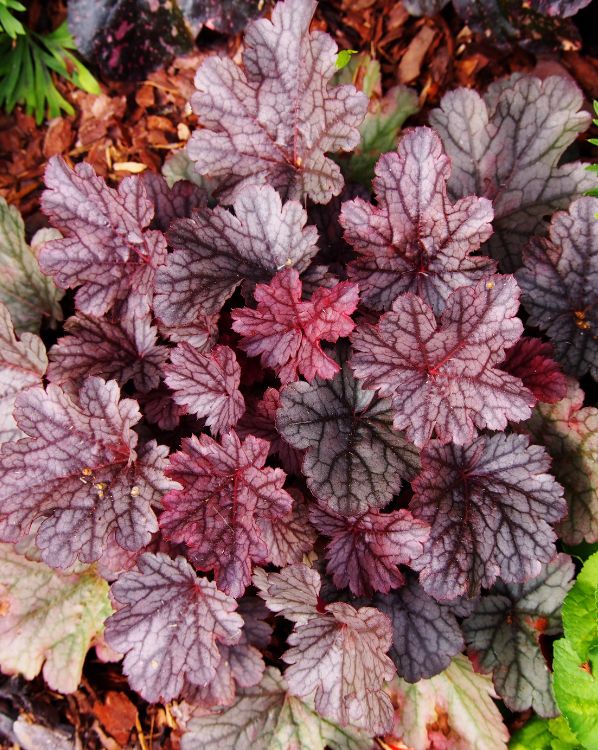
Heucheras, often called coral bells, are among the most versatile companions for hydrangeas because of their striking foliage. Their leaves come in shades ranging from deep burgundy to lime green, silver, and even caramel tones, which makes them stand out against the lush green of hydrangea shrubs.
While hydrangeas provide rounded clusters of flowers, heucheras offer an ever-present carpet of color and texture beneath them. This contrast makes the garden feel layered and complete.
Another advantage of heucheras is their ability to thrive in the same growing conditions as hydrangeas. Both plants enjoy partial shade, moist soil, and shelter from the harshest afternoon sun.
When planted together, they do not compete aggressively for resources, which makes them perfect neighbors. Their root systems are shallow compared to the deeper roots of hydrangeas, so the two can grow side by side without issues.
The blooms of heucheras, though delicate, add an additional layer of charm to a hydrangea garden. In late spring and early summer, slender stalks rise above the foliage with tiny bell-shaped flowers that sway in the breeze.
While not as bold as hydrangea blossoms, these flowers add gentle movement and an airy quality that balances the heavy clusters of hydrangea blooms. The timing also means that interest begins early in the season and continues as hydrangeas enter their full display.
Heucheras also help with soil health and moisture retention. Their wide leaves cover the ground and act like a natural mulch, helping to keep the soil cool and damp. This reduces the amount of watering needed and supports the water-loving nature of hydrangeas.
The variety of foliage colors available also makes it easy to design combinations that highlight specific hydrangea shades. Deep purple leaves look striking beside white hydrangeas, while golden or lime-toned foliage pairs beautifully with pink or blue blooms.
For gardeners who want a display that looks beautiful throughout the growing season, heucheras are a natural choice. Even when hydrangeas finish their bloom cycle, the bold leaves of heucheras continue to provide structure and interest.
This ensures the garden never looks bare or empty but instead stays vibrant with color and life well into the fall.
Brunnera
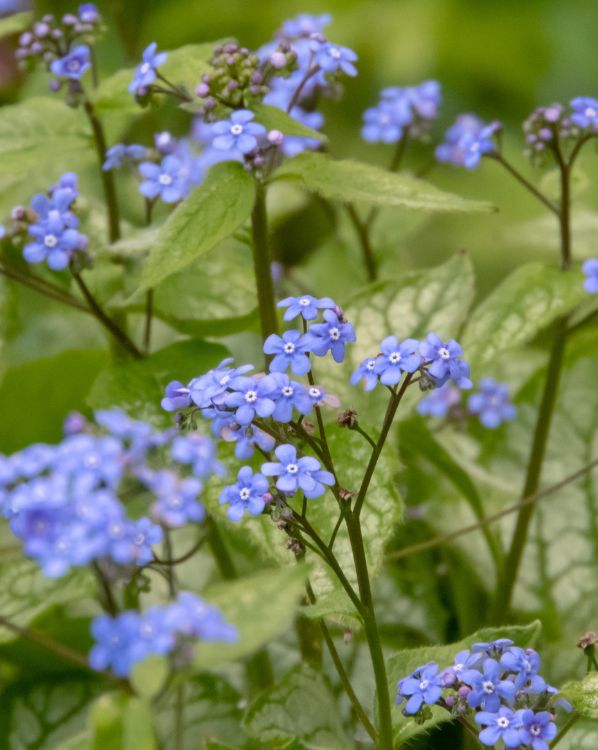
Brunnera, sometimes called false forget-me-not, is another excellent partner for hydrangeas because of its heart-shaped leaves and charming spring flowers. The foliage often has silver or white markings that shimmer in shaded areas, making it an eye-catching contrast against the deep green of hydrangea leaves.
This natural brightness brings light into the darker corners of the garden where both plants often thrive. Together, hydrangeas and brunnera create a balance of bold blooms and delicate foliage that lasts through much of the growing season.
One of the most appealing qualities of brunnera is its early flowering. In spring, before hydrangeas have begun their summer show, brunnera sends up sprays of tiny blue flowers that resemble forget-me-nots.
These blooms create a cheerful display when the rest of the garden is just waking up. By the time the flowers fade, the hydrangeas are ready to take center stage, ensuring continuous beauty in the planting bed. This staggered timing means there is always something to admire.
Brunnera also shares the same growing preferences as hydrangeas, which makes them simple companions. Both plants enjoy partial shade, cool soil, and consistent moisture.
When paired together, brunnera’s leafy clumps help cover the soil, keeping it cool and damp, which supports the needs of hydrangeas. This protective ground cover also suppresses weeds, reducing maintenance and allowing hydrangeas to grow without competition.
The foliage of brunnera is what keeps interest alive after the flowers fade. The large, heart-shaped leaves often have silver veining or mottling that reflects light and provides texture.
When planted near hydrangeas, these leaves create contrast that highlights the size and color of hydrangea blooms. Blue hydrangeas look even richer when paired with silver-leaved brunnera, while white hydrangeas appear more striking against the darker green varieties.
For gardeners who appreciate long-lasting beauty, brunnera ensures that shaded areas never feel dull. Its flowers arrive early, its foliage lasts late into the season, and its needs align perfectly with hydrangeas. The pairing creates a calm yet striking display that brings structure, light, and steady charm to the garden throughout the year.
Hostas
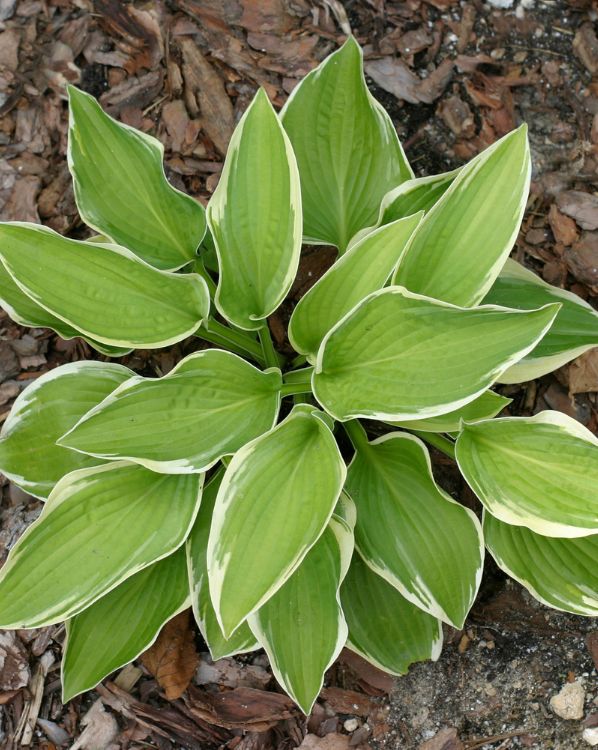
Hostas are one of the most dependable companions for hydrangeas because of their bold foliage and ability to thrive in shade. The broad leaves of hostas create a dramatic backdrop for the colorful hydrangea blooms.
This combination brings balance to the garden, with hydrangeas offering bright clusters of flowers and hostas providing lush greenery that anchors the planting bed. The two together create a sense of fullness and harmony that looks beautiful from spring through fall.
One of the main reasons hostas pair so well with hydrangeas is their shared love for shady spaces. Both plants prefer filtered light or morning sun with afternoon shade. This makes them easy to grow side by side without one overshadowing the other. Hostas naturally fill in the lower levels of the garden, covering bare ground beneath taller hydrangea shrubs and creating layers of texture that feel both rich and inviting.
Moisture needs are another reason hostas and hydrangeas work so well together. Both plants thrive in consistently damp soil that does not dry out too quickly. The wide leaves of hostas shade the soil, keeping it cooler and preventing water loss.
This helps hydrangeas stay hydrated and reduces the need for frequent watering. The natural mulch created by hosta foliage breaking down over time also adds nutrients back into the soil, which benefits both plants.
The variety of hostas available makes it easy to design a garden with endless combinations. Some hostas have deep green leaves that provide a classic, calming effect when paired with pink or white hydrangeas. Others have variegated leaves with gold or cream accents that brighten shaded spaces and highlight blue hydrangea blossoms.
Dwarf hostas can be placed in the front of beds for edging, while larger varieties make bold statements alongside full-sized hydrangea shrubs.
Hostas also extend the garden’s interest well beyond the hydrangea blooming season. While hydrangeas are prized for their flowers, their foliage alone can look plain after the blossoms fade.
Hostas, on the other hand, keep their leaves fresh and attractive until frost, ensuring that the garden does not lose its appeal. The late-summer blooms of hostas, which rise on tall stalks, add yet another layer of charm and keep the garden looking alive.
When planted together, hydrangeas and hostas form one of the most reliable and striking partnerships in a shaded garden. Their shared growing needs, contrasting shapes, and ability to support each other’s beauty make them a favorite pairing for gardeners everywhere.
The result is a display that feels timeless, vibrant, and effortless all at once.
Final Thoughts
Hydrangeas have long been a symbol of elegance in the garden, but they become even more captivating when paired with thoughtful companion plants.
Ferns, astilbes, heucheras, brunnera, and hostas each bring their own textures, colors, and seasonal highlights that complete the hydrangea’s story. Together, they create gardens that are rich with variety and alive with balance.
Choosing companions for hydrangeas is not only about appearance but also about creating harmony in growing conditions. Each of these plants thrives in shade or partial shade, enjoys moist soil, and contributes to the overall health of the planting bed. This makes them easy partners that reduce competition and increases beauty.
By weaving these plants alongside hydrangeas, gardeners ensure that their shaded spaces remain full of charm from spring through fall. The careful layering of foliage and blooms brings depth, color, and energy that lasts through the entire growing season.