
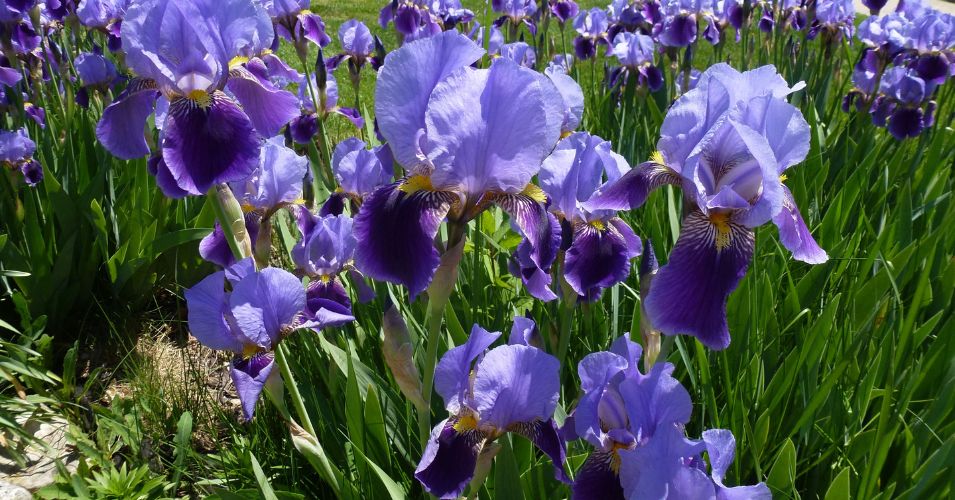
Irises have been a garden favorite for generations, bringing bold color and elegant flowers to borders every spring. Yet despite their long-standing popularity, plenty of gardeners eventually decide not to grow them anymore.
It is not because irises suddenly lose their beauty. More often, priorities change, gardens evolve, and the work involved starts to outweigh the rewards.
Some people replace them with longer-flowering perennials, while others want plants that ask for less attention.
Before pulling up your own irises, it is worth understanding why so many gardeners make that decision and whether it is the right choice for you.
Expectations Do Not Always Match Reality
It is easy to see why so many gardeners fall in love with irises. A single plant can produce elegant blooms in shades of purple, white, yellow, blue, and even near black. Garden catalogs and nursery displays make them look almost effortless, promising dependable flowers that return every spring with very little attention.
That is the dream. The reality can be a little different.
A gardener might enjoy a spectacular display during the first season or two, then notice the flowers becoming less impressive. Instead of thick clumps covered with blooms, only a handful of stems appear.
The leaves are still there, but the display no longer has the same impact for someone expecting years of color without much work; that can be disappointing.
Growing conditions also have a bigger influence than many people expect. An iris planted in full sun with well-drained soil can perform beautifully. Move that same plant into heavier soil or a spot that stays damp after rain, and the results may change dramatically.
It is not unusual for gardeners to blame themselves when the real issue is simply that the location does not suit the plant.
Experience changes expectations as well. A first-time gardener may choose irises because they are beautiful, but after several seasons they begin looking for plants that flower for months instead of weeks. Suddenly, the short blooming period that once felt special starts to seem limiting.
Gardens change just as people do. Trees grow taller, borders become fuller, and personal tastes evolve. The plants that once felt like the stars of the garden may no longer fit the look or level of care the gardener wants.
Irises are often caught in that transition, not because they have become poor plants, but because priorities have shifted.
That is why plenty of gardeners stop growing irises. It is rarely one major disappointment. More often, it is the gradual realization that the plant does not quite deliver what they originally imagined.
Irises Need More Maintenance Than Many Gardeners Expect
Irises have a reputation for looking after themselves, but that reputation only goes so far. They are certainly easier than many flowering plants, yet they are not the perennial you can ignore forever and expect the same results year after year.
The biggest surprise is usually dividing the rhizomes. After a few seasons, healthy clumps become crowded. New rhizomes push against older ones until flowering begins to decline.
The solution is simple enough. Dig the clump up, separate the healthiest sections, and replant them with enough space to grow again. It is not difficult work, but it can become tiring when there are dozens of irises spread across the garden.
Maintenance does not end there. Old leaves need trimming to keep the plants tidy and to reduce the chance of disease. Flower stalks should be removed once blooming has finished. Weeds have to be kept from taking over the bare soil around the rhizomes.
None of these jobs take long on their own, yet together they add another task to an already busy gardening calendar.
Even a well-established planting can begin struggling as the garden matures. A young tree that once cast very little shade may eventually block several hours of sunlight each day. Shrubs expand, neighboring plants spread, and air circulation becomes poorer. Without realizing it, a gardener can create conditions that irises no longer enjoy.
For some people, these extra jobs are simply part of gardening. They are happy to spend an afternoon dividing plants if it means another season of spectacular flowers.
Others reach a different conclusion. When there are newer perennials that bloom for longer and ask for less attention, irises can lose their place in the border. The decision is not usually about disliking the flowers. It is about choosing plants that better match the amount of time and effort the gardener is willing to invest.
Dividing Irises Becomes a Chore
Every experienced iris grower knows the warning signs. The leaves still look healthy enough, but the flowers are not what they used to be. Instead of a clump covered in blooms, only a few flower stalks appear. At that point, there is usually only one answer.
The plants need dividing. It sounds simple on paper. Dig up the clump, cut away the older rhizomes, keep the healthiest pieces, and replant them with enough room to spread again. A single clump is no trouble at all. Twenty or thirty clumps scattered around the garden are another matter.
The job also arrives at an awkward time of year. By late summer, there is already plenty to do outside. Hedges need trimming, weeds seem to grow overnight, vegetables are ready for picking, and containers dry out almost as quickly as they can be watered.
Faced with another afternoon of digging and replanting, plenty of gardeners decide the irises can wait until next year.
That decision often comes at a cost. The longer crowded clumps are left alone, the less impressive they become. Flowering declines, the centers can die out, and the plants begin looking tired. It is frustrating because the solution is well known, but finding the time and motivation is another story.
Then there are all the spare rhizomes. Healthy plants multiply quickly, leaving gardeners with piles of divisions after every session. Some are given to friends. Others end up at local plant sales.
Quite a few are added to the compost because there is nowhere else to put them. Throwing away healthy plants never feels quite right, yet most gardens have limited space.
For gardeners who want borders that mostly take care of themselves, this cycle eventually becomes a nuisance. The flowers are still beautiful, but the regular digging, sorting, and replanting can begin to feel more like maintenance than enjoyment.
Why Other Perennials Often Replace Irises
Gardeners rarely stop growing irises because they suddenly dislike them. More often, another plant catches their attention and earns the space instead.
A flower bed can only hold so much. When a new perennial promises months of color instead of a few weeks, it is easy to see why people start making changes. Plants like salvias, hardy geraniums, and coneflowers keep producing flowers through much of the summer, while irises have usually finished long before the warmest days arrive.
The difference becomes more noticeable every year. After the iris blooms disappear, the foliage has to carry the display on its own. Some gardeners appreciate the upright, sword-shaped leaves. Others see them as taking up valuable space that could be filled with plants offering flowers, fragrance, or changing colors for much longer.
Gardening styles have changed too. Large collections of individual varieties were once a source of pride. Today, many gardeners prefer mixed borders packed with pollinator-friendly plants, ornamental grasses, and long-flowering perennials that blend naturally together. Irises still have a place in those gardens, but they are no longer the obvious choice for every border.
Time plays a part as well. Someone who once enjoyed dividing plants and experimenting with different varieties may later decide they want a simpler garden that asks for less attention. That often means choosing dependable perennials that can stay in the ground for years with very little intervention.
None of this takes away from what irises do well. Few perennials can match their flowers for elegance or their incredible range of colors. They face far more competition than they did in the past.
For some gardeners, that is enough to push irises lower down the planting list, even if they never lose their admiration for them.
Are Irises Still Worth Growing Today?
Despite the extra work they sometimes require, irises continue to earn a place in thousands of gardens every year. If they were truly more trouble than they were worth, they would have disappeared from garden centers long ago.
Instead, they remain one of the first perennials many people look for when planning a new flower bed.
The appeal is easy to understand once they bloom. Few plants put on such a striking display. The flowers seem almost too perfect to be real, standing proudly above the foliage in colors that range from soft pastels to deep, velvety shades. Even after seeing them year after year, many gardeners still stop to admire them.
Of course, irises are not the right choice for everyone. Anyone hoping to plant them once and forget about them will probably end up disappointed. They like sunshine, good drainage, and the occasional bit of attention. Ignore those needs for too long, and they will usually let you know by producing fewer flowers.
For plenty of gardeners, that is a fair trade. Spending a little time dividing clumps every few years feels like a small price to pay for such an impressive display. Others would rather fill the same space with perennials that bloom for months without asking for much in return.
Neither approach is wrong. It simply depends on what you want from your garden.
There is also something to be said for growing plants that have stood the test of time. Irises have been passed from one gardener to another for generations, often carrying family stories with them.
A clump planted by a grandparent can still be flowering decades later with a little care. Few garden plants have that kind of history.
That lasting popularity says more than any gardening guide ever could. Irises may no longer be the automatic choice for every border, but they have never stopped being one of the garden’s most memorable flowers.
Final Thoughts
There is rarely one reason why gardeners stop growing irises. More often, it is a combination of changing tastes, busy schedules, and the simple fact that gardens evolve. A plant that seemed perfect twenty years ago may no longer suit the space or the gardener looking after it.
Even so, irises have never really gone out of fashion. They still offer some of the most distinctive flowers you can grow, and many gardeners would not dream of being without at least one clump.
They may ask for a little more attention than some modern perennials. Still, for those who appreciate their beauty, that extra effort is usually forgotten the moment the first flowers open.
Whether you decide to grow irises or replace them with something else, the choice comes down to what you value most. Every garden reflects the person who tends it, and the best plants are always the ones that match both your landscape and the time you are willing to give it.