Rhubarb is one of those plants that usually takes care of itself, which is why spotting a tall flower stalk can catch gardeners off guard. It often raises the same question.
Should you leave it alone or cut it off?
While flowering is a normal part of the plant’s life, it can affect both the size and quality of your harvest. The good news is that it is easy to manage once you know what is happening.
This guide explains why rhubarb flowers, whether the stalks are still good to eat, and the simple steps you can take to keep your plants growing strongly.
Should You Let Rhubarb Flower?
If you’re growing rhubarb for its juicy, tart stalks, the simple answer is no. Once the plant starts producing a flower stalk, it shifts its attention away from growing the part you actually want to harvest.
The result is often fewer stalks and a less productive plant for the rest of the season.
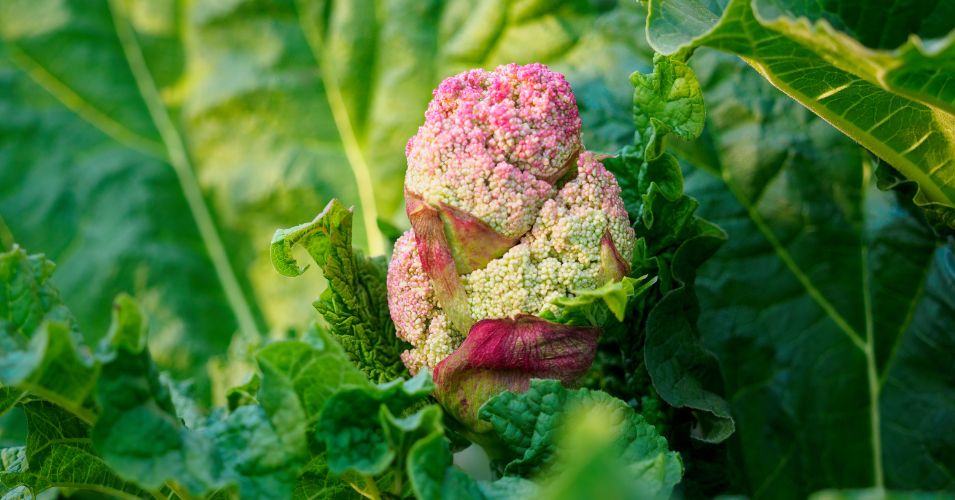
The flower stalk is easy to spot because it looks much thicker than the edible stems. It rises straight from the middle of the plant and quickly develops a large cluster of buds. Many first-time gardeners leave it alone because they think it is another stalk that will eventually be ready to pick. Unfortunately, that is not the case.
As the flower develops, the plant uses valuable energy to produce blooms and, eventually, seeds. While rhubarb is perfectly capable of flowering, seed production is not helpful if your goal is a good harvest. Removing the flower stalk encourages the plant to put its resources back into producing fresh leaves and sturdy stems instead.
That does not mean flowering is a sign of failure. Healthy, well-established rhubarb often flowers from time to time, especially after several years in the same spot. It is simply part of the plant’s natural life cycle.
Some gardeners choose to leave the flowers because they like their unusual appearance. The tall stems and creamy white flower clusters can look quite striking in a vegetable garden. If appearance matters more than harvest size, there is no real harm in letting a flower stalk mature. The plant will usually recover the following season.
For most people, though, cutting the flower stalk off is the better choice. It only takes a minute, and it gives the plant every opportunity to keep producing the thick, tender stalks that make rhubarb worth growing in the first place.
Why Rhubarb Flowers in the First Place
It can be surprising to see a flower stalk appear when your rhubarb looked perfectly healthy just a few days earlier.
In reality, flowering is a normal stage in the life of the plant. Rhubarb is a perennial, which means it returns year after year, and producing flowers is simply part of how it reproduces.
One of the most common reasons is age. A young plant spends its early years building a strong root system and producing leaves. As it becomes more established, it is much more likely to send up flower stalks during spring or early summer. That is why older plants tend to flower more often than newly planted crowns.
The weather can also influence when flowering begins. A cold period followed by warmer temperatures sometimes encourages the plant to bloom earlier than expected. Changes in growing conditions can have a similar effect.
Dry soil, overcrowding, or inconsistent watering may increase the chances of flowering, although even well-cared-for plants can produce flowers.
The variety you grow also makes a difference. Some types of rhubarb naturally flower more readily than others. If one plant blooms every year while another nearby never does, genetics may be the reason rather than anything you have done.
Seeing flowers does not automatically mean your rhubarb is unhealthy. Many gardeners worry that the plant is reaching the end of its life, but that is rarely the case. Established plants can continue producing excellent harvests for many years, even if they occasionally flower.
Instead of treating flowering as a problem, think of it as a reminder to give the plant a little attention. Removing the flower stalk and continuing with regular watering and feeding is usually all that is needed to keep your rhubarb growing strongly for the rest of the season.
Can You Still Eat Rhubarb After It Flowers?
Flowering does not affect whether rhubarb stalks can be eaten, so there is no need to pull up the plant or throw away your harvest. As long as the stalks are fresh and healthy, they can still be picked and used in your favorite recipes.
The part you should always avoid is the leaves. Rhubarb leaves naturally contain high levels of oxalic acid, making them unsuitable for eating, whether the plant is flowering or not. The stalks are the only edible part, and that does not change once blooms appear.
What flowering can change is the quality of the harvest. Many gardeners notice that the stalks become smaller or less tender after the plant begins producing flowers. They are still perfectly usable, but they may not have the same crisp texture or rich flavor as stems picked earlier in the season.
If you catch the flower stalk early and remove it, the plant often returns to producing stronger growth. You may not notice an immediate difference, but it helps the rhubarb spend less time developing flowers and more time growing leaves and stems.
It is also worth remembering that the time of year affects quality just as much as flowering. By the middle of summer, rhubarb naturally starts slowing down. Even plants that never produce flowers often have tougher stalks later in the season, which is why many gardeners stop harvesting and let the plant recover until the following spring.
If your rhubarb has flowered, there is no reason to panic. Remove the flower stalk, harvest any stems that are still in good condition, and leave the plant with plenty of healthy leaves to rebuild its energy.
A single flowering season is unlikely to cause lasting problems, especially if the plant has been well cared for over the years.
How to Remove a Rhubarb Flower Stalk the Right Way
As soon as you spot a flower stalk, it is worth removing it. You do not need any special tools or gardening experience, and the whole job usually takes less than a minute.
The flower stalk stands out from the rest of the plant. It grows straight from the center of the crown and is much thicker than the edible stems. At the top, a cluster of tightly packed buds soon develops into large flowers, making it difficult to mistake for a normal stalk.
The aim is to remove the entire flowering stem, not just the top. Use a clean pair of secateurs or sharp pruning shears and cut the stalk as close to the base as you can without damaging the surrounding growth. If the stalk is still young, you may also be able to twist it gently and pull it free by hand.
After removing it, take a quick look over the rest of the plant. Clear away any leaves that have become yellow or damaged, then check whether the soil needs watering. Rhubarb grows best in consistently moist soil, particularly during warm weather.
Do not be surprised if another flower stalk appears later in the season. Older plants sometimes produce more than one, especially after unusual weather or periods of stress. Remove each one as it appears.
Many gardeners worry that they have acted too late if the flowers have already opened. Fortunately, that is rarely the case. While it is best to remove the stalk before the blooms fully develop, cutting it off at any stage is still worthwhile. The plant can then put more of its resources into staying healthy instead of producing seeds, giving you a better chance of enjoying a stronger harvest both this year and next.
Tips to Prevent Rhubarb from Flowering Too Soon
Although you cannot completely stop rhubarb from flowering, good care goes a long way toward keeping it focused on producing leaves and stalks instead. Plants that are growing in the right conditions are generally less likely to send up flower stalks before the season is over.
Start with the soil. Rhubarb performs best in rich, fertile ground that holds moisture without becoming waterlogged. If the soil dries out for long periods, particularly during warm weather, the plant can become stressed. A deep watering every so often is far more beneficial than a quick splash with the hose every day.
Feeding the plant each spring also helps. Many gardeners spread compost around the base before new growth gets underway. As the compost breaks down, it slowly improves the soil and provides nutrients throughout the growing season. It is a simple habit that pays off year after year.
Older rhubarb plants sometimes benefit from being divided. If the crown has become very large or the harvest has started to decline, lifting and dividing it can give each section more room to grow. Most gardeners only need to do this every few years, but it often gives tired plants a fresh start.
It is also worth being sensible when harvesting. Pulling every usable stalk might seem tempting, especially when the plant is producing heavily, but leaving a good number behind allows the leaves to keep feeding the crown. A healthy crown is much better prepared for the following season.
Even when you do everything right, flowers can still appear. Sudden changes in temperature or the natural habits of a particular variety are sometimes enough to trigger flowering. That is simply part of growing rhubarb.
Remove the flower stalk, carry on caring for the plant as usual, and it will usually settle back into normal growth without any lasting problems.
Final Thoughts
For most gardeners, the appearance of a flower stalk is nothing more than a reminder that rhubarb follows its own natural cycle. It does not mean the plant is unhealthy, and it certainly does not mean you have done anything wrong.
If your priority is harvesting thick, tender stalks, remove the flower as soon as you notice it and continue looking after the plant as you normally would. Good soil, regular watering, and sensible harvesting will do far more for your rhubarb than worrying about the occasional bloom.
In the end, rhubarb is a remarkably reliable perennial. Give it the right conditions, deal with flower stalks when they appear, and it will continue producing generous harvests for many springs to come.