
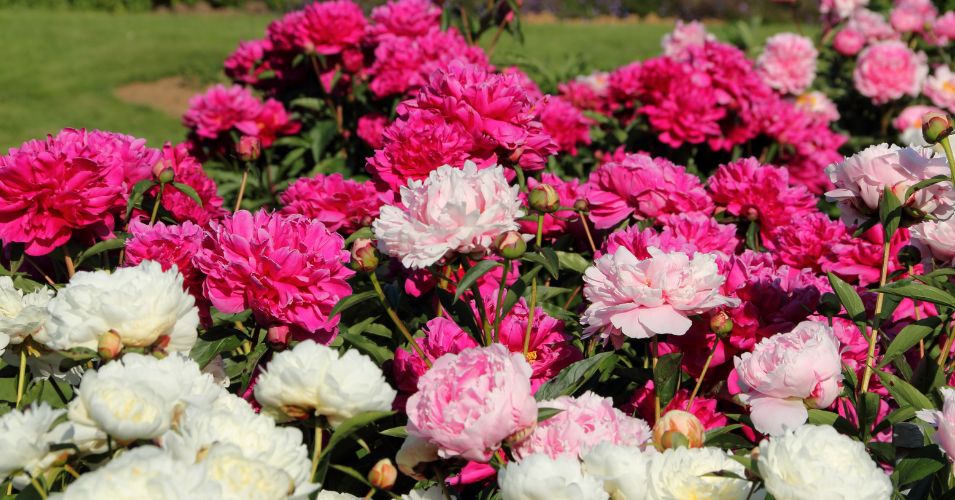
Few garden plants are as rewarding as peonies. Once established, they can bloom for decades with very little attention, filling borders with large, fragrant flowers each spring.
While they are not heavy feeders, giving them the right nutrients at the right time can make a noticeable difference in their health and flower production. Natural fertilizers are often the best choice because they improve the soil while providing a steady supply of nutrients.
In this guide, you’ll discover the most suitable natural fertilizers for peonies, how to use them effectively, and the simple practices that help these beautiful perennials thrive year after year.
Why Choose Natural Fertilizers for Peonies
Natural fertilizers do more than feed peonies. They improve the soil the plants depend on, creating healthier growing conditions that can last for years.
Since peonies are long-lived perennials, that long-term approach often makes more sense than applying products designed to deliver a quick burst of nutrients.
Unlike synthetic fertilizers, organic options break down gradually. As they do, they release nutrients at a pace that matches the plant’s growth. This steady supply helps support strong roots, healthy foliage, and reliable flowering without encouraging excessive, soft growth that is more vulnerable to stress.
Peonies generally thrive with a balanced nutrient supply that is relatively low in nitrogen and slightly higher in phosphorus. Synthetic fertilizers often recommend NPK ratios such as 5-10-10, 5-10-5, or 4-8-4 because they provide sufficient nutrients without encouraging excessive leafy growth.
Natural fertilizers do not usually have precise NPK ratios, as their nutrient content varies by source. Instead, focus on combining organic materials such as compost, bone meal, and worm castings to create a similar balance. This approach supports strong roots, healthy foliage, and abundant blooms while improving the soil over time.
Another reason many gardeners prefer natural fertilizers is the way they improve soil over time. Compost, aged manure, and other organic materials increase the soil’s organic matter content, helping it retain moisture without becoming waterlogged.
They also encourage earthworms and beneficial microbes that gradually break down nutrients, making them easier for roots to absorb.
Natural fertilizers are also more forgiving. It is much harder to overfeed peonies with compost or worm castings than it is with a concentrated synthetic fertilizer. That makes them a practical choice for beginners as well as experienced gardeners who want consistent results without worrying about damaging their plants.
The biggest benefit, however, is what happens over the years. As the soil becomes richer and more biologically active, peonies often develop stronger stems, healthier foliage, and more dependable blooms.
Instead of chasing quick results each season, natural fertilizers help build the kind of growing environment that allows peonies to flourish for decades.
Organic Fertilizers That Help Peonies Thrive
There is no single natural fertilizer that works best for every garden. Soil conditions vary, and what your peonies need this year may be different from what they need a few seasons from now.
Even so, a handful of organic fertilizers have earned a strong reputation for consistently producing healthy plants and impressive blooms.
Compost is usually the first choice, and with good reason. A layer spread around established peonies each spring slowly feeds the soil while improving its texture. It does not deliver nutrients all at once, but it creates an environment where roots can grow more easily and access water more efficiently.
Good compost is often enough to keep mature peonies performing well.
If your goal is bigger, better flowers, bone meal is worth considering. It is naturally rich in phosphorus, which plays an important role in bud formation and root development. Mixing it into the soil when planting, or applying a small amount around established plants, can help promote stronger flowering over time.
Worm castings may not look impressive, but they are packed with nutrients and beneficial microorganisms. They enrich the soil without the risk of burning roots, making them one of the safest natural fertilizers available. Many gardeners add a thin layer around their peonies each spring as part of their regular maintenance routine.
Well-composted manure is another valuable option. Whether it comes from cows or horses, it adds nutrients while increasing organic matter in the soil. The key is making sure it has fully aged before use. Fresh manure can damage plants and create more problems than it solves.
Fish emulsion has its place too, particularly if peonies need a gentle boost early in the growing season. Since it becomes available to plants more quickly than compost or bone meal, it can help support healthy spring growth. A light application is usually all that is needed, as too much nitrogen may reduce flowering.
Many experienced gardeners use a combination of these fertilizers rather than relying on just one. Compost forms the foundation, while bone meal, worm castings, or aged manure provide additional nutrients where needed.
This simple approach feeds both the plant and the soil, giving peonies the support they need to grow healthy and produce beautiful blooms year after year.
How and When to Feed Peonies for the Best Results
When it comes to feeding peonies, timing is more important than quantity. These plants are not heavy feeders, so adding more fertilizer than they need will not produce bigger blooms. In many cases, it does the opposite, encouraging leafy growth rather than flowers.
The best time to fertilize peonies is in early spring when the red shoots first appear above the soil. At this stage, the plants are waking from dormancy and beginning a new growth cycle. Applying compost, worm castings, or another natural fertilizer at this point gives the roots access to nutrients when they can use them most effectively.
If you use bone meal, spring is also a good time to apply it. Since it breaks down slowly, it provides a steady source of phosphorus that supports root development and flower production throughout the season.
Once flowering has finished, resist the temptation to feed heavily again. Although peonies continue storing energy for next year’s blooms, a thick layer of fertilizer is unnecessary. Instead, spread a light layer of compost around the plant to replace nutrients and improve the soil. That is usually all mature peonies need.
Late-season fertilizing is best avoided. New growth produced just before autumn is unlikely to harden before colder weather arrives, leaving the plant more vulnerable as temperatures drop.
Application is simple but often overlooked. Spread fertilizer around the drip line rather than directly over the crown, and gently work compost into the top layer of soil if needed. Covering the crown with thick layers of organic material can reduce flowering, as peonies prefer their buds to remain close to the soil surface.
If your peonies bloom well each spring and produce healthy green foliage through summer, your feeding routine is probably working. If flowering becomes sparse or growth looks weak, consider testing the soil before adding more fertilizer.
The results may reveal that the problem has less to do with nutrients and more to do with soil pH, drainage, or planting depth.
Natural Soil Care That Keeps Peonies Healthy
A healthy peony starts below ground. Rich, well-drained soil gives the roots room to spread, stores moisture during dry spells, and supplies a steady stream of nutrients throughout the growing season. Fertilizer certainly helps, but it can only do so much if the soil itself is in poor condition.
Adding compost every year is one of the easiest ways to keep the soil productive. A thin layer around the base of the plant improves soil structure as it breaks down while feeding beneficial organisms that help release nutrients naturally. Over time, the soil becomes easier to work and better able to support vigorous root growth.
Drainage deserves just as much attention. Peonies dislike wet feet, and soil that stays saturated after rainfall often leads to root rot. If water tends to collect where your peonies are growing, improving the soil with organic matter or planting in a slightly raised area can make a noticeable difference.
Mulch also has its place, especially during long periods of warm weather. Organic mulch helps keep the soil cooler and reduces moisture loss, so you may not need to water as often. Leave a small gap around the crown so air can circulate freely and excess moisture does not build up around the stems.
Soil pH is another factor worth checking every few years. Peonies generally prefer a pH between 6.5 and 7.0, where nutrients are most readily available. If the soil falls well outside that range, the plants may struggle even when they are fertilized regularly.
The good news is that healthy soil does not require complicated care. A yearly application of compost, sensible mulching, good drainage, and occasional soil testing are often enough to keep peonies thriving.
Those small jobs gradually build a stronger, more robust growing environment, helping plants return each spring with healthy foliage and the large, beautiful blooms they are known for.
Fertilizer Mistakes That Can Reduce Peony Blooms
When peonies produce lots of leaves, but very few flowers, fertilizer is often the first thing gardeners blame. Sometimes it is the cause, but just as often the problem comes down to how the fertilizer is being used rather than the product itself.
Using too much nitrogen is one of the most common mistakes. Nitrogen encourages leafy growth, which is important, but peonies do not need large amounts of it.
An unbalanced fertilizer can leave you with a healthy-looking plant that produces very few blooms. Choosing a natural fertilizer with lower nitrogen and higher phosphorus levels is usually a better fit for peonies.
Feeding too often is another mistake. Unlike annual flowers that need regular feeding to support continuous blooming, peonies store energy from one season to the next. Once they have been fertilized in spring, and perhaps given a light layer of compost after flowering, they rarely need anything more until the following year.
It is also easy to apply fertilizer in the wrong place. Compost, manure, and other organic materials should be spread around the plant, not piled over the crown. Covering the crown too deeply can reduce flowering and increase the risk of rot, especially in heavier soils.
Do not assume every flowering problem can be solved with fertilizer. Peonies need at least six hours of sunlight each day, and they are very particular about planting depth.
If the eyes are buried too deeply below the soil surface, flowering can decline no matter how much fertilizer you apply. Crowded plants may also produce fewer blooms and can benefit from being divided once they are mature.
The best results usually come from doing less rather than more. Feed peonies at the right time, improve the soil with organic matter, and let the plants settle into their natural growing cycle. A simple routine is often all it takes to enjoy healthy plants covered in blooms each spring.
Final Thoughts
Peonies have earned their reputation as among the longest-lived garden plants, and they do not ask for much in return. Healthy soil, plenty of sunlight, and the right natural fertilizer are usually enough to keep them thriving for decades.
Instead of looking for a quick fix, focus on building the soil over time with compost and other organic materials. Feed your peonies in spring, avoid overfertilizing, and choose products with a balanced or low-nitrogen nutrient profile.
Those small steps can make a noticeable difference in your plants’ health and the quality of their blooms.
With a little patience, your reward will be stronger plants, larger flowers, and a peony display that returns year after year with very little extra effort.