
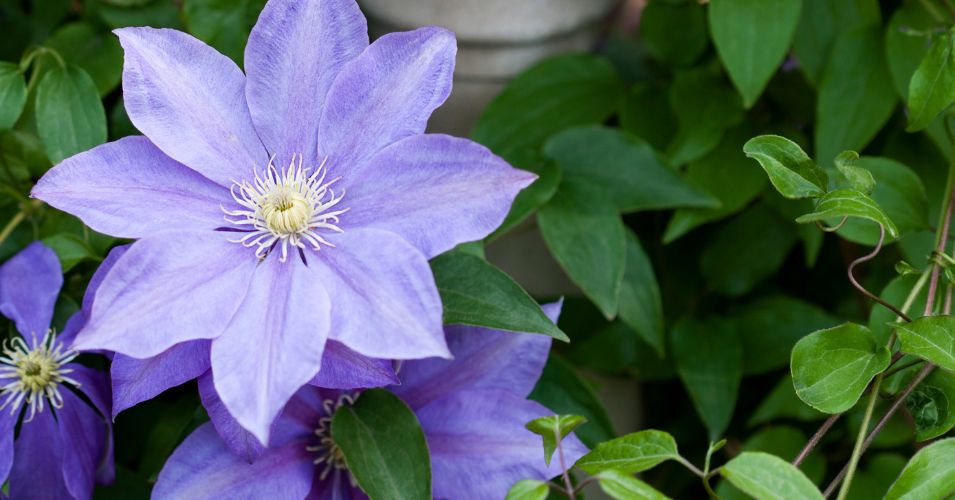
A thriving clematis is one of the highlights of any garden. Once it starts climbing and flowering, it quickly becomes the center of attention.
But producing masses of blooms year after year takes more than regular watering and the occasional pruning; like any long-lived perennial, clematis benefits from the right nutrients at the right time.
Natural fertilizers are a popular choice because they nourish the plant while improving the soil beneath it. They work gradually, encourage healthier roots, and support steady growth without overwhelming the vine.
This guide covers the best natural fertilizers for clematis, how to use them, and the feeding practices that deliver the best results.
Choosing a Natural Fertilizer That Works
Natural fertilizers do more than feed clematis. They also build healthier soil, which is just as important for a vine that may stay in the same spot for decades.
Instead of delivering a sudden rush of nutrients, organic products break down gradually. This gives roots time to absorb what they need while reducing the risk of overfeeding.
Worm castings are one of the best all-around choices. Although they look like ordinary soil, they are packed with nutrients and beneficial microbes that encourage vigorous root growth. They are also gentle enough to use on both young and established plants.
A handful worked into the soil around the base of the vine in spring is often enough to give clematis a strong start.
Bone meal is another reliable option, especially if your goal is bigger blooms. Because it contains ample phosphorus, it supports flower production and root development without promoting excessive leafy growth. It is most effective when mixed into the soil early in the season so the nutrients have time to become available.
Kelp meal is often overlooked, but it deserves a place in any organic feeding routine. Seaweed contains trace minerals that many standard fertilizers lack, helping plants cope with heat, drought, and other environmental stresses. While it is not a complete fertilizer on its own, it works very well alongside other organic products.
Alfalfa meal is another excellent addition. In addition to supplying nutrients, it contains natural growth compounds that can promote stronger stems and healthier foliage. Gardeners often use it as a light top dressing before watering so it gradually breaks down into the soil.
Fish emulsion is one of the few natural fertilizers that works quickly. It provides readily available nitrogen, making it useful when a clematis looks pale or grows slowly after winter.
Because it is concentrated, it should always be diluted according to the instructions and applied sparingly. Used alongside slower-releasing organic fertilizers, it helps maintain steady growth without overwhelming the plant.
Homemade Fertilizers for Clematis
You do not have to buy every fertilizer from a garden center. Several items that usually end up in the kitchen bin can be put to better use in the garden.
While homemade fertilizers should not replace a balanced feeding program, they can provide useful nutrients and help reduce waste.
Banana peels are probably the best-known example. They contain potassium, which plays a role in flower development and overall plant health.
Rather than burying whole peels beside your clematis, chop them into small pieces and add them to a compost pile or soak them in water before using the liquid around the base of the plant. This approach breaks them down more effectively and is less likely to attract pests.
Eggshells are another common household material that gardeners like to recycle. Once washed, dried, and crushed into a fine powder, they slowly release calcium as they decompose. Their effect is gradual, so they are best viewed as a long-term soil amendment rather than a quick fix for nutrient problems.
Used coffee grounds can also find a second life in the garden. They contain small amounts of nitrogen and organic matter, but they should be applied with a light hand. A thin scattering mixed into mulch or compost is far better than piling fresh grounds directly around the stems, which can form a dense layer that limits water movement.
Water from rinsing vegetables is another simple resource that often goes unused. As long as it contains no salt, oil, or soap, it can be poured onto the soil instead of down the drain. Although it is not a fertilizer in the traditional sense, it returns small amounts of dissolved nutrients that would otherwise be wasted.
The key with homemade fertilizers is to keep expectations realistic. They work best as small additions that support healthy soil rather than as complete plant foods.
Combining several homemade options with high-quality natural fertilizers creates a balanced approach that keeps clematis growing vigorously without relying entirely on synthetic products.
When Synthetic Fertilizers Make Sense
Natural fertilizers are often the first choice for clematis, but synthetic products can still be useful in certain situations.
They release nutrients much faster than organic options, making them a practical solution if a vine is growing poorly or needs a quick boost during the active growing season. The key is choosing the right formula and resisting the temptation to feed too often.
For most clematis, a fertilizer with less nitrogen and more phosphorus and potassium produces the best results. An NPK ratio close to 5-10-10, 10-10-10, or 5-10-5 works well because it supports root growth and flowering without pushing excessive leaf production.
High nitrogen fertilizers, such as lawn feeds, should be avoided. They encourage long, leafy vines, but the number of flowers often drops noticeably.
Granular fertilizers are the easiest option for most gardeners. They are sprinkled around the drip line rather than directly against the stem, then watered thoroughly so the nutrients move into the root zone. Depending on the product, one application may last for several weeks.
Liquid fertilizers act much faster. They are absorbed quickly and can help a clematis recover from slow spring growth or pale foliage. Since they work almost immediately, they also disappear from the soil more quickly, so repeated applications are sometimes needed.
Always mix them according to the manufacturer’s instructions, as stronger solutions increase the risk of root damage.
Synthetic fertilizers are effective, but they do not improve the soil itself. Over time, relying on them alone can leave the ground lacking in organic matter.
Many experienced gardeners use them only when a plant needs extra support, while adding compost or other organic materials to keep the soil healthy. That approach delivers the immediate benefits of synthetic fertilizers without sacrificing long-term soil quality.
How to Feed Clematis Throughout the Growing Season
A clematis does not need constant feeding to produce spectacular flowers. In fact, applying fertilizer too often is one of the easiest ways to end up with plenty of leaves and very few blooms. A simple schedule is usually all that is needed.
The first feeding should take place in early spring when fresh shoots begin to emerge. At this stage, the plant is using a great deal of energy to produce new stems and prepare flower buds.
Applying fertilizer while the soil is moist allows the roots to absorb nutrients more efficiently. If the ground is dry, water first, then feed.
If you are using a slow-release fertilizer, one application in spring is often enough, although some products benefit from a second light feeding in early summer. Liquid fertilizers differ because they leach through the soil more quickly.
These are usually applied every two to four weeks during active growth, provided the label recommends that schedule.
Once flower buds begin to open, there is little benefit in increasing the amount of fertilizer. At this point, the plant has already invested most of its energy into blooming. Extra feeding will not suddenly produce more flowers and may instead encourage fresh leafy growth.
Stop fertilizing towards the end of summer. New shoots produced late in the season may not harden before winter arrives, leaving them vulnerable to frost damage. Allowing the plant to slow down naturally helps prepare it for dormancy.
No matter which fertilizer you choose, proper watering makes a noticeable difference. Nutrients move through moist soil far more easily than dry soil, giving the roots better access to everything they need. A layer of mulch also helps by keeping the root zone cool and reducing moisture loss during hot weather.
When combined with sensible feeding, these simple habits will keep clematis healthy and in bloom for years.
Common Clematis Fertilizer Mistakes to Avoid
Feeding clematis is fairly straightforward, but a few simple mistakes can keep the plant from reaching its full potential. In many cases, poor flowering has less to do with the fertilizer itself and more to do with how or when it is applied.
Using too much nitrogen is one of the most common problems. A fertilizer designed for lawns or leafy plants can produce vigorous vines covered in green leaves, yet the flowers may be disappointing. Clematis grown for their blooms generally perform much better with a balanced fertilizer or one that contains slightly more phosphorus and potassium.
Timing also matters. Fertilizing as new growth appears in spring helps fuel the season ahead, but continuing to feed into late summer often does more harm than good. Fresh shoots produced late in the year rarely have enough time to mature before temperatures fall, leaving them vulnerable to winter damage.
Fresh manure is another product that should stay away from clematis roots. While aged manure is an excellent soil amendment, fresh manure contains high levels of ammonia and can burn young roots. It may also introduce weed seeds that quickly become a nuisance around the base of the plant.
Some gardeners apply fertilizer every time they water, believing it will produce larger or more frequent blooms. In reality, clematis is not a heavy feeder. Once the plant has received the nutrients it needs, adding more rarely improves flowering.
Instead, excess fertilizer can build up in the soil and place unnecessary stress on the roots.
Finally, remember that fertilizer is only one piece of the puzzle. A clematis growing in deep shade, dry soil, or the wrong pruning group will not suddenly bloom better because it receives more nutrients.
Healthy soil, consistent watering, and suitable growing conditions all play an equally important role. When those basics are in place, a sensible feeding routine becomes far more effective.
Final Thoughts
The best natural fertilizer for clematis is one that feeds the plant without compromising the soil it grows in. Organic fertilizers release nutrients gradually, helping develop strong roots, healthy foliage, and the energy needed for an impressive display of flowers.
There is no single product that suits every garden. Some gardeners rely on worm castings and bone meal, while others prefer kelp meal, fish emulsion, or homemade alternatives. The best results often come from combining several methods rather than relying on just one fertilizer throughout the year.
Feed your clematis at the right time, avoid overdoing it, and focus on the plant’s overall health rather than chasing faster growth. With a little consistency, your clematis will reward you with vigorous vines and beautiful blooms that return year after year.