
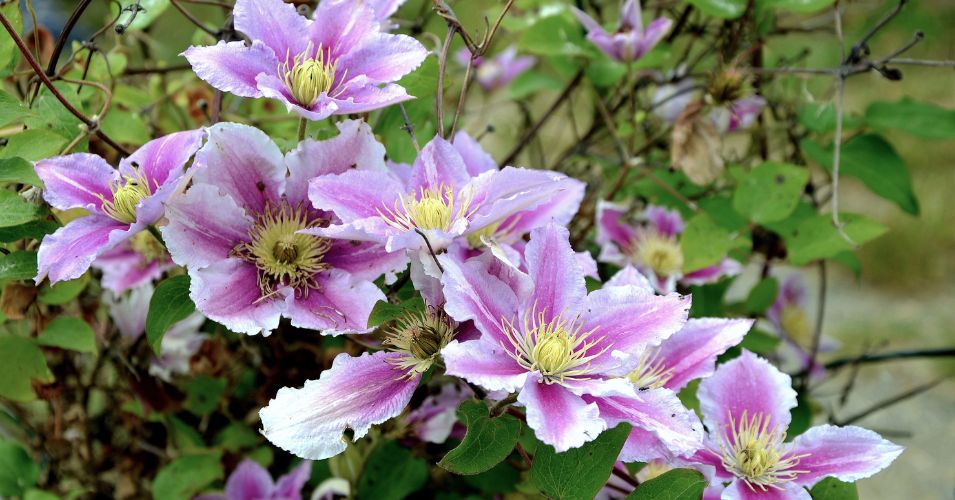
Clematis vines are known for their bold blooms and graceful climbing habits, but when they start to wilt, dry out, or lose color, it can feel frustrating and confusing.
You plant them with hope, expecting flowers to cover your fence or trellis, but instead, you’re left wondering what went wrong.
The good news is that clematis plants often show clear signs before they fail completely.
By learning to spot problems early and take the right steps, you can often bring your plant back to life or prevent decline altogether.
Here’s what you need to know to rescue your struggling clematis.
Sudden Wilting May Point to Clematis Wilt
One of the most alarming things that can happen to a clematis is when it suddenly wilts overnight. You might go to bed with a healthy vine full of buds and wake up to limp stems and shriveled leaves.
When this happens, clematis wilt is often the cause. This disease strikes fast and without much warning. It is caused by a fungus that enters through damaged stems and travels downward, cutting off the plant’s ability to send water to the top.
The result is a dramatic collapse of all or part of the plant, usually affecting new growth. The leaves droop suddenly, and within a day or two, entire sections turn brown and die.
It can be especially upsetting because the plant may have looked perfectly healthy just hours before.
The first step is to check for dark, mushy areas at the base of the stems. These often appear near the soil line and are a clear sign of infection.
If you spot clematis wilt, act quickly. Cut back the affected stems to just above a healthy node, even if it means trimming the plant down to the ground. Use clean, sharp shears and disinfect them between cuts to avoid spreading the fungus.
Remove all infected material and dispose of it in the trash. Do not compost wilted stems or leaves, as the fungus can survive and spread later.
Fortunately, clematis roots are usually not affected by the disease. With proper care, many plants will regrow from the base and bounce back the following season.
Mulching around the base without crowding the crown can protect stems from injury and reduce the risk of wilt.
Avoid overhead watering, and give the plant time to regrow without extra stress. Sudden wilt can be scary, but with fast action, recovery is still possible.
Poor Soil or Drainage Can Slowly Weaken the Roots
Clematis vines need more than sunlight and support to thrive. If your plant is slowly declining, one of the most common reasons is poor soil or bad drainage.
Clematis roots like to stay cool and moist, but they do not do well in soggy or compacted ground. When the soil does not drain well, water pools around the roots, leading to rot and slow suffocation.
You might notice your plant is not growing as quickly as it used to. New shoots are thin or weak, leaves turn yellow, and flowers become fewer or smaller. These are signs that the roots are stressed or damaged.
To check your soil, dig down a few inches beside the plant. If the ground feels heavy and sticky or smells sour, drainage is likely the problem.
Another issue is planting depth. Clematis vines should be planted with the crown about two to three inches below the soil surface. This protects the base from temperature swings and gives roots a stronger start.
If your soil is heavy clay or holds water for too long, consider improving the site. Mix in compost, sand, or fine bark to increase airflow and help excess water drain away.
Raised beds or planting on a slope can also help. The goal is to keep moisture balanced, not soaked.
Mulch helps regulate soil temperature and keeps roots cool in summer. Use bark or shredded leaves, but pull it back from the main stem to avoid rot.
You can also use a soil moisture meter to track watering more accurately. This helps avoid overwatering while still meeting the plant’s needs.
Healthy roots are the hidden key to a thriving clematis. If the soil is poor, the plant cannot recover, no matter how much sunlight or pruning you give it. Make the roots your priority, and the growth will follow.
Too Much Sun or Not Enough Can Affect Bloom and Health
Clematis vines are often described as loving “sun on their heads and shade on their feet,” but finding that perfect balance is not always simple.
Too much sun can scorch the leaves and dry out the roots, especially during the peak of summer heat.
On the other hand, not enough sunlight will leave your clematis weak, leggy, and unable to produce many flowers.
Most clematis varieties need at least six hours of direct sun each day to bloom well. However, intense afternoon sun can stress the plant if the roots are exposed or the soil dries out too quickly.
If your clematis is in full sun and struggling, check to see if the base of the plant is protected. A low-growing perennial or a layer of an organic mulch can help shade the roots.
For plants that seem to be roasting under the afternoon sun, try placing a light screen or providing some partial shade during the hottest part of the day.
Too much shade, especially in dense or north-facing spots, can reduce blooming to just a few scattered flowers.
If your clematis has plenty of healthy leaves but very few blooms, it may be getting filtered light instead of full sun.
You can trim back overhanging branches or reposition other nearby plants to open up more light.
When choosing a spot for clematis, always consider the variety. Some are more tolerant of shade, while others need full sunlight to thrive.
Watching how your plant responds across the season helps you make adjustments without moving it unnecessarily.
Getting the light right helps boost energy, improve flowering, and keep your vine growing strong year after year.
Balance is everything, and small changes in exposure can make a huge difference in how your clematis performs.
Pruning at the Wrong Time Might Be Doing More Harm
Clematis pruning can feel confusing because not all types are treated the same.
Cutting your plant back at the wrong time can accidentally remove next season’s flower buds or weaken the plant just when it needs support.
The key is knowing which group your clematis belongs to. These groups are based on bloom time and determine when and how much to prune.
Group 1 clematis blooms in early spring on old wood from the previous year. If you prune this group in late winter or early spring, you are likely cutting off the buds that were already formed.
Only prune Group 1 right after flowering. This gives the plant time to grow new stems and set buds before the next season.
Group 2 clematis blooms in late spring and early summer, often with a second lighter flush later on. These plants bloom on both old and new wood, so pruning is more selective.
For Group 2, trim only weak or dead stems in early spring, and cut back lightly after the first bloom if needed.
Group 3 clematis blooms later in the summer on new growth. These are the easiest to prune, since you can cut them back hard in late winter or early spring.
If you do not know your plant’s group, try to find the name or bloom pattern and match it to the right type.
When in doubt, watch where your plant produces flowers. If they bloom on old wood early in the season, avoid pruning heavily in spring.
Overpruning or pruning at the wrong time can leave your clematis looking healthy but bare of flowers.
A few minutes of research can prevent months of disappointment. Prune with confidence by learning your plant’s timing, and your clematis will reward you with a fuller, longer-lasting display.
What to Do Right Now to Help Your Clematis Recover
If your clematis is struggling, there are immediate steps you can take to give it a second chance. Recovery takes time, but fast action can often stop the damage and guide the plant back to health.
Start by checking the soil. Is it staying too wet or drying out too quickly? Test the moisture level a few inches below the surface. If it is soggy, reduce watering and improve drainage with compost or sand. If it is too dry, add mulch and water slowly to rehydrate the roots without shocking them.
Next, examine the stems for signs of disease or damage. If you see blackened, soft, or spotted areas, trim them away with clean garden shears. Always cut back to healthy green tissue or just above a leaf node.
Remove any yellowed or wilted leaves to help the plant focus its energy on strong growth.
Check for pests such as aphids or spider mites. Use insecticidal soap or a strong blast of water to clear them from the leaves.
If your plant is in a pot, consider whether it has outgrown its container. Repotting into fresh soil with better drainage can bring immediate improvement.
Gently feed the plant with a balanced fertilizer or compost tea to give it a nutritional boost. Avoid heavy feeding if the plant looks very weak, as this can add stress.
Make sure the plant has the right amount of sunlight. If it is getting too much or too little, adjust nearby structures or shade as needed.
Give it space to breathe by removing weeds or overgrowth around the base. Good airflow keeps disease away and helps your clematis stay dry after watering or rain.
With patience and regular care, many struggling clematis vines come back stronger. They are resilient plants, and even a hard-cut vine can return with fresh growth if given the right conditions.
Final Thoughts
A clematis in trouble does not mean all hope is lost.
By paying attention to wilting, root health, sunlight, and pruning habits, you can identify the real issue and take steps to fix it.
These beautiful climbers often recover when given support, time, and a little hands-on care.
Keep learning from your plant, and it will reward you with vibrant blooms for many seasons to come.