
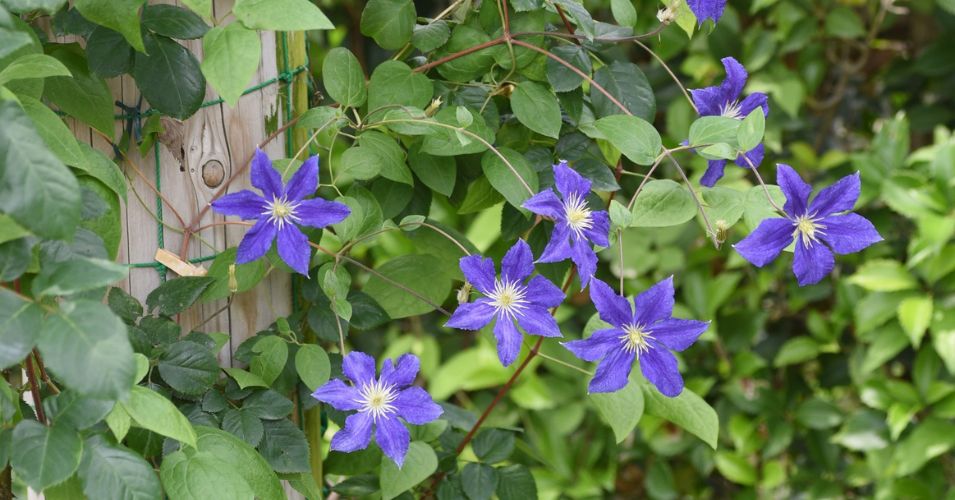
Clematis vines are known for their stunning flowers, climbing beauty, and the way they bring life to fences, trellises, and garden walls. But when those expected blooms fail to appear, it can leave even experienced gardeners feeling confused and frustrated.
A healthy clematis plant may grow strong leaves and long vines, yet still refuse to flower for reasons that are not always obvious at first glance.
Understanding what affects blooming is the key to turning things around and helping your plant reach its full potential.
Roots Are Stressed by Heat and Poor Placement
Clematis plants grow best when their roots stay cool and protected, even while the top of the plant reaches toward sunlight. This balance is often overlooked, and when it is, the plant may grow leaves but struggle to bloom.
When the base of the plant sits in direct sun all day, the soil heats up quickly and dries faster than it should. This creates stress at the root level, limiting the plant’s ability to take up water and nutrients.
As stress builds below the surface, the plant begins to focus more on survival than on producing flowers. You may see long vines and green leaves, but very few buds form along the stems.
Placement in the garden plays a big role in this problem. Areas near walls, fences, or paved surfaces can trap heat and raise soil temperatures even more.
To correct this, it helps to create shade at the base of the plant while still allowing the vines to climb into sunlight. A simple layer of mulch can make a big difference by keeping the soil cooler and holding moisture longer.
Another effective option is to plant low-growing flowers or ground covers around the base. These plants act as a natural shield, protecting the roots from direct heat.
Watering also becomes more important when roots are exposed to warmth. Consistent moisture helps balance temperature and reduces stress on the plant.
Over time, improving root conditions allows the clematis to redirect its energy toward blooming. Once the base is stable and protected, the plant can support stronger bud development.
Healthy roots are the starting point for every successful flowering season. When you focus on keeping them cool and well placed, you give your clematis the foundation it needs to thrive.
Incorrect Pruning Removes Future Flowers
Pruning mistakes are one of the most common reasons clematis plants fail to produce blooms. It is easy to remove future flowers without realizing it, especially if you are unsure how your plant grows.
Clematis varieties are grouped by when they bloom and how they form buds. Some produce flowers on old wood, meaning the buds were already formed the previous season.
If these types are cut back too early, those buds are removed before they ever have a chance to open. The plant may still grow strong leaves, but it will not bloom that year.
Other clematis types bloom on new growth, which means they can be pruned more freely at the right time. In fact, cutting them back can encourage fresh stems that produce more flowers.
The challenge comes when gardeners treat all clematis plants the same. Without knowing the type, pruning can accidentally reduce or eliminate blooming.
A safer approach is to start with light pruning. Removing dead or weak stems helps the plant stay healthy without risking important buds.
Watching your plant closely can also give helpful clues. If it blooms early in the season, it likely relies on old wood and should be pruned carefully.
If it blooms later, it may respond well to more active pruning that supports new growth. Timing your cuts to match the plant’s natural cycle makes a noticeable difference.
With the right pruning approach, your clematis can produce fuller vines and more reliable blooms. Learning when to trim and when to leave the plant alone is key to seeing those flowers return each year.
Nutrient Imbalance Reduces Flower Energy
Clematis plants rely on a steady supply of nutrients to support both growth and flowering, but when that balance is off, the plant may struggle to produce blooms even if it looks healthy. A vine covered in green leaves can still lack the energy needed to form buds.
One of the most common problems is an excess of nitrogen in the soil. These nutrients promote leafy growth, which can cause the plant to focus on producing long vines rather than flowers.
As a result, the clematis may grow quickly and fill space, but buds either form poorly or not at all. This can be frustrating because the plant appears strong yet fails to bloom.
Phosphorus is essential for flower production, and a shortage can directly limit bud development. Without enough of it, the plant cannot shift its energy toward blooming.
Potassium also plays a role in overall plant strength and resilience. When this nutrient is lacking, the plant may not have the support it needs to sustain flowering once buds begin to form.
A soil test can help reveal what is missing or overabundant. This simple step allows you to correct the imbalance rather than guessing and possibly making the problem worse.
Using a fertilizer that is designed for flowering plants can make a noticeable difference. These formulas usually contain lower nitrogen and higher phosphorus to support blooms.
Organic options like compost can also improve nutrient balance over time. They feed the soil gently and help maintain a stable growing environment.
When nutrients are properly balanced, the plant can redirect its energy toward producing flowers. This often leads to fuller vines, stronger buds, and a more reliable blooming season.
Watering Habits Affect Bloom Development
Watering habits directly affect how well clematis plants bloom, and even small inconsistencies can lead to fewer flowers. These plants prefer steady moisture, but they do not tolerate extremes well.
When soil becomes too dry, the plant experiences stress that interrupts its normal growth cycle. Bud formation may slow down or stop completely during these dry periods.
If the plant is watered heavily after a dry spell, it may struggle to adjust. This uneven pattern can lead to weak growth and fewer blooms overall.
Overwatering can also create serious problems. Soil that stays too wet limits oxygen around the roots, which can weaken or damage them over time.
Healthy roots are essential for transporting water and nutrients to the rest of the plant. When roots are compromised, the clematis cannot support strong flowering.
Watering deeply is more effective than frequent shallow watering. Deep watering encourages roots to grow downward, which helps the plant become more stable and drought-resistant.
Mulch is a helpful tool for maintaining consistent moisture. It reduces evaporation and keeps the soil temperature more even throughout the day.
Timing matters as well, and watering earlier in the day allows excess moisture to dry naturally. This reduces the chance of disease and supports overall plant health.
When watering habits are consistent and balanced, the plant can focus its energy on blooming. A steady supply of moisture creates the conditions needed for strong and reliable flower development.
Plant Age and Establishment Delay Flowering
Clematis plants often take time to settle before they begin producing strong blooms. A young plant may focus more on building roots and structure during its first few seasons. This early stage is important because a strong root system supports long-term growth.
Without that foundation, the plant would struggle to sustain regular flowering later on.
Many gardeners expect blooms right away, but clematis can require patience. Some varieties take a couple of years before they reach their full flowering potential.
During this time, the plant may grow longer vines and fuller foliage without producing many buds. This is a natural part of its development rather than a sign of failure.
Transplanting can also delay flowering. When a clematis is moved, it needs time to adjust to its new environment and rebuild root strength.
Stress from planting or changes in conditions can cause the plant to pause blooming. It redirects energy toward recovery instead of producing flowers.
Providing stable care during this stage makes a big difference. Consistent watering, proper sunlight, and balanced nutrients all help the plant establish more quickly.
Avoid over-pruning young plants, as this can slow their progress. Allowing them to grow naturally helps them build the strength needed for future blooms.
Once the plant becomes well established, flowering often improves each season. Patience during the early stages leads to a stronger, more reliable display over time.
Final Thoughts
Clematis may seem unpredictable when they refuse to bloom, but there is always a reason behind it. Small factors like light, pruning, soil, and watering all play a role in flower production.
By observing your plant and making thoughtful adjustments, you can correct these issues over time. Consistency and patience are often the most important tools.
With the right care and attention, your clematis can return to full beauty and reward you with the vibrant blooms it is known for.