
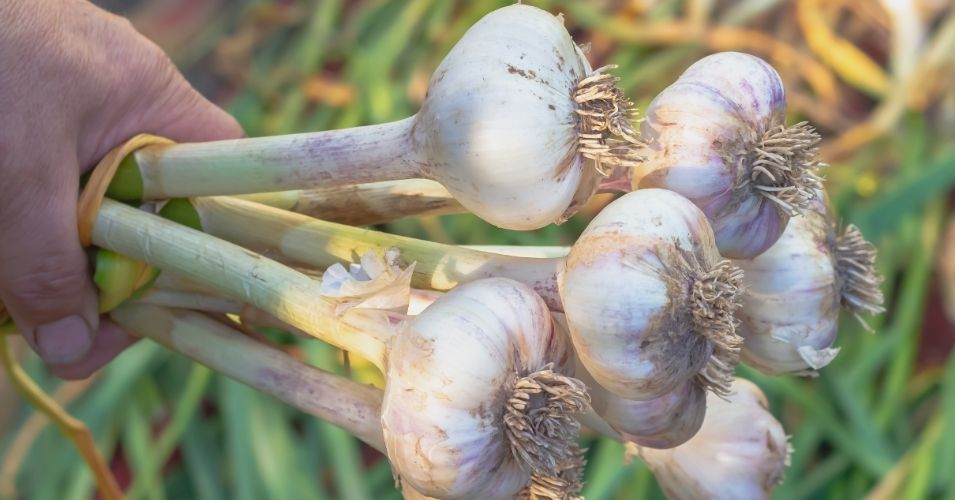
Garlic is one of the most rewarding crops you can grow in a home garden.
It begins quietly beneath the soil, asking for little attention until the moment comes to lift it out.
Harvesting garlic is not difficult, but it must be done at the right time and with the right technique to get bulbs that store well and taste their best.
If you pull too early, the bulbs may be small and underdeveloped. Wait too long, and they may split open or rot underground.
With a few simple tips, you can get your timing just right.
What the Leaves Tell You About Garlic Readiness
One of the clearest signs that garlic is ready to harvest comes from the leaves above ground. While the bulbs grow in silence below the surface, the leaves act as a guide to help you know when to start paying attention.
Garlic leaves grow tall and green for most of the season. As the bulbs mature underground, the leaves slowly begin to dry from the bottom up. This yellowing is a natural process and should not be mistaken for poor health.
The key is to watch how many leaves are turning brown. When about one third to one half of the leaves have died back, the garlic is likely ready to harvest.
Each green leaf above ground represents a layer of protective wrapper around the bulb. If too many leaves die off before harvesting, those wrappers begin to break down.
Once the wrappers are gone, the cloves become exposed and the bulb will not store as long. That is why timing matters so much. You want to harvest when the leaves show just enough decline but still leave enough layers for protection.
If you wait until all the leaves turn brown, the garlic can become overripe. Overripe bulbs often split open or begin to rot where they touch the soil.
On the other hand, pulling the garlic too early means the bulbs will be small and not fully formed.
Softneck garlic usually has a slightly different leaf pattern than hardneck garlic, but both types follow the same basic signs.
If you see three or four green leaves still standing and the rest fading, that is often your cue to begin. Check a few sample bulbs if you are unsure.
Gently dig one or two to see how they look, then decide whether to wait another week or go ahead.
The leaves will always give you hints, but it is your job to notice and respond.
Loosening the Soil Without Damaging the Bulbs
Harvesting garlic begins with the soil. Pulling too hard or digging too close can bruise or slice your precious bulbs.
To keep them intact, it is best to start by loosening the soil gently around the base of the plant. Use a garden fork or a spade, but stay at least four to six inches away from the stem to avoid stabbing the bulb.
Push your tool deep into the ground and lift the soil slowly. Wiggle the fork or shovel back and forth to loosen the earth rather than scoop aggressively.
You should begin to feel the soil loosen as you lift upward. Be patient during this step. Garlic bulbs are nestled tightly and need gentle coaxing, not force.
Once the soil is loosened, grasp the garlic stalk close to the ground and pull upward with steady pressure. Do not yank quickly, or you may snap the stalk and leave the bulb behind.
If it resists, wiggle the bulb a little to help release it. The goal is to bring the whole bulb up with roots and wrappers intact.
Avoid shaking or brushing off too much dirt right away. Leave the soil on the bulbs until they begin to dry. This protects them during the first stage of curing.
Do not wash the bulbs or rinse them with water at this stage. Moisture can lead to mold during the drying process and shorten the storage life of your harvest.
If you break a bulb or tear its skin during digging, it will not store as long. Use these damaged ones first in your cooking.
Move row by row, loosening carefully and pulling slowly until your harvest is complete. This method takes more time but leads to better results.
Garlic is a patient crop, and it responds best to gentle hands during harvest.
How to Cure Garlic So It Lasts Longer
Once garlic is pulled from the ground, it is not ready to go straight into your pantry. It needs time to cure, which helps it dry properly and develop flavor while improving how long it can be stored.
Curing garlic allows the outer wrappers and neck to dry out fully. These dried layers act as natural protection against moisture, mold, and decay during storage.
Start by choosing a dry, airy space that is out of direct sunlight. A shaded shed, garage, or covered porch works well as long as it stays dry and gets good air movement.
Lay the garlic in a single layer or hang it in small bundles using twine or string. Make sure the bulbs are spaced apart so air can move freely around them.
Do not remove the leaves or roots during this stage. Leaving the tops attached allows moisture to leave the bulb more gradually, which improves the curing process.
Let the garlic cure for two to four weeks. The exact time depends on your local humidity and how thick the stalks are.
Check the bulbs every few days for signs of mold or soft spots. Remove any that show damage so they do not affect the rest.
When the outer skins feel crisp, the necks are dry, and the roots look shriveled, your garlic is ready. You can now trim the roots and cut the stalks if you like.
For a rustic look, many gardeners leave the tops braided and hang them in the kitchen. Others clip the tops clean and store only the bulbs. Either way works well once curing is complete.
The key to long-lasting garlic starts with good curing. Take your time and keep conditions dry and well ventilated.
Your garlic will reward you with flavor and storage power that lasts for months.
Storing Garlic the Right Way for Future Use
After curing, garlic needs the right storage conditions to stay fresh. The way you store it can make the difference between cloves that last all winter and ones that rot or sprout too soon.
Garlic likes to be kept in a cool, dry place with steady airflow. A temperature between 55 and 65 degrees Fahrenheit is ideal for long-term storage.
Avoid placing garlic in sealed containers, plastic bags, or the refrigerator. These traps moisture and lead to mold or early sprouting.
Instead, use mesh bags, baskets, or paper bags with small holes. These allow air to circulate while keeping the bulbs together.
A pantry shelf, kitchen drawer, or cellar works well as long as it stays dry and has moderate air flow. Keep garlic away from areas with high humidity or large temperature changes.
Do not store garlic near potatoes. Potatoes release moisture and gases that speed up spoilage in garlic bulbs.
As the months go by, check your stored garlic often. Use up any bulbs that feel soft or begin to sprout. These are still edible but should be used first.
Hardneck garlic usually stores for about 3 to 5 months, while softneck varieties can last up to 9 months under good conditions.
Label your garlic if you grow different types, so you know which ones to eat first. This helps you avoid waste and enjoy the full variety of flavors.
Well-cured and carefully stored garlic can be a gift that lasts well into the next season. Treat it with care, and it will keep your meals rich in flavor and freshness.
Knowing When to Stop Harvesting
Garlic harvest does not last forever, and knowing when to stop is just as important as knowing when to begin. Once the bulk of your garlic has reached maturity, there are clear signs that tell you it is time to wrap up the process.
One of the main signs is leaf loss across most of the bed. If nearly all your garlic plants have more brown leaves than green ones, you are at the tail end of the harvest window.
When too many leaves have died back, it means the protective wrappers around the bulbs have started to break down. The longer you wait, the higher the risk of overripe bulbs splitting open or rotting in the soil.
Another signal is the softness of the neck just above the bulb. When this area begins to feel weak or floppy, the garlic is no longer pulling in nutrients. This suggests the bulb has finished growing and should be removed soon.
You may also notice an increase in pests or signs of rot in some bulbs. These are late-season warnings that the garlic has been in the ground too long. Leaving it longer could reduce your overall quality.
Weather changes can also affect the timing. If heavy rain is coming and the soil is already moist, it is often best to harvest what is left before the garlic becomes waterlogged.
Digging in wet soil increases the risk of damaging the wrappers, which can shorten storage life. Harvesting before a long wet spell keeps your bulbs cleaner and easier to cure.
You want to preserve the quality of your harvest and avoid losing good garlic to over-maturity or soil conditions. Paying attention to these final clues helps ensure a successful end to the season.
Final Thoughts
Garlic rewards those who are patient and observant. From the moment the leaves begin to change to the final bulbs pulled from the earth, every step matters.
Harvesting with care, curing with patience, and storing with wisdom all lead to flavorful results.
When you follow nature’s signals and handle your garlic gently, it will provide months of rich taste and homegrown satisfaction.
Let each clove remind you of the time and care it took to grow it right from the soil in your own garden.