
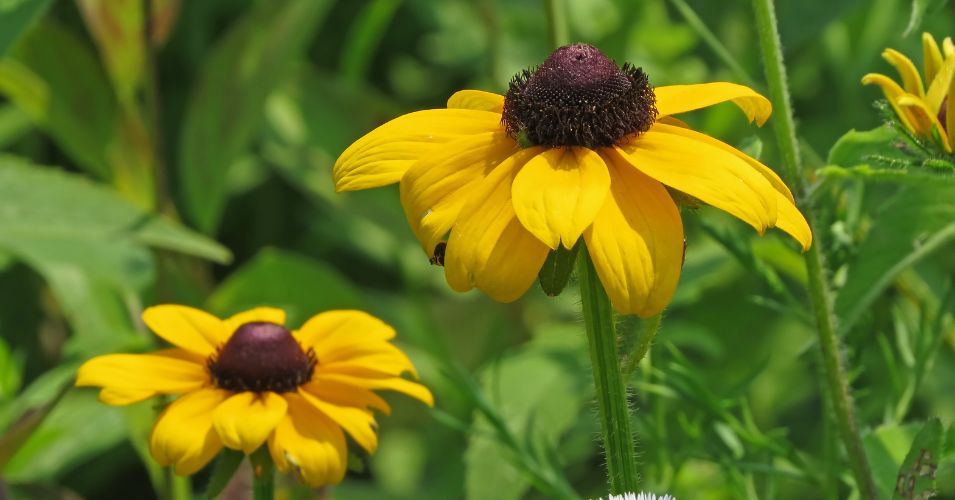
Black-eyed Susans are hard to resist when they are covered in golden flowers. They look cheerful, handle plenty of sun, and have a reputation for being the perennial you can plant without worrying about too much.
Give them a few seasons, though, and your opinion may change.
A small clump can turn into seedlings scattered across the bed. Leaves that looked healthy in spring may become spotted later in summer, and fading plants are not always pretty.
None of these problems makes Black-eyed Susans terrible plants. They explain why some gardeners eventually decide they have had enough.
They Can Spread Far Beyond Their Welcome
Black-eyed Susans are often planted because they are easy. Put a few in a sunny bed, give them time to settle in, and before long you may have a generous patch of yellow flowers without doing much at all.
Then seedlings start showing up several feet away.
Black-eyed Susans can produce plenty of seed, and those seeds do not care much about the original garden plan. They may sprout beside other perennials, squeeze into small gaps, or pop up in sections where a completely different planting was supposed to take center stage.
At first, this can be fun. Gardeners rarely complain about free flowers. After a few seasons, though, pulling unwanted seedlings can become another regular garden job.
How much they spread depends on the Black-eyed Susan variety and garden conditions. Some stay relatively manageable, while others seem much more eager to claim open ground. A sunny bed with bare patches of soil can give new seedlings particularly good opportunities to establish themselves.
Garden style makes a difference too. In a loose cottage border or naturalistic planting, wandering flowers may fit right in. Their unpredictable placement can even make the garden look fuller and more relaxed.
A neat perennial border is a different story.
When every plant has been chosen for a particular position, dozens of volunteer seedlings are not nearly as charming. They can crowd smaller plants and blur the carefully planned spaces between different flowers.
Deadheading helps limit the problem because removing faded blooms prevents some seeds from ripening. Of course, that adds work during a time when plenty of garden chores are already waiting.
It also means cutting off the seed heads that many birds visit later in the season.
That is often when gardeners lose enthusiasm. A plant originally chosen for being wonderfully easy can start requiring regular attention to keep it from becoming too successful.
Powdery Mildew and Leaf Problems Spoil the Show
Some Black-eyed Susan growers know a disappointing moment well. The flowers are finally opening, the yellow petals look terrific, and then you notice the leaves underneath.
They are covered in spots, patches, or a strange whitish film.
Powdery mildew can give foliage a dusty appearance that is hard to ignore once it spreads. The plant may keep flowering, but healthy blooms sitting above tired-looking leaves are not quite the summer display most gardeners had in mind.
Crowded plants can make matters worse because poor airflow creates conditions that favor certain disease problems. Humid weather can also contribute, leaving gardeners with a problem that may vary considerably from one summer to the next.
Black-eyed Susans can also develop leaf spot diseases. Small dark marks may not seem important at first. As more leaves become affected, however, the entire clump can begin to look worn out long before the gardening season is finished.
This is particularly annoying because Black-eyed Susans have a reputation for toughness. They handle conditions that make fussier ornamentals struggle, so it is easy to assume they’ll look good without much intervention.
Tough and tidy are not always the same thing. Gardeners can improve airflow by giving plants enough room and dividing congested clumps. Watering near the soil rather than repeatedly wetting the leaves is another sensible habit, and removing badly affected plant debris can help keep the growing area cleaner.
Even with good care, however, weather can still create a favorable year for disease.
Some gardeners accept spotted leaves as part of growing the plant. They focus on the flowers, leave the seed heads for birds, and do not worry about foliage that looks less than perfect. Others eventually lose patience.
If a perennial occupies a prominent spot beside a patio, path, or front entrance, attractive foliage matters almost as much as flowers. Once Black-eyed Susans repeatedly spend part of summer looking shabby, replacing them with a plant that stays cleaner can become very tempting.
The Garden Can Start Looking Messy
For a few glorious weeks, a big patch of Black-eyed Susans is hard to fault. The flowers are bright, bold, and easy to spot from across the yard. By late summer, however, that same patch may look very different.
Older blooms begin turning brown while new ones are still opening. Petals drop, stems lean sideways, and leaves near the bottom of the plant can start looking rough.
You end up with fresh yellow flowers mixed among brown cones and tired foliage.
This change is completely normal, but it can be frustrating in a garden where appearance matters. Black-eyed Susans do not simply finish blooming all at once and leave behind a neat mound of leaves. Their decline happens gradually, so there can be an awkward stretch when the plants are neither in full bloom nor ready to be cut back.
A summer storm can speed things along. Heavy rain weighs down the stems, and a dense clump may flop outward onto nearby plants. Flowers growing along a walkway can end up leaning into the path.
Tidying them usually means deadheading individual flowers or eventually cutting back stems that have passed their best.
But there’s a reason not to rush outside with the pruners. Those dark seed heads are useful to birds, including finches that visit gardens for seeds. They can also provide texture later in the year when many other perennials have disappeared.
Leaving them standing is easier and can be better for wildlife.
The tradeoff is appearance.
In a meadow garden, a row of browned seed heads can look perfectly at home. Put the same plants beside a tidy patio surrounded by carefully clipped shrubs, and they may look neglected.
Gardeners who like a little wildness probably will not mind. Those who want beds to remain crisp and colorful may find themselves doing much more trimming than they expected when they first brought Black-eyed Susans home.
Black-eyed Susans Do Not Always Stay Where You Put Them
You plant three Black-eyed Susans in the middle of a sunny border. A couple of years later, there are two more near the front, another beside a different perennial, and a small seedling growing close to the path.
This is where an easygoing flower can begin interfering with a carefully planned garden.
Black-eyed Susans can reproduce from seed, and new plants are not guaranteed to appear close to the original clump. Seeds that reach a suitable patch of soil may germinate there, leaving gardeners with young plants scattered through the bed.
Sometimes they land in surprisingly good places. A volunteer seedling filling a space can save you the trouble of buying another plant. It can also make an established garden feel fuller, especially if you prefer flowers to mingle rather than grow in obvious rows.
Other seedlings have terrible timing. One can appear next to a slow-growing perennial that is only beginning to establish itself. Another may settle at the front of a border even though its eventual height makes it better suited to the middle. Suddenly, a plant meant to be part of the design starts rearranging it.
You can pull unwanted seedlings or move useful ones while they are still manageable. Doing that once is hardly a burden.
Doing it every growing season is where the annoyance creeps in.
Another detail worth knowing: if you bought a particular cultivar for its appearance, Plants raised from its seeds may not always look exactly like the parent. Depending on the cultivar and what else is growing nearby, seedlings can show differences in their characteristics.
That unpredictability can be exciting in a relaxed garden. A flower appearing unexpectedly between grasses and other summer perennials often looks more natural than anything placed with a measuring tape. Formal beds leave less room for surprises.
When gardeners have carefully considered height, spacing, and color, they generally want plants to cooperate with those choices. Black-eyed Susans can make that difficult, which is one reason some gardeners eventually reserve them for looser areas where wandering is part of the plan.
Better Behaved Alternatives Can Be More Appealing
At some point, repeatedly managing the same plant stops feeling worthwhile. If Black-eyed Susans spend every summer spreading into the wrong spots or looking rough by August, another perennial may earn that garden space instead.
Plenty of options are available.
Gardeners who love the prairie look often turn to coneflowers. Their daisy-shaped blooms have prominent centers, and the plants work easily among grasses and other sun-loving perennials. Leaving the old flower heads standing also gives birds something to investigate later in the year.
Coreopsis is worth considering when yellow flowers are the main reason you planted Black-eyed Susans in the first place. Its blooms can provide that same splash of sunshine without making the border feel quite so heavy.
Of course, a replacement doesn’t need to look anything like the plant you’re removing.
Maybe that sunny patch would look better with the purple-blue flowers of catmint spilling gently over the edge. Upright salvias can add height and sharper lines. Sedums take the garden in another direction altogether, providing sturdy foliage followed by clusters of flowers later in the season.
This is often how gardens improve. Plants get moved, divided, replaced, and occasionally abandoned as gardeners learn what works rather than what looked good on the nursery label.
Conditions matter as much as personal taste. A perennial that stays compact in one garden might grow vigorously in another, and rainfall, soil, sunlight, and winter weather can completely change how much attention a plant needs.
Black-eyed Susans might still be the right choice for a large informal area where a few wandering seedlings cause no trouble.
But when space is limited, keeping a plant that creates work every year is harder to justify. Replacing it with something that fits the bed more comfortably can mean less correcting and more time simply enjoying what is growing.
Final Thoughts
There is plenty to like about Black-eyed Susans, which is why they keep showing up in gardens year after year. Those unmistakable yellow flowers can brighten a border and draw plenty of activity from visiting pollinators.
But living with a plant for several seasons tells you more than seeing it covered in flowers at a nursery. Seedlings may appear where you don’t want them. Leaves can become spotted or dusty-looking, and plants aren’t always at their prettiest once the main flush of flowers starts fading.
Some gardeners will happily accept all of that. Others will decide the upkeep is too much. That is part of gardening. Not every popular plant deserves a permanent place in every yard.
If Black-eyed Susans are thriving without causing headaches, keep enjoying them. If managing them has become another chore on the weekend list, there is nothing wrong with digging them out and giving another perennial a chance.