
Rhubarb is one of those garden plants that looks bold, grows fast, and surprises you with just how many stalks it can produce.
But knowing when and how to harvest it makes all the difference between a tart delight and a bitter disappointment.
Whether you are brand new to growing rhubarb or simply looking to do things the right way this season, taking the time to understand proper harvesting techniques can help your plant stay productive year after year.
There is more to picking rhubarb than yanking out a few stalks. Let’s explore it step by step.
When Rhubarb Is Ready to Pick
One of the most important parts of harvesting rhubarb is knowing the right time to begin. The timing affects not just the taste but also the long-term health of your plant.
Rhubarb is usually ready for harvest in spring or early summer once the stalks reach between 10 and 15 inches in length. That height means the stalks are mature enough to be picked without stressing the crown.
The color of rhubarb stalks can be misleading since it depends on the variety. Some stalks are deep red, while others stay green or pink, even when fully ripe.
Instead of relying on color, check for thickness and firmness. A ripe stalk will feel solid and stand upright without bending under its own weight.
Another sign your plant is ready is the number of stalks it has produced. A full, leafy clump with strong stems is usually mature enough for harvest.
If your rhubarb is in its first year of growth, do not harvest it at all. The plant needs time to establish its roots and grow stronger before you begin taking stalks.
In the second year, you can harvest lightly and only take a few stalks. By the third year, you can harvest more freely throughout the season.
Picking stalks too early or too often can weaken your plant and reduce next year’s harvest. That is why it’s important to observe how the plant looks and feels before you begin.
New stalks will continue growing throughout the season, so you don’t need to harvest everything at once. You can return every few weeks and take only the strongest stalks at a time.
Rhubarb grows best when you listen to its cues. When it’s ready, it will show you with sturdy, tall stalks and wide, healthy leaves.
The Right Way to Pull Stalks Without Hurting the Plant
Once your rhubarb is ready to harvest, the next step is removing the stalks correctly. How you pick them matters more than many people realize.
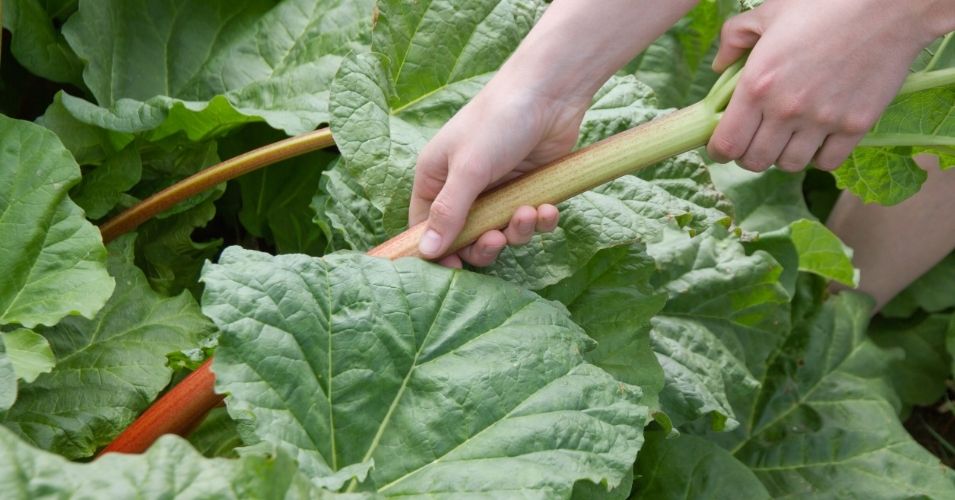
The best way to remove a stalk is by gripping it near the base and pulling it gently with a slow, twisting motion. Do not cut the stalks with scissors or a knife, as this can leave behind a stub that may rot.
Pulling with your hand allows the stalk to detach naturally from the crown. It also encourages the plant to grow new stalks from the same area.
If the stalk resists or feels stuck, try twisting a bit more or wait a few days until it loosens. Forcing it out can damage the plant and leave open wounds.
Always pull stalks one at a time and avoid grabbing bunches. This keeps the plant from being overwhelmed and helps you see which stalks are ready.
Once you remove a stalk, cut off the large leaf at the top and discard it. Rhubarb leaves contain oxalic acid, are toxic, and should never be eaten. However, they can be safely composted.
Make sure to leave at least a third of the plant’s stalks untouched. These remaining stalks help the plant continue to grow and collect energy through photosynthesis.
Do not harvest the shortest or weakest stalks, even if they are technically long enough. Prioritize strong, thick stalks and leave the rest to mature.
Harvesting should be spaced out over a few weeks, not done all at once. Your plant needs time to recover between each round of picking.
If you follow this approach, your rhubarb will continue producing healthy stalks for many seasons. It is a simple method, but it works best when done with care and patience.
What to Avoid While Harvesting Rhubarb
Harvesting rhubarb may seem simple, but there are a few key mistakes that can harm your plant if you’re not careful. Avoiding these errors will help keep your rhubarb strong and productive for years.
One of the most common mistakes is harvesting too early in the plant’s life. Rhubarb needs at least one full year in the ground before any stalks are picked. If you take stalks during the first season, the plant may not grow back well the next year.
Another thing to avoid is pulling too many stalks at once. It might be tempting to harvest a large bunch, but that can stress the crown and slow future growth. Always leave behind at least one third of the stalks.
Cutting the stalks with a knife may seem like a quick option, but it’s not ideal. Cutting can leave behind part of the stalk and create an open wound on the plant that invites disease. Pulling with a twist is safer and more natural.
You should also avoid removing short or thin stalks. These stalks may still be developing and pulling them early can reduce the plant’s energy and limit new growth. Focus on tall, thick stalks that feel firm when you grip them.
Never try to harvest from a dry or wilted plant. Rhubarb does best when it is hydrated, and pulling from a dry plant can cause tearing and root damage. Water a day or two before harvesting if the soil feels dry.
Be careful not to damage the crown or root area while harvesting. If you step too close or tug too hard, you might disturb the plant’s base and reduce its strength. Step gently around the plant and always reach in with care.
Rhubarb leaves contain oxalic acid, which is poisonous to humans and pets. Although you should never eat them, you may compost them safely.
Each of these small details can make a big difference. Rhubarb rewards gentle, thoughtful harvesting and punishes rough or rushed hands.
How to Keep Your Plant Healthy After the Harvest
Caring for your rhubarb does not stop once the stalks are pulled. What you do afterward is just as important as how you harvest. Healthy rhubarb plants need recovery time and proper care to keep producing strong stalks in the future.
Start by removing any broken or leftover stalks around the base of the plant. These can rot over time and attract pests or fungal diseases. Keeping the area clean helps with air flow and reduces problems later in the season.
After harvesting, avoid disturbing the soil around the crown. Rhubarb roots run deep, and loose soil can expose or damage them. Gently pat down any soil that was moved while harvesting, but do not dig.
Water the plant if the weather has been dry. Rhubarb enjoys consistent moisture, and a deep drink after harvesting helps it recover. Aim to water the soil directly rather than spraying the leaves.
It’s also helpful to apply a layer of compost or organic mulch around the base of the plant. This will protect the roots, improve the soil, and hold moisture during warmer days. Just keep the mulch a few inches away from the crown to prevent rotting.
You should also remove any yellowing or damaged leaves that remain. Cleaning up the plant helps it focus on new growth and reduces the chance of spreading disease. Use clean hands or pruning shears to snap away only what is clearly unhealthy.
Avoid feeding the plant with strong fertilizer immediately after harvest. Rhubarb prefers slow, steady nourishment. If you feed it, choose a balanced organic fertilizer and use it sparingly to avoid shocking the roots.
Throughout the growing season, check for signs of pests like slugs or rhubarb curculio beetles. Removing these early can prevent further damage and help your plant stay strong.
If you continue to harvest over several weeks, always allow time between pickings. This gives the plant a chance to rest and send energy back to the root system.
Strong plants grow from good habits. After-harvest care is what helps your rhubarb bounce back, grow thicker stalks, and live longer in your garden.
When You Should Stop Harvesting for the Season
Rhubarb gives generously throughout the spring and early summer, but there comes a point when it needs to rest. Knowing when to stop harvesting is just as important as knowing when to begin.
One of the clearest signs is when the stalks begin to grow thin and soft. Stalks that were once firm and thick may start to look pale or feel floppy when touched.
You might also notice that new stalks are taking longer to appear. This slowdown means the plant is shifting its focus from producing to storing energy for the next year.
The leaves may also start to shrink or droop more easily. When the leaves look weak, the plant is often signaling that it is tired.
Another sign is crown fatigue, which shows up as fewer healthy stalks coming from the center of the plant. If the base of your rhubarb starts to look sparse or uneven, it is time to give it a break.
Yellowing leaves or overall plant stress are also red flags. A struggling plant should never be harvested further, even if a few stalks still seem usable.
In most regions, the harvesting season ends by early to mid-July. Cooler climates may allow for a few more weeks, but once growth slows, it is best to stop.
Letting your rhubarb rest allows it to store nutrients and strengthen its roots. That energy is what helps the plant bounce back stronger next spring.
Pushing it past its limit may result in fewer stalks and weaker growth next season. Stopping at the right time ensures the plant’s long-term success and continued health.
Final Thoughts
Harvesting rhubarb is more than just pulling stalks from the ground. It is a process of patience, timing, and care that rewards you year after year.
By watching the signs, using gentle techniques, and protecting the plant afterward, you give rhubarb what it needs to thrive.
A well-tended plant can last for well over a decade in the same garden bed.
Treat it with respect, and it will keep feeding you for many seasons to come.