
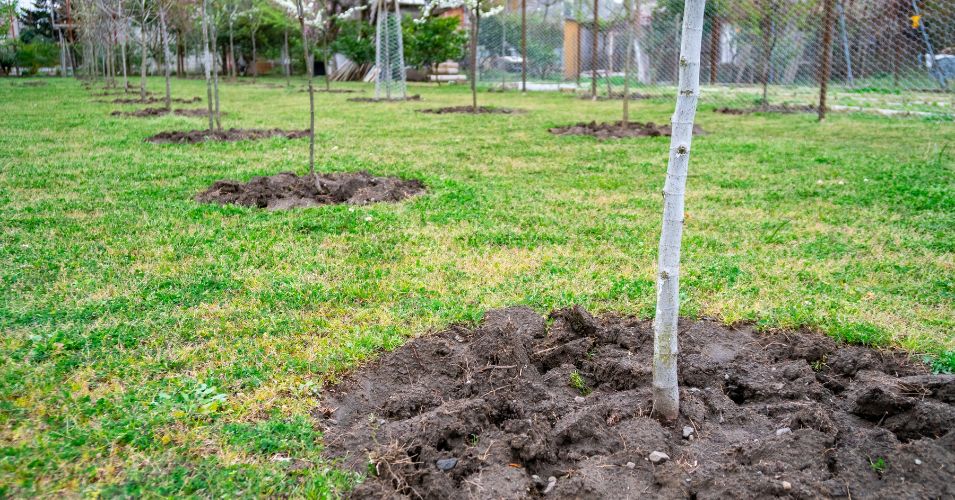
Growing a new tree takes more than digging a hole and hoping for the best. During its first year, the roots are still settling into the soil, so regular watering makes a big difference.
Give it too little water, and the tree may struggle to grow. Give it too much, and the roots can have problems just as quickly.
The challenge is finding the right balance as the weather, soil, and seasons change. Once you understand what a young tree needs, watering becomes much less of a guessing game.
A few simple habits can help your tree get off to a healthy start.
The First Weeks Set the Stage for Healthy Root Growth
A newly planted tree spends its first few weeks adjusting to a completely different environment. Even if it looked healthy when you brought it home, the roots have been disturbed during planting and need time to settle.
That is why watering matters so much during this stage. Healthy roots are built from consistent moisture, not from occasional heavy soaking followed by long dry spells.
Give the tree a thorough watering as soon as it is planted. This helps the soil settle around the roots and removes empty air pockets that can dry them out.
After that, many trees need water every day for the first week or two if the weather is warm and there has been little rainfall. If it rains enough to soak the ground, you can wait until the soil begins drying before watering again.
The goal is to keep the root ball slightly moist, not soaking wet. Roots need both water and oxygen, so constantly saturated soil can cause just as many problems as dry soil.
Instead of spraying the surface for a few minutes, let the water soak in slowly. A longer watering session reaches deeper into the soil where the roots actually need it. It also encourages new roots to grow outward instead of staying close to the trunk.
Checking the soil only takes a minute. Push your finger a few inches into the ground beside the root ball. If it feels damp below the surface, wait another day. If it feels dry, it is time to water again.
Adding mulch makes the job easier. A couple of inches of bark or wood chips help the soil stay cool and reduce moisture loss on hot days. Just avoid piling mulch against the trunk because trapped moisture can damage the bark over time.
How Often to Water Newly Planted Trees Through the First Year
The watering routine that works during the first couple of weeks will not stay the same for long.
As the tree begins growing new roots, it becomes better at finding moisture in the surrounding soil. That means you can slowly increase the time between waterings without leaving the tree thirsty.
For the rest of the first month, watering every two or three days is often enough. Each watering should be deep enough to soak the root zone instead of just wetting the surface. A slow trickle from a hose usually works better than a quick blast of water.
After the first month, many newly planted trees do well with one or two deep waterings each week. There is no perfect schedule that fits every yard, though. A tree planted in sandy soil may dry out much faster than one growing in heavier clay. Sunny locations also lose moisture more quickly than shaded spots.
Summer usually calls for the closest attention. Long stretches of hot, dry weather can quickly pull moisture from the soil. During these periods, you may find yourself watering every two or three days again, even if the tree had been doing well with a weekly routine.
Once cooler weather arrives, the soil stays moist longer, and the tree does not use water as quickly. Many homeowners can reduce watering to about once a week unless rainfall is scarce. Even after the leaves begin changing color, the roots continue growing below ground.
By the time the tree has been in the ground for a full year, it should be much less dependent on regular watering. Even so, it is still worth checking the soil during long dry spells.
Giving a young tree enough water throughout its first year builds a stronger root system that will support healthy growth for many years.
Weather, Soil, and Tree Type Can Change Your Watering Schedule
If someone tells you a newly planted tree should be watered on the same schedule every week, take that advice with caution.
Trees do not grow under identical conditions, and a routine that works in one yard might leave another tree either too dry or sitting in wet soil.
Weather is usually the biggest reason your schedule changes. A cool week with cloudy skies keeps moisture in the ground much longer than a week filled with sunshine, wind, and high temperatures. During hot spells, the soil can dry surprisingly fast, so you may need to water more often than you did only a few days earlier.
Rainfall deserves a closer look too. A quick shower often wets only the top layer of soil and does very little for the roots below. A slow rain that lasts several hours is much more useful because it soaks deeply into the ground. After that kind of rain, you can often skip your next scheduled watering.
The type of soil makes a noticeable difference as well. Sandy soil drains quickly and rarely stays damp for long, which means trees usually need water more often. Clay holds water much longer, but if it stays saturated for days, the roots can struggle. Loamy soil falls somewhere in the middle and is often the easiest to manage.
Different trees also use water at different rates. A fast-growing maple with a full canopy will usually need more moisture than a slow-growing oak of the same age. Evergreen trees can continue losing water through their needles even after many deciduous trees have slowed their growth for the season.
Rather than trying to follow an exact schedule, make small adjustments as conditions change. A quick look at the soil every few days will tell you far more than a reminder on your phone ever could.
Easy Ways to Tell If Your New Tree Needs More or Less Water
You do not need expensive tools to figure out whether a newly planted tree needs water. In most cases, the tree and the soil provide all the information you need. Spending a minute or two checking them every few days can prevent small problems from turning into major ones.
Start with the soil instead of the leaves. Push your finger a few inches into the ground near the root ball. If it feels cool and slightly damp, the tree is probably doing fine. If the soil feels dry below the surface, it is time to water. This simple test is often more reliable than watering on a fixed schedule.
The leaves offer helpful clues too. When a tree does not have enough moisture, the leaves may begin curling, drooping, or turning brown around the edges. Some trees will also shed leaves earlier than normal as a way to conserve water.
While a little transplant stress is common, continued leaf loss usually means something needs to change.
Too much water creates a different set of warning signs. The leaves often turn pale or yellow instead of becoming dry and crispy. The ground may stay muddy for several days, and in some cases it develops a musty smell because the roots are sitting in overly wet soil.
Take a look at new growth as well. A healthy tree should slowly produce fresh leaves and small shoots as the season moves along. If weeks pass without much change and the tree seems to lose vigor instead of gaining it, the watering routine is worth checking before looking for other causes.
Over time, you will become familiar with how your tree responds after a deep watering or a week without rain. That experience is often more useful than following a strict timetable, because every yard has its own conditions and every tree settles in at its own pace.
Common Watering Mistakes That Can Slow Tree Growth
Most watering mistakes come from good intentions. It is easy to think that more water is always better or that sticking to the same routine every week will keep a young tree healthy.
In reality, newly planted trees respond much better to watering that matches the conditions around them.
One mistake is reaching for the hose every day long after the tree has settled in. Constantly wet soil limits the amount of oxygen around the roots, making it harder for them to grow. As the weeks pass, the tree should gradually rely on deeper, less frequent watering instead of daily attention.
The opposite problem happens just as often. Some homeowners water thoroughly after planting, then forget about the tree until the leaves begin to wilt. By that point, the roots may have been sitting in dry soil for days. Regular checks prevent this from happening and make it easier to catch problems before they become serious.
Another habit worth avoiding is watering too quickly. If water runs across the surface or drains away before it has time to soak in, much of it never reaches the root ball. Letting a hose run slowly for a while usually gives much better results than soaking the area in a hurry.
Mulch can also be used the wrong way. Covering the root zone helps the soil stay moist, but piling mulch against the trunk creates a damp environment where bark problems are more likely to develop. Leave a small space around the base so air can circulate freely.
There is also no reason to water the same spot every time. As the months go by, the roots spread farther away from the trunk. Expanding the watering area encourages those new roots to keep growing outward, which helps the tree become stronger and more stable. Small changes like these often have a bigger impact than people expect.
Final Thoughts
Helping a newly planted tree get established is mostly about consistency, not perfection. Some weeks it will need water more often, while other weeks nature will do much of the work for you.
Instead of following a fixed schedule, let the soil guide your decisions. A quick check takes very little time and gives you a much clearer picture of what the tree actually needs.
Once the roots have had time to spread, watering becomes much less demanding. Until then, a little extra attention goes a long way.
Give the tree the moisture it needs during that first year, and it will have a much better chance of growing into a healthy, well-established part of your landscape for many years to come.