
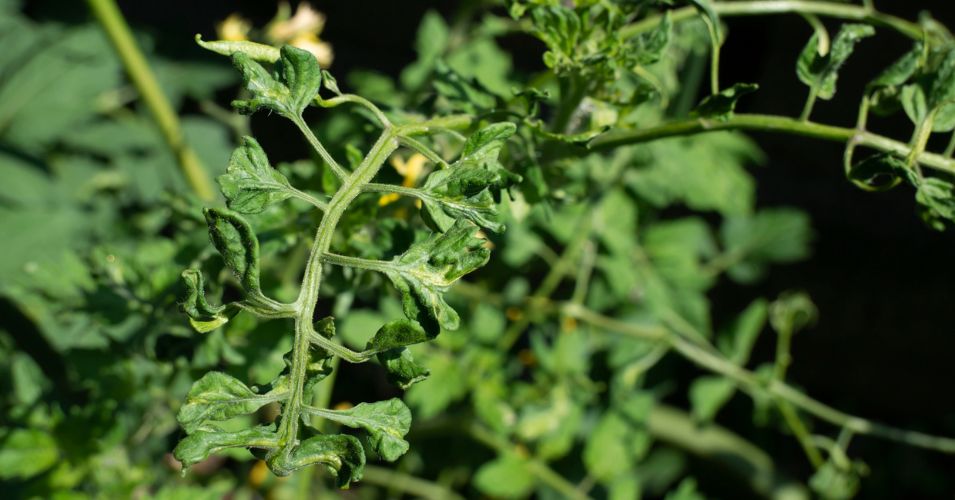
You head out to check on your tomato plants, and something looks off. The leaves are curling upward, rolling inward, or twisting in ways they were not a few days ago. Naturally, your mind starts racing. Is it a disease? An insect problem? Have you done something wrong?
The good news is that curled tomato leaves are incredibly common and can occur for several reasons. Sometimes the cause is as simple as a stretch of hot weather. Other times, pests, disease, or even routine gardening practices may be to blame.
Before you assume the worst, it helps to know what signs to look for. Understanding why tomato leaves curl can help you fix the problem quickly and keep your plants producing healthy, flavorful fruit throughout the season.
When Healthy Plants Start Looking Strange
Spotting curled tomato leaves can be unsettling, especially when the plant looked perfectly healthy just a few days earlier. Many gardeners immediately assume that disease is to blame, but leaf curl is not always a sign of something serious. In many cases, the plant is simply reacting to conditions around it.
The way the leaves curl can provide important clues. Sometimes the edges roll upward, creating a cupped appearance. Other times, entire leaves seem to fold in on themselves. If the foliage remains green and the plant continues producing flowers and fruit, the issue is often less severe than it first appears.
One of the most common causes is physiological leaf roll. Despite the technical name, it simply refers to a stress response. The plant encounters conditions it does not particularly like and responds by altering the shape of its leaves. Older leaves near the bottom of the plant are usually the first to show symptoms, while newer growth may continue to look normal.
This is where many gardeners make a mistake. They focus entirely on the curled leaves and overlook the rest of the plant. A tomato plant can have a handful of rolled leaves while remaining healthy enough to produce an excellent crop. Looking at the overall condition of the plant often tells a much more accurate story.
Think back to any recent changes in the garden. Have temperatures climbed suddenly? Did you prune heavily last weekend? Has watering been irregular because of a busy schedule or unexpected rain? Small changes that seem insignificant to us can be enough to trigger a visible reaction in tomato plants.
Before reaching for sprays or fertilizers, spend a few minutes observing. The pattern of the curling, the age of the affected leaves, and the plant’s general vigor can reveal far more than any quick fix ever will. In many situations, identifying the cause is the hardest part. Once you know what the plant is responding to, the solution often becomes surprisingly straightforward.
Weather Stress Can Change Everything
Tomatoes love warm weather, but even these heat-loving plants have their limits. When conditions become too hot, too wet, too dry, or simply too unpredictable, the leaves often reveal the problem before the rest of the plant does.
Heat is one of the biggest culprits. During a stretch of scorching summer weather, tomato plants can lose moisture rapidly through their leaves. Curling helps reduce that loss. It is not unlike closing blinds on a sunny day to keep a room cooler. The plant is trying to protect itself from further stress.
Dry soil can make the situation worse. A plant that struggles to access enough water may curl its leaves to conserve what little moisture it has available. This response is especially common in container-grown tomatoes, which tend to dry out much faster than plants growing directly in the ground.
Too much water can create similar symptoms. When roots sit in saturated soil, they cannot function efficiently. Oxygen levels drop, root growth slows, and the plant begins to show signs of above-ground stress. Curled leaves are often one of the first warnings that something is off below the surface.
Wind is another factor that gardeners sometimes overlook. A consistently windy location can pull moisture from the leaves faster than many people realize. Even well-watered plants may react by curling their foliage when exposed to strong gusts day after day.
Sudden weather swings can be particularly challenging. A week of cool temperatures followed by intense heat forces tomato plants to adjust quickly. Young plants and recent transplants often struggle the most because their root systems have not yet fully established.
While you cannot control the weather, you can reduce its impact. Consistent watering, a layer of mulch, and protection from extreme conditions help create a more stable environment. Once temperatures moderate and soil moisture returns to normal, new growth often emerges healthy and unchanged, even if older curled leaves never fully recover.
Pests and Diseases That Trigger Leaf Curl
Not every curled tomato leaf can be blamed on heat, watering issues, or a rough patch of weather. Sometimes the problem is alive and actively feeding on your plants.
Aphids are often the first suspects. These tiny insects gather on stems and the undersides of leaves, where they feed on plant sap. At first, the damage may seem minor. A few leaves start to twist, curl, or wrinkle. As their numbers grow, the distortion becomes harder to ignore. If you notice ants frequently climbing your tomato plants, take a closer look. Ants are attracted to the sugary residue aphids leave behind and often signal that a colony is nearby.
Whiteflies can create similar headaches. Shake the plant gently and watch what happens. If a small cloud of tiny white insects rises into the air, you have likely found the culprit. Their feeding weakens the plant and can leave leaves looking curled, pale, and unhealthy.
Some pests are much harder to spot. Broad mites are so small that most gardeners never actually see them. Instead, they notice the damage. New leaves emerge twisted and deformed, almost as if they were crumpled before they had a chance to unfold properly. Because the symptoms appear unusual, many people mistake mite damage for a nutrient deficiency or a plant disease.
Disease can also enter the picture. Certain viruses affect tomato plant growth, causing leaves to curl and slowing overall development. One of the most well-known examples is the tomato yellow leaf curl virus. Plants infected with this disease often remain smaller than expected and produce fewer tomatoes throughout the season.
The difficult part is that diseases and pests rarely disappear on their own. Unlike temporary weather stress, the symptoms often spread or become more pronounced over time. If the newest growth appears increasingly distorted each week, it is worth investigating further rather than hoping the plant will bounce back on its own.
The sooner you identify what is feeding on or infecting the plant, the easier it becomes to limit the damage. A quick inspection every few days can reveal problems long before they threaten the entire crop.
Mistakes Gardeners Often Make
Tomato plants have a way of testing a gardener’s patience. The moment leaves start curling, it is tempting to do something, anything, to make the problem disappear. Ironically, that urge to help is often what makes the situation worse.
One of the most common reactions is to immediately increase watering. Curled leaves look stressed, so adding more water feels like the logical solution. Unfortunately, tomatoes do not always curl because they are dry. When roots sit in constantly wet soil, they struggle just as much as they do during drought. In both cases, the leaves may respond with the same warning sign.
Fertilizer is another tool that gardeners sometimes reach for too quickly. A plant that looks unhealthy must need more nutrients, right? Not necessarily. Feeding a stressed tomato plant without knowing the cause can push it to produce excessive foliage while doing little to solve the underlying issue.
Pruning mistakes can have a surprising effect as well. After watching online videos or reading gardening tips, some people remove large amounts of foliage in a single session. The plant suddenly loses much of its natural shade, exposing leaves and fruit to stronger sunlight. Within days, curled foliage may begin to appear as the plant adjusts to its new conditions.
Chemical drift is a problem that catches many gardeners off guard. Weed killers applied several yards away can travel farther than expected. A light breeze is sometimes enough to carry small amounts onto nearby tomato plants. The result is often dramatic twisting and curling that appears without warning.
The biggest mistake, however, is assuming every case of leaf curl has the same cause. Two plants growing side by side can show similar symptoms for completely different reasons. One may be reacting to inconsistent watering, while the other may be dealing with an insect infestation.
Experienced gardeners spend less time searching for quick fixes and more time looking for clues. They examine the soil, check the newest leaves, consider recent weather, and note any changes in the garden. That extra bit of detective work usually reveals the answer far faster than any bottle, spray, or fertilizer ever could.
Bringing Your Tomato Plants Back to Full Strength
Seeing curled leaves does not necessarily mean your tomato season is headed for disaster. In many gardens, plants continue to grow, flower, and set fruit even after leaf curl appears. The goal is not always to make every affected leaf look perfect again. Instead, focus on creating conditions that encourage healthy new growth.
One of the first things to check is your watering routine. Tomatoes prefer consistency. If the soil stays bone dry for several days and then becomes soaked all at once, the plant is forced to adapt repeatedly. Over time, that stress often shows up in the foliage. A steady watering schedule helps the plant settle back into a normal rhythm.
Mulch can be surprisingly helpful during recovery. Whether you use straw, compost, or shredded leaves, a protective layer over the soil slows moisture loss and keeps root temperatures from swinging too dramatically during hot weather. It is a simple step, but one that often makes a noticeable difference over the course of a growing season.
If insects are causing the problem, act before their numbers explode. A few aphids today can become hundreds next week. Take a close look beneath the leaves and around tender new growth, where pests tend to gather. Catching an infestation early is far easier than trying to control one that has already spread throughout the plant.
Patience also plays a larger role than many gardeners realize. Leaves that have already curled may remain that way for the rest of the season. That does not mean the plant is failing. The real indicator of progress is what happens next. Watch the newest growth near the top of the plant. Fresh leaves that emerge flat, green, and healthy are usually a sign that conditions have improved.
Many experienced gardeners judge recovery by the flowers as much as the foliage. A plant that continues producing blossoms and developing fruit is often in far better shape than its curled leaves suggest. Tomatoes are remarkably resilient, and given the chance, they can recover from a surprising range of setbacks.
Final Thoughts
Tomato plants rarely make it through an entire season without a few bumps along the way. A stretch of intense heat, an inconsistent watering schedule, a pest outbreak, or even a sudden storm can leave its mark on the foliage.
Leaf curl is often one of the first signs that something has changed.
Rather than viewing curled leaves as a disaster, think of them as an early warning system. The plant is telling you that conditions are less than ideal. Once you understand the message, you can usually take steps to reduce the stress and keep the plant moving forward.
The encouraging part is that tomato plants are tougher than they look. A plant with a handful of curled leaves can still produce baskets of ripe fruit by the end of the season. Pay attention to new growth, stay consistent with care, and avoid the temptation to chase every symptom with a quick fix.
In many cases, the best response is to give the plant what it needs and allow time to do the rest.