
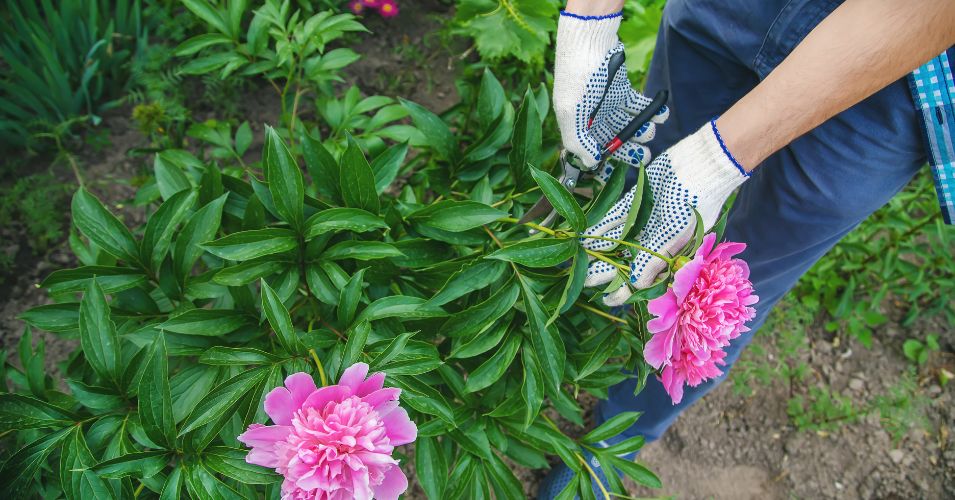
Peonies put on a spectacular show when they bloom, but they still need a little care once the flowers have faded.
It is easy to assume the plant’s job is done for the year, yet what happens after flowering plays a big part in how well it performs next spring.
Unlike some flowering perennials, peonies bloom only once each season, so proper care after flowering has a direct impact on next year’s display.
Whether you have been growing peonies for years or have just planted your first one, this guide explains exactly how to cut them back without harming future growth or reducing next year’s blooms.
How to Prune Peonies After They Bloom
Once the flowers have faded, your peonies only need a light tidy-up. Many gardeners assume the whole plant should be cut back, but that comes much later in the year. For now, focus on removing the parts that are no longer useful while leaving the rest of the plant to grow as normal.
The first job is deadheading. Cut away each faded bloom once the petals have dropped or the flower has started to dry out. This prevents the plant from investing energy in producing seeds and keeps it looking much neater.
Never pull spent blooms off by hand, as this can loosen or damage healthy stems. Using clean, sharp pruning shears gives you far more control and leaves a smoother cut that heals more quickly.
Supporting the stem while making each cut helps avoid accidental damage, especially if the stems are carrying plenty of healthy leaves. Clean cuts also heal more quickly than crushed or torn stems.
As you move around the plant, look for anything that clearly needs to be removed. Broken stems, damaged growth, and leaves with severe signs of disease should all be cut away. Healthy foliage should stay in place, even if it is no longer as attractive as it was during the flowering season.
Herbaceous peonies need nothing more than this until autumn, when the foliage naturally dies back. Tree peonies differ in that they retain their woody stems year-round. After blooming, they rarely need more than the occasional removal of a dead or damaged branch.
Once you have finished, gather any fallen petals or diseased plant material from around the base of the plant. Then leave your peony alone. It will spend the rest of the season building strength below ground, ready to produce another display of blooms when spring returns.
The Best Time to Cut Back Peonies
A little patience goes a long way when caring for peonies. Although the flowers disappear early in the season, the plant itself is far from finished.
During summer, the foliage quietly does one of its most important jobs. Every healthy leaf captures sunlight and converts it into energy stored underground. Those stored nutrients are what help produce fresh shoots and large blooms the following year. Cutting the plant back too early interrupts that process.
For herbaceous peonies, the right time for a full cutback is in autumn after the foliage has naturally died back. In many gardens, this happens after the first hard frost. The leaves will change from green to shades of yellow, brown, or black before collapsing. That is your signal that the plant has finished storing energy for the season.
Rather than watching the calendar, pay attention to the plant itself. A peony growing in a cool climate may die back weeks before one growing in a warmer area. The foliage tells you much more than the date ever will.
Tree peonies follow a different pattern. Their woody stems remain alive throughout winter, so they should not be cut down like herbaceous varieties. Only dead, damaged, or unhealthy branches need to be removed, and that job is usually left until late winter or early spring.
Waiting until the proper time may feel like doing nothing, but it is one of the best things you can do for your peonies. Giving the plant a chance to complete its natural cycle helps ensure stronger growth and a better display of flowers when spring returns.
Mistakes That Can Reduce Next Year’s Blooms
Peonies are known for being long-lived, but they are not completely maintenance-free. A few well-intentioned mistakes can leave you wondering why the flowers seem smaller or less impressive the following year.
The most common problem is cutting the plant back too early. Once flowering has finished, the leaves still have an important job to do. They continue feeding the roots throughout summer, building up the energy needed for next year’s display. Removing that foliage too soon weakens the plant without providing any real benefit.
Another mistake is assuming every untidy leaf needs to come off. It is normal for peony foliage to look a little worn by late summer. Unless the leaves are severely diseased, they are still helping the plant. Waiting until they die back naturally gives the roots more time to store nutrients.
Many gardeners also forget that tree peonies and herbaceous peonies are pruned differently. Cutting a tree peony down to ground level removes the woody stems that produce future flowers. Knowing which type you have prevents a disappointing surprise when spring arrives.
Poor garden hygiene causes problems too. Old leaves and fallen petals left around the base of the plant can encourage fungal diseases, especially during wet weather. Cleaning up after pruning takes only a few minutes and helps create healthier growing conditions.
Finally, avoid the temptation to keep trimming throughout the season. Peonies do not respond well to frequent pruning. Once the faded flowers have been removed, the healthiest thing you can do is let the plant grow uninterrupted until autumn.
Sometimes the best care comes from knowing when to leave a plant alone. That patience is often rewarded with stronger growth and more flowers the following year.
Signs Your Peonies Need More Than a Simple Prune
If a peony looks untidy after flowering, pruning is usually all that is needed. When the plant continues to struggle, however, the problem often lies elsewhere.
Leaves are often the first clue. A few spots toward the end of summer are fairly common, but large patches of powdery black or brown growth, or leaves that die much earlier than expected, can all point to disease. Removing the affected parts helps, although improving airflow around the plant is just as important.
Take a look at the stems as well. Firm, green stems are a sign of a healthy plant. Soft, dark, or collapsing stems suggest rot, particularly during wet weather. These should be removed as soon as they are noticed to stop the problem spreading further.
A lack of flowers can also be misleading. Many gardeners blame their pruning, but poor blooming is more often caused by deep planting, too much shade, or overfeeding with nitrogen-rich fertilizer. If the growing conditions are not right, changing the way you prune is unlikely to make much difference.
Very old clumps sometimes become crowded, which can reduce flowering, too. If your peony has been growing in the same spot for many years and blooms have gradually become fewer, dividing the plant in autumn may be a better solution than pruning alone.
Healthy peonies rarely need heavy pruning. When a plant continues to decline despite being cut back correctly, it is usually worth looking beyond the pruning shears and checking whether disease, overcrowding, or growing conditions are holding it back.
Simple Care Tips After Pruning for Healthy Growth
Once you have finished pruning, there is very little left to do. That is one of the reasons peonies are such popular garden plants. They are happiest when they are not fussed over too much.
If the weather is dry, give the plant a thorough watering. A deep soak is far more useful than frequent light watering because it encourages the roots to grow deeper into the soil. If rain is regular in your area, nature will often do the job for you.
Take a few minutes to clear away weeds as you work around the plant. Weeds compete for moisture and nutrients, and they can restrict airflow around the foliage. A tidy planting area dries more quickly after rain, making it less inviting for fungal diseases.
Resist the urge to add lots of fertilizer after pruning. Peonies are not heavy feeders, especially once flowering has finished. Too much fertilizer can encourage plenty of leafy growth without improving next year’s display. If the soil needs a boost, adding a small amount of compost or a balanced fertilizer at the appropriate time of year is usually enough.
Keep an eye on the leaves as summer comes to an end. A few marks or blemishes are not unusual, but widespread black spots or stems that begin to collapse should not be ignored. Removing affected growth promptly helps stop problems spreading to the rest of the plant.
If you grow herbaceous peonies, remember to tidy up properly once autumn arrives, and the foliage has died back. Collect the old stems and leaves rather than leaving them on the soil over winter. This simple habit reduces the chance of pests and diseases carrying over into the next growing season.
After that, let the plant rest. Peonies do not need constant pruning, feeding, or watering to perform well. Once established, they often produce their best displays when they are left alone for most of the year. A little care after pruning is all it takes to keep them healthy and ready for another season of spectacular blooms.
Final Thoughts
Peonies do not need much attention after they finish blooming, but they do benefit from the right care at the right time.
Removing faded flowers, leaving the healthy foliage in place, and waiting until autumn for a full cutback helps the plant recover naturally and prepare for the next growing season.
If your peonies have been growing well, there is no need to overcomplicate things. A little pruning, a tidy garden bed, and a bit of patience are usually enough to keep them in good shape.
By following these simple steps each year, you can look forward to healthy plants and another beautiful display of blooms when spring comes around.