
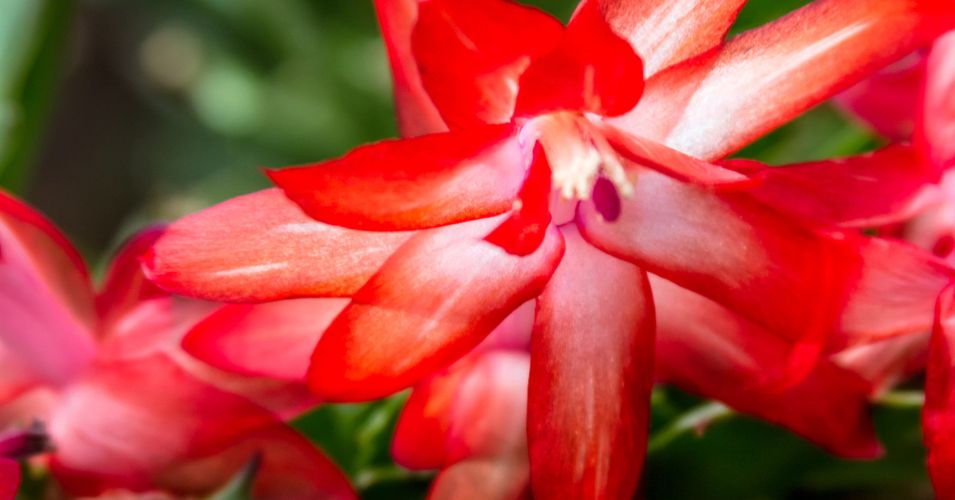
Growing a Christmas cactus is fairly easy. Getting one to produce a generous crop of flowers year after year can take a little more thought. Fertilizer is part of the picture, but this plant does not need heavy feeding.
Natural fertilizers are a good fit because you have several gentle options, including compost, worm castings, and liquid organic feeds.
You can even make some fertilizers at home, although not every kitchen scrap belongs in the pot.
So, what should you actually use? Here is how to feed a Christmas cactus without overcomplicating it.
What Makes a Natural Fertilizer Good for Christmas Cactus?
Christmas cactus does not need heavy feeding to look good. In fact, overfertilizing the pot can create more problems than it solves. What this plant really needs is a steady, gentle supply of nutrients while it is actively growing.
That makes natural fertilizers a particularly useful option.
A Christmas cactus comes from a very different environment than the desert associated with most cacti. In the wild, these plants grow in humid forests, where they may be found in pockets of organic matter around trees and rocky areas. Their roots are used to moisture, air, and slowly available nutrients rather than extremely rich soil.
A suitable fertilizer should reflect those conditions.
Start with the three nutrients found on most fertilizer labels: nitrogen, phosphorus, and potassium. Nitrogen promotes healthy green growth, phosphorus supports roots and flowers, and potassium supports several processes that keep the whole plant functioning well.
Balance is more important than chasing one nutrient in large amounts.
A fertilizer loaded with nitrogen, for example, may leave you with plenty of fresh green growth but not necessarily the impressive flower display you were hoping to see.
Natural fertilizers can help because many release nutrients gradually. This slower approach suits a Christmas cactus, particularly when compared with giving a small container a strong dose of concentrated fertilizer.
There is another reason to be cautious. Fertilizer salts can collect in potting soil over time, and tender roots may suffer when the buildup becomes excessive. Applying modest amounts and occasionally flushing the potting mix with plain water can reduce this risk.
Above all, look for a fertilizer that complements good plant care rather than replacing it.
A Christmas cactus with poor drainage, inadequate light, or constantly wet roots will not suddenly become healthy because it receives more food. Get the basics right first, then use fertilizer as a gentle boost during active growth.
The Best Natural Fertilizers for Healthy Growth and Flowers
Open a gardening cupboard, and you might find several products that could feed a Christmas cactus. The trick is knowing which ones are gentle enough for a container plant and which ones are better left for the vegetable patch.
Worm castings are a good place to begin.
They provide nutrients in a mild form and are easy to use without dramatically changing your normal care routine. You can work a small amount into the upper part of the potting mix, or spread a light layer over the surface.
Good finished compost can work similarly, but there is a catch. Christmas cactus roots like an airy mixture, so filling a small pot with dense compost can make the soil retain more moisture than you intend.
Use compost as an addition, not as the main potting material.
Liquid options are handy when you want more control. Fish-based fertilizers are widely used by gardeners and can provide a useful supply of nutrients, although some formulas contain considerably more nitrogen than others. Since these products are concentrated, check the label and dilute them properly before adding them to the pot.
Kelp and seaweed products are worth considering too. Their exact nutrient content varies, and many are better used as supplements than as complete fertilizers.
If you would rather avoid combining different products, a balanced organic liquid fertilizer is probably the easiest route. You can measure it, dilute it, and spread it evenly through moist potting soil.
The best choice ultimately depends less on finding a magical ingredient and more on using a sensible amount.
Christmas cactus is not a hungry garden crop that needs constant feeding. Give it modest nutrition while new growth develops, then ease back when growth naturally slows or when flowering becomes the priority.
A restrained feeding routine can produce a healthier plant than repeatedly adding fertilizer in the hope of forcing more blooms.
Homemade Fertilizers You Can Make With Simple Ingredients
Homemade fertilizer sounds appealing for an obvious reason. You may already have useful materials in your kitchen or garden, so why buy something new?
The important part is knowing what actually belongs in a Christmas cactus pot.
Finished compost is a good place to start. If you make your own, take a small amount of the dark, crumbly material and mix it lightly into the top layer of potting mix. You don’t need to add a thick covering. Christmas cactus likes air around its roots, and too much compost can make the mixture heavier and drain more slowly.
Have a worm bin at home? You can also put the castings to good use. A light sprinkling over the soil gives the plant organic matter and small amounts of nutrients without requiring a complicated homemade recipe.
Kitchen waste needs more caution.
Banana peels are probably the best-known example. They contain potassium, which explains why gardeners often recommend them for flowering plants. But chopping up a peel and burying it beside the roots is not the best way to use it. The peel has to decompose, and during that time it may attract insects, develop mold, or just sit in the pot.
Coffee grounds create similar problems when added directly. Even though they contain nutrients, a layer of wet grounds can become compact and interfere with the light, airy conditions a Christmas cactus prefers.
Put banana peels and used coffee grounds in the compost bin instead. Once everything has broken down properly, a little of that finished compost is far more suitable for the pot.
Eggshells are another popular suggestion, but do not expect eggshell water to act like a complete fertilizer. Shells are mainly useful for their calcium content and cannot provide everything the plant needs.
Homemade feeding is best kept simple. Use properly decomposed materials, apply them sparingly, and leave raw kitchen scraps out of the flowerpot.
Natural vs Synthetic Fertilizer for Christmas Cactus
There is nothing wrong with reaching for a synthetic fertilizer when your Christmas cactus needs feeding. Natural options fit the theme of this guide, but a conventional houseplant fertilizer can do the job just as well when it is used carefully.
For Christmas cactus, look for a balanced fertilizer with an NPK ratio such as 10-10-10 or 20-20-20. Those three numbers represent nitrogen, phosphorus, and potassium. An equal ratio provides all three major nutrients rather than heavily favoring one.
Christmas cactus is not a heavy feeder, so many growers apply a water-soluble synthetic fertilizer at half the label strength during active growth. If the directions call for one teaspoon per gallon of water, for example, you would use half a teaspoon per gallon when feeding at half strength.
Never assume that doubling the dose will produce twice as many flowers.
Synthetic fertilizer works quickly because its nutrients are readily available to the roots. That makes feeding straightforward, but it also means careless applications can lead to excess fertilizer salts in the potting mix. Over time, you might even notice a pale or crusty deposit around the soil surface or pot.
Natural fertilizer behaves somewhat differently. Compost, worm castings, and many other organic materials provide nutrients more gradually. They can be forgiving, although their exact nutrient content is not always as easy to predict.
So there is a tradeoff.
Synthetic fertilizer gives you a clearly stated NPK ratio and precise directions. Natural fertilizer offers a slower approach that many gardeners prefer, particularly when they want to rely more heavily on organic materials.
Both can keep a Christmas cactus healthy. The safest choice is the one you can apply consistently without overfeeding.
If you choose synthetic fertilizer, stick with a balanced formula, dilute it appropriately, and resist the temptation to add an extra splash. With Christmas cactus, controlled feeding usually beats a heavy hand.
When and How to Fertilize for Better Growth and Blooms
A Christmas cactus does not need fertilizer every time you pick up the watering can. Some months call for feeding; others call for leaving the plant alone.
Spring is usually the time to start. Watch the ends of the stems for fresh segments, which are a simple sign that active growth has returned. Once you see them, you can begin feeding and continue through the main growing period.
How often you feed depends on the product you are using. Always check its directions rather than relying on a fixed schedule for every fertilizer.
One habit is worth getting into before feeding: check the potting mix.
If it has become extremely dry, avoid pouring concentrated fertilizer straight around the roots. A thirsty Christmas cactus is already under stress. Water as needed first, or use a correctly diluted liquid fertilizer during an appropriate watering.
Then comes the part that often causes confusion. If flowers are the goal, should you keep feeding heavily as the blooming season gets closer?
Usually, no. Christmas cactus needs the right seasonal conditions to develop buds. Long, uninterrupted periods of darkness and suitable temperatures are particularly important. Extra fertilizer cannot make up for a plant sitting under bright lights late into the evening.
As bud formation approaches, reduce or pause feeding and concentrate on those environmental conditions instead. Once buds appear, try to keep the plant’s surroundings reasonably consistent.
After the flowers fade, there is no rush to start pouring fertilizer into the pot again. Christmas cactus commonly enters a quieter period after blooming, with lower nutritional demands and slow growth.
Let the plant provide a few clues.
Fresh growth signals that feeding may be useful. Slower seasonal growth tells you to back off. If the stems look unhealthy, check watering, light, drainage, and the roots before deciding hunger is the problem.
With Christmas cactus, a calendar can help, but the plant itself is often the better guide.
Final Thoughts
The best fertilizer routine for Christmas cactus is usually simple. Choose a gentle, natural fertilizer, use a homemade option carefully, or reach for a diluted, balanced synthetic product if you want an exact nutrient ratio.
Then avoid fussing with it too much.
Christmas cactus doesn’t need constant feeding to put on a spectacular show. Its flowers depend on good everyday care and the seasonal changes that encourage buds to form.
Watch for fresh growth, keep the roots healthy, and feed when the plant can actually use the nutrients.
You do not need banana peels buried in the pot, complicated homemade mixtures, or an overflowing shelf of plant foods. A sensible fertilizer used at the right time is enough.
Sometimes the best way to get more from a Christmas cactus is to give it less, but give it well.