
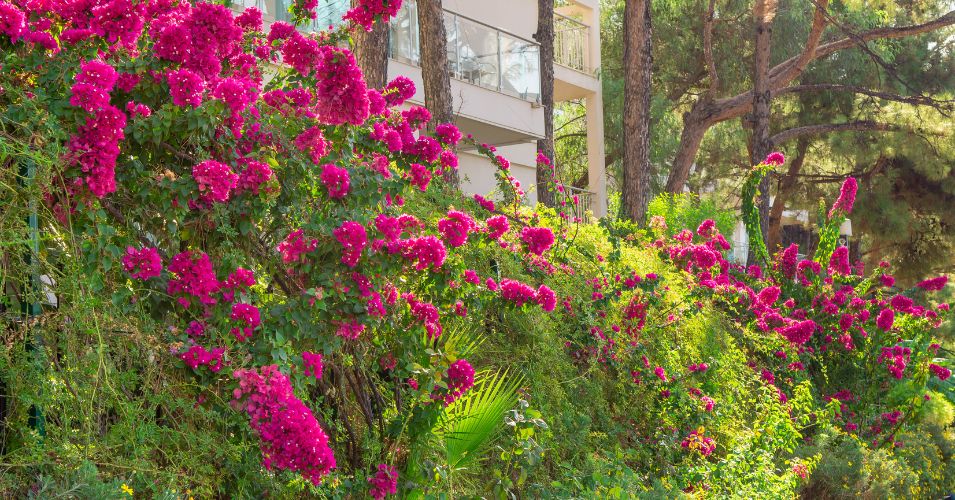
A garden does not need towering trees to feel bold and inviting. Tall shrubs can create the same sense of height while adding color, texture, and privacy in places where larger plants would not fit.
They are versatile enough to line a property, frame a patio, or serve as the backdrop for flower beds, all while providing lasting structure through the seasons. From colorful bloomers to evergreen favorites and space-saving varieties, there is a tall shrub for almost every landscape.
Here are some of the best options to help you add instant height and lasting character to your garden.
Flowering Tall Shrubs That Fill Your Garden With Color
If your garden feels flat, flowering tall shrubs can change that surprisingly quickly. They lift the eye upward, soften fences and walls, and fill empty corners with color that lasts for weeks or even months.
Unlike annual flowers that need replacing every year, these shrubs become permanent features that grow more impressive with each season.
Rose of Sharon is one of the best choices for gardeners who want dependable late-season blooms. While many plants begin to fade in midsummer, this shrub is just getting started.
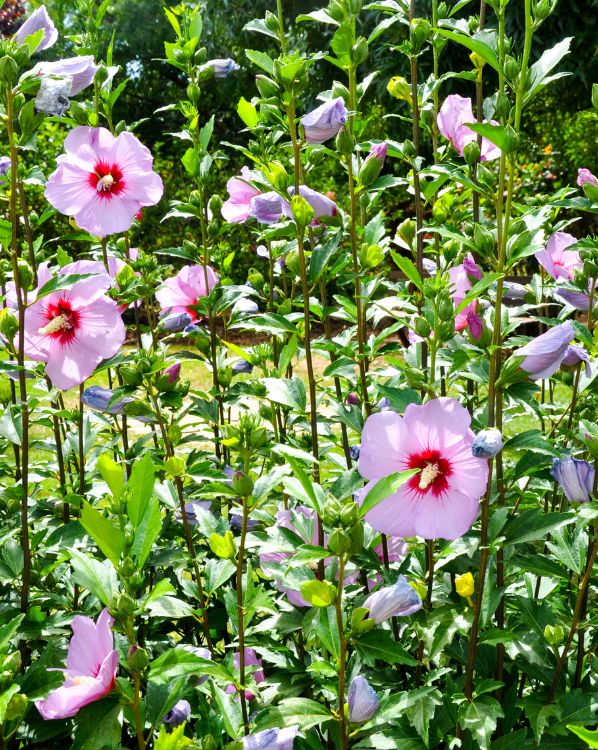
Growing around 8 to 12 feet tall, it produces large flowers in shades of pink, purple, blue, and white that continue well into early fall. It is also forgiving of different soil conditions, making it a smart pick for beginners who want plenty of color without constant attention.
Panicle hydrangea offers something completely different. Instead of large individual flowers, it produces oversized cone-shaped flower clusters that seem to glow in the summer sun.
Many varieties reach 8 to 15 feet tall, giving them enough height to anchor a flower bed or frame a garden entrance. As the season progresses, the blooms gradually shift from creamy white to soft pink, extending their display long after many other shrubs have finished flowering.
Few shrubs are as memorable as lilac when spring arrives. Growing between 8 and 15 feet tall, it fills the garden with fragrant flower clusters that have been loved for generations.
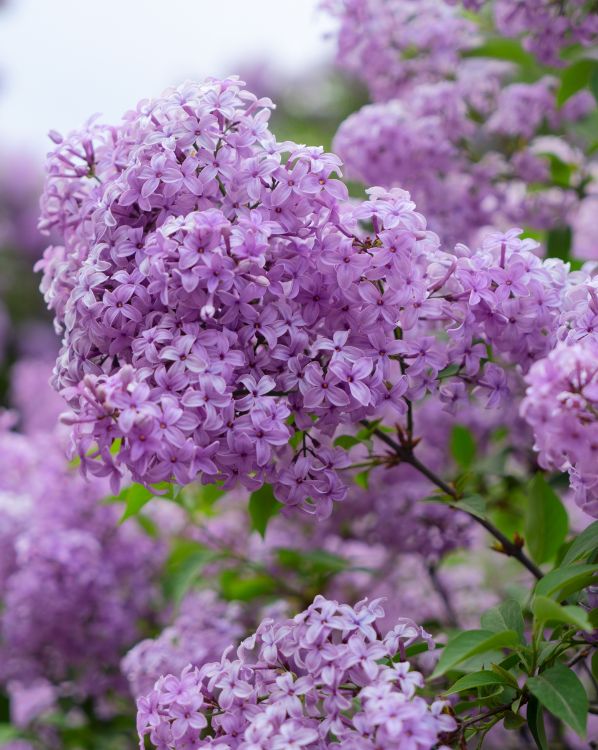
Besides their fragrance, lilacs also attract butterflies and other pollinators, making them a valuable addition to wildlife-friendly gardens.
Purple is the classic color, but white, pink, and lavender varieties are just as striking. Plant it where you can enjoy the scent from a patio, pathway, or open window, because its fragrance is every bit as impressive as its blooms.
Evergreen Tall Shrubs for Year-Round Structure
Color comes and goes with the seasons, but evergreen shrubs keep a garden looking established every day of the year.
They provide a steady backdrop for flowering plants in spring and summer, then become the stars of the landscape once deciduous shrubs have dropped their leaves. They are also among the best choices for creating privacy without installing a fence.
Arborvitae has become a go-to option for gardeners who want a fast, reliable screen. Depending on the variety, it can grow 10 to 30 feet tall while maintaining a naturally narrow shape.
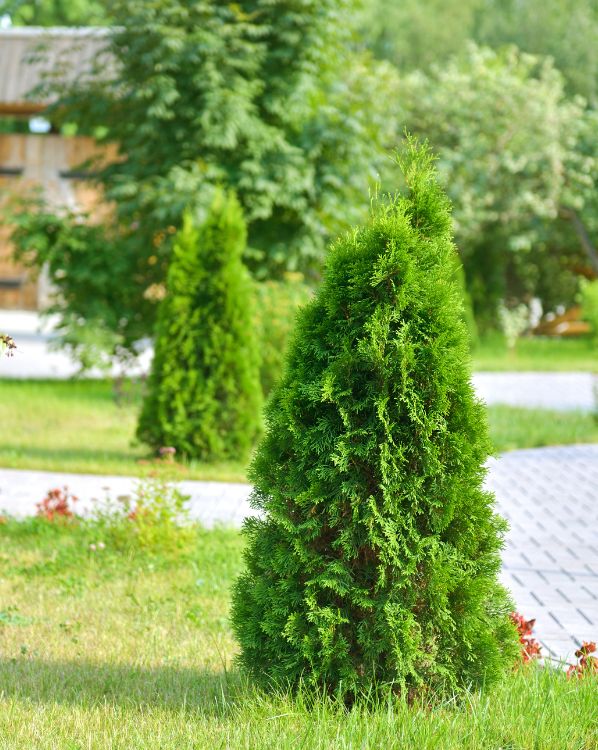
Its dense green foliage remains attractive year-round, making it useful for screening neighboring properties, reducing road noise, or creating a sheltered outdoor space. Once established, it asks for very little beyond occasional watering during dry spells.
Cherry laurel brings a softer, fuller look to the landscape. Mature plants often reach 15 to 20 feet tall, producing glossy green leaves that form a thick wall of foliage year-round.
Spring adds another layer of interest with upright clusters of small white flowers, followed by dark berries that birds enjoy. It also tolerates partial shade better than many evergreens, making it a practical solution for gardens that do not receive full sun all day.
If you prefer a more natural-looking privacy screen, wax myrtle is well worth considering.
This fast-growing evergreen shrub reaches 10 to 20 feet tall and develops dense green foliage that remains attractive year-round. The leaves release a pleasant fragrance when crushed, while the thick branches provide shelter for birds and other wildlife.
Wax myrtle also adapts well to different soil types and handles heat and humidity with ease, making it a practical choice for many gardens.
Fast Growing Tall Shrubs That Make an Impact Quickly
Some shrubs ask for patience. Others reward you almost immediately. If your goal is to create privacy, hide an empty fence, or make a new garden feel established, fast-growing varieties can save years of waiting.
They put on impressive growth each season and quickly become part of the landscape, especially when planted in a sunny spot with regular watering during their first year.
Forsythia is often one of the first shrubs to announce that spring has arrived. Before the leaves emerge, its branches are covered in brilliant yellow flowers that brighten the garden after winter.
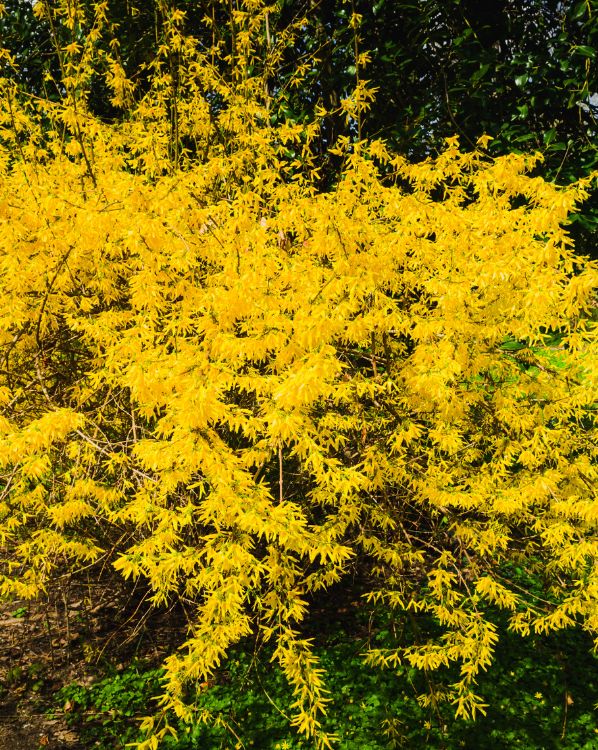
It usually grows to around 8 to 10 feet tall and can add several feet of growth in just a few seasons. Once the flowers fade, fresh green foliage takes over, making it an attractive hedge or informal screen for the rest of the year. Pruning immediately after flowering helps maintain its shape without reducing next year’s blooms.
Red twig dogwood grows quickly for a different reason to plant it. During spring and summer, it forms a full, leafy shrub that reaches about 8 to 10 feet tall.
In autumn, the foliage develops warm seasonal color before dropping; green stems change to reveal brilliant red stems that stand out against snow, frost, or an otherwise quiet winter garden. That changing appearance keeps the shrub interesting throughout the year instead of only during one season.
It also performs well in damp areas where other shrubs struggle, making it a practical and attractive choice.
Skinny Tall Shrubs That Make the Most of Small Spaces
Finding room for taller plants can be difficult when every part of the garden already has a purpose. Fortunately, some shrubs grow almost straight upward instead of spreading across the border.
These narrow varieties fit comfortably beside walkways, along fences, or near the front of the house, giving you extra height without making the space feel crowded.
Sky Pencil holly is one of the easiest shrubs to recognize because of its remarkably slim shape. Mature plants usually reach 8 to 10 feet tall while remaining only a couple of feet wide.
That makes it a natural choice for framing entrances, marking the corners of a garden bed, or creating a living accent where a broader shrub would simply not fit. Its evergreen foliage keeps its tidy appearance in every season, and little pruning is needed to maintain its column-like form.
Because it grows so narrowly, it also works well in containers placed beside entryways or patios.
Fine Line buckthorn brings a completely different texture while staying just as compact. Rather than producing broad leaves, it has delicate, threadlike foliage that gives the shrub a soft, graceful appearance.
Most plants grow around 5 to 7 feet tall and only 2 to 3 feet wide, making them well suited to smaller landscapes or modern garden designs.
Whether planted on their own or repeated along a pathway, they add height without competing for valuable growing space. Their unusual shape pairs especially well with ornamental grasses and flowering perennials.
Common Mistakes to Avoid When Growing Tall Shrubs
Planting a tall shrub is a long-term investment, so it pays to get the basics right from the start.
While most shrubs are surprisingly resilient, a few simple mistakes can limit their growth or leave them looking sparse instead of full and healthy. Fortunately, these problems are easy to avoid once you know what to watch for.
The most common mistake is choosing a shrub based only on how it looks at the garden center. A young plant may seem compact enough for a small corner, but it could eventually grow 12 feet tall and spread just as wide. Always check the mature size before planting, so your shrub has enough room to develop naturally.
It is equally important to match the shrub to the growing conditions in your yard. A sun-loving variety placed in too much shade may produce fewer flowers and weaker growth.
Likewise, shrubs that prefer moist soil often struggle in dry locations. Taking the time to choose the right plant for the right place usually leads to better results than trying to force a shrub to adapt.
Pruning can also cause problems when it is done at the wrong time. Many spring-flowering shrubs produce their flower buds months before they bloom, so cutting them back too early often means sacrificing an entire season of flowers.
A quick check of the recommended pruning time for each variety will help you avoid unnecessary disappointment.
Newly planted shrubs also need consistent watering while their roots establish. Giving them a deep soak every few days is generally more effective than light daily watering, which encourages shallow roots.
Adding mulch around the base helps the soil retain moisture and reduces weed growth, but keep it a few inches away from the trunk to prevent rot.
Finally, resist the temptation to pack shrubs too closely together. They may look a little small at first, but they will soon fill the available space.
Proper spacing improves air circulation, reduces the risk of disease, and allows every shrub to show off its natural shape without competing with its neighbors.
Final Thoughts
The right tall shrub can completely change the feel of a garden. It can soften a fence, frame a patio, provide welcome privacy, or become the feature that catches your eye every time you step outside.
Better still, these plants continue improving the landscape year after year, making them one of the most rewarding additions you can grow.
Whether you choose flowering shrubs for their seasonal display, evergreens for lasting structure, fast growers for quick results, or narrow varieties for smaller spaces, success starts with choosing plants that suit your climate and available space.
Give them the right conditions, allow room for mature growth, and they will reward you with height, color, and character for many years to come.