
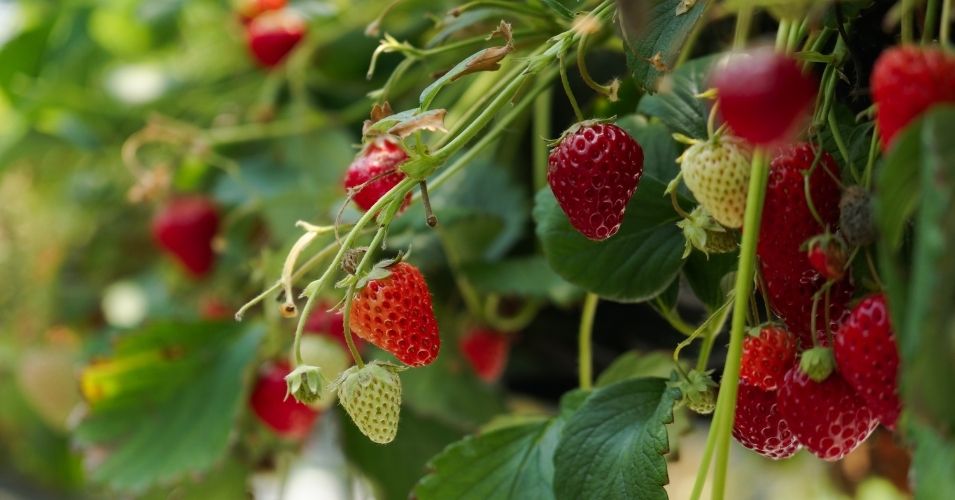
Strawberries are among the most rewarding fruits to grow, offering sweet berries in summer and lush greenery through the warm months.
By the time fall arrives, the plants begin to slow down, but this does not mean your work is finished.
The care you give strawberries in fall shapes their health and productivity for the year ahead.
With the right steps, you can strengthen roots, reduce disease, and prepare the bed for winter. Fall is the time to secure next year’s harvest by protecting and nourishing your plants.
Trim Plants After the Harvest Ends
Strawberries pour their energy into producing sweet, juicy berries throughout the summer, and by the time fall arrives, the plants are often worn out. Their leaves may look ragged, their stems tired, and the bed cluttered with runners and spent foliage.
Trimming strawberry plants after the harvest ends is one of the most important fall tasks because it cleans the bed, reduces disease, and gives the crowns a chance to strengthen before winter.
The first step in trimming is removing old leaves. Once fruiting has finished, many of the larger leaves begin to yellow or brown. These leaves no longer contribute much to the plant’s growth and instead can harbor pests and fungal spores.
Use sharp scissors or garden shears to cut them back to about one inch above the crown. Always take care not to cut into the crown itself, as this is the heart of the plant where new growth will emerge.
Runners are another part of the plant to address in fall. During the growing season, strawberries often produce long stems that sprawl across the bed, sending out baby plants wherever they touch the soil.
While runners are useful for propagation, they also drain energy from the mother plant. In fall, it is best to thin them out, leaving only the strongest or those you want to replant. Cutting away excess runners allows the mother plant to redirect strength into its roots rather than producing more offshoots.
Trimming also makes it easier to apply mulch later in the season. A tidy bed ensures mulch can be spread evenly without being blocked by tangled stems. This creates better protection for the crowns when temperatures drop.
By trimming strawberries in fall, you prepare them for dormancy in a healthier state. The cleaned plants can store energy in their roots rather than wasting it on unnecessary growth. When spring arrives, they will respond with fresh leaves, vigorous flowering, and a more productive harvest.
Renew Strawberry Beds with Compost
Strawberries are heavy feeders, and after producing a season’s worth of fruit, the soil they grow in is often depleted. Fall is the perfect time to renew strawberry beds with compost, giving the plants a supply of nutrients to store in their roots for winter and to fuel early growth in spring.
This step not only enriches the soil but also improves its texture, making it better able to support healthy strawberry plants year after year.
Compost provides a slow and steady release of nutrients, including nitrogen, phosphorus, and potassium. These elements strengthen the root system, improve disease resistance, and encourage strong flowering when the next growing season begins.
Spread a layer of compost about two inches thick across the bed, gently working it into the top layer of soil around the plants. Avoid piling compost directly on top of the crowns, as this can cause them to rot during damp fall weather.
One of the added benefits of compost is that it supports beneficial microbes in the soil. These organisms help break down organic matter, release nutrients in forms the plants can absorb, and improve overall soil health. By adding compost in fall, you give these microbes time to work through the cooler months, preparing the bed for vigorous spring growth.
Compost also improves the physical condition of the soil. In heavy clay soil, it increases drainage, reducing the chance of roots sitting in waterlogged ground. In sandy soil, it improves moisture retention, keeping the plants from drying out too quickly. This balance is especially valuable during winter when conditions fluctuate between wet and dry.
Renewing beds with compost also prepares the ground for mulch. A layer of compost beneath the mulch provides both nourishment and insulation, creating an ideal environment for crowns to rest safely through the cold.
By refreshing strawberry beds with compost in fall, you are not only feeding the plants but also laying the foundation for healthier growth and more abundant harvests in the future.
This small investment of time ensures that your strawberry patch will remain strong, productive, and ready for the next season.
Control Runners for Better Growth
Strawberry plants are known for their ability to spread rapidly by producing runners, which are long stems that grow outward and form new baby plants wherever they touch the soil.
While this natural habit allows strawberries to multiply quickly, it can also create overcrowded beds and reduce the energy available for fruit production. In fall, controlling runners becomes an important step to maintain balance, improve plant vigor, and prepare the patch for a productive season ahead.
If runners are left unchecked, they tangle across the bed and compete with the mother plants for water and nutrients. This often results in smaller, weaker crowns and fewer berries the following year. By thinning out the runners in fall, you allow the established plants to conserve their strength, focusing on storing energy in their roots rather than continuing to produce new offshoots.
Begin by examining each plant carefully. Identify which runners are strong and healthy, with well-developed baby plants at their ends. These can be saved if you want to expand your patch or replace older, declining plants.
Use scissors or garden shears to clip the runner stem close to the mother plant, then gently transplant the baby into a new spot with rich, well-prepared soil. Water lightly to help it settle.
Any runners that are thin, weak, or unnecessary should be removed entirely. Cutting them away prevents wasted energy and reduces overcrowding. It also keeps the strawberry bed looking tidy, which makes it easier to add compost and mulch later in the season.
Managing runners in fall is also an opportunity to evaluate your patch. If certain plants are struggling or the bed is too dense, you can thin out both runners and older plants, creating better spacing for air circulation and healthier growth.
By controlling runners in fall, you create a stronger foundation for your strawberry plants. The crowns will rest through winter with more energy stored, and when spring arrives, the plants will reward you with vigorous growth and a harvest that is both larger and sweeter.
Protect Plants with Mulch and Covers
Strawberry plants may be hardy, but their shallow roots and exposed crowns make them vulnerable to winter weather.
Frost, fluctuating temperatures, and drying winds can all cause damage that affects the following year’s harvest. Protecting plants in fall with mulch and covers is one of the most effective ways to shield them from these challenges and ensure their survival.
Mulch is the first line of defense. Spread a layer of straw, pine needles, or shredded leaves over the strawberry bed once the plants have gone dormant and the ground has cooled. Aim for a depth of three to four inches, which is enough to insulate the crowns from harsh cold without smothering them.
Mulch keeps the soil temperature stable, preventing the freeze and thaw cycles that can push crowns out of the ground and expose them to freezing air.
Mulch also helps regulate soil moisture. During winter, alternating periods of rain, snow, and dry spells can stress plants. A proper mulch layer holds enough moisture to keep the roots from drying out but prevents the soil from becoming waterlogged. As an added benefit, organic mulches gradually decompose, enriching the soil and supporting healthy microbial activity.
Covers provide additional protection in harsher climates. Burlap, row covers, or even evergreen branches can be laid gently over the mulch to shield plants from strong winds and severe frosts.
These coverings allow air circulation while offering an extra barrier against cold. Avoid using plastic directly, as it traps moisture and can lead to rot.
In areas with heavy snowfall, the snow itself acts as an excellent insulator. However, because snow levels are unpredictable, a mulch layer should always be applied first to guarantee protection.
By combining mulch with protective covers, you create a safe winter environment for your strawberry plants. This preparation ensures that crowns remain secure, roots stay healthy, and the patch awakens in spring ready to produce lush foliage and abundant berries.
Divide Old Plants for Fresh Starts
Strawberry plants are productive, but they do not remain at their peak forever. After three to four years, older plants often begin to decline, producing fewer and smaller berries.
The crowns may become woody, the foliage less vigorous, and the overall patch less reliable. Dividing old plants in fall is one of the best ways to refresh your strawberry bed and ensure a steady harvest in the seasons ahead.
The process begins with identifying which plants are past their prime. Look for crowns that are crowded, misshapen, or not sending out as many healthy leaves as younger plants nearby.
These older crowns can be dug up and separated into smaller, more manageable sections. Each division should have a portion of healthy roots and at least one strong crown that can regrow.
To divide, use a spade or garden fork to gently lift the plant from the soil. Shake away excess dirt and inspect the crown. You will often find that older plants naturally separate into smaller units. With a sharp, clean knife or by gently pulling them apart, divide the crown into sections. Be sure to discard any parts that appear diseased, overly woody, or damaged.
Once divided, prepare new planting holes with enriched soil. Compost added at this stage ensures the divisions have the nutrients needed to establish strong root systems.
Plant each division at the same depth as the original, with the crown just above soil level, and space them about twelve to eighteen inches apart to allow for growth. Water the divisions thoroughly to help them settle and mulch lightly to protect them as winter approaches.
Dividing old strawberry plants is not only a way to maintain productivity but also an opportunity to expand your patch or start a new bed in another part of your garden.
By doing this in fall, you allow the plants to rest and adapt before the cold sets in, giving them a strong foundation for the next growing season. With this renewal, your strawberry plants can continue providing sweet and abundant harvests for many more years.
Final Thoughts
Strawberry plants may slow their growth as fall sets in, but the care they receive during this season determines how well they will perform in the year ahead.
Tasks like trimming back leaves, enriching the soil, controlling runners, protecting crowns with mulch, and dividing older plants all work together to prepare them for dormancy.
These steps ensure the plants store enough strength to endure winter while setting the stage for vigorous growth and fruitful harvests in spring. Each action you take now pays dividends when the plants burst back to life.
With thoughtful attention in fall, your strawberry patch will remain productive, resilient, and ready to reward you with baskets of berries season after season.