
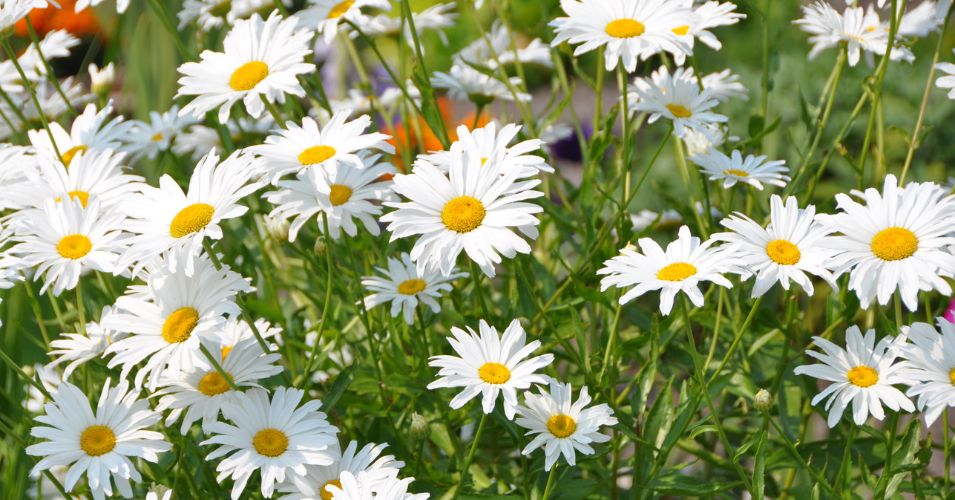
Shasta daisies seem like the sort of flowers you plant once and enjoy for years. They have cheerful white petals, sunny yellow centers, and a familiar look that fits easily into almost any flower bed.
So why do some gardeners eventually dig them up?
After a few seasons of growing these classic perennials, a few frustrations can start to show. Clumps get bigger, flowers need regular tidying, stems may fall over, and leaves do not always stay attractive.
None of these problems makes Shasta daisies terrible plants, but together they explain why some gardeners eventually decide they have had enough.
Their Neat Clumps Can Turn Into a Spreading Problem
Shasta daisies are easy to underestimate when they are young. A small plant sits politely in its corner of the border, flowers for the summer, and seems to ask for very little in return.
A few years later, that same plant can occupy considerably more ground than expected.
Shasta daisies grow in clumps that gradually widen as the plants mature. That is hardly a problem in a large cottage garden where plants are allowed to mingle, but it can be irritating in a smaller bed where every inch has already been spoken for.
Before long, a generous clump can start pressing into nearby perennials and making the border feel crowded.
Keeping it under control means division. Every few years, an established plant may need to be dug out and split into smaller pieces. It is not especially difficult work, but it involves plenty of digging, lifting, separating, and replanting.
Then comes the question of what to do with all the spare pieces.
Giving divisions to friends is fun the first couple of times. Finding homes for another pile of Shasta daisies can be less exciting when the rest of the garden is already full.
Leaving an old clump alone is not always a great answer either. As plants become crowded, growth can lose some of its vigor, and the center of the clump may begin to look sparse or tired. Dense foliage can also restrict airflow, particularly when plants are packed closely together.
For gardeners who enjoy moving plants around and regularly redesigning their beds, none of this will sound particularly troublesome. Dividing a large clump might be another enjoyable autumn or spring job.
Gardeners chasing a genuinely low-maintenance border may feel differently.
A perennial that needs digging up every few years to stay healthy and fit its space starts to look less carefree than those cheerful white flowers first suggested.
Beautiful Blooms Often Come With an Untidy Aftermath
Catch a Shasta daisy at the right moment, and it is hard to understand why anyone would remove it. Fresh white petals surround sunny yellow centers, dozens of flowers can open together, and the whole plant has that relaxed summer-garden look people spend years trying to create.
Come back a little later, and the picture can be quite different.
Shasta daisy flowers do not disappear neatly when their best days are over. Petals droop and turn brown, yellow centers darken, and spent flower heads remain on their stems unless somebody removes them. With new buds still opening nearby, a mature plant can quickly become a mixture of lovely fresh daisies and decidedly tired ones.
That is where the deadheading begins.
One or two plants are easy enough to tidy. A big established patch is another story, especially because every flower does not finish at the same time. There always seems to be another faded bloom waiting a few days after the last round of cutting.
Anyone who likes a slightly wild garden may barely notice.
In a neat border, however, those aging flowers can stand out surprisingly quickly.
The leaves do not necessarily save the display once flowering slows down. As summer progresses, foliage can turn yellow, become marked, or look generally worn, leaving a plant that takes up plenty of room without contributing much visually. A Shasta daisy in full bloom can be a star. Afterward, it can feel more like something the gardener is waiting to cut back.
That short window of peak beauty is enough for plenty of people. Others start questioning whether the flowers earn the maintenance and space they require.
When perennials offer attractive foliage, interesting seed heads, longer flowering periods, or stronger structure after their blooms fade, repeatedly tidying Shasta daisies can start to feel like work for a display that disappears too quickly.
Floppy Stems Can Spoil the Display
Shasta daisies can spend weeks growing into a beautiful upright clump, only for one night of bad weather to flatten the whole thing. A downpour is often enough.
Water weighs down the open flowers, stems bend outward, and suddenly the plant lies across the path or rests on whatever happens to be growing next door.
It is particularly annoying because the flowers may still be perfectly good.
Taller varieties tend to make the problem more obvious. Their long stems have plenty of work to do once large flower heads open, and strong wind or heavy rain can push them past their limit. Rather than forming the upright mass of white flowers shown on the plant label, the clump starts opening out from the middle.
The result can look more collapsed than carefree.
Sometimes gardeners accidentally make matters worse by being too kind. Shasta daisies planted in very rich ground or given lots of fertilizer can put on generous growth. More growth sounds desirable, but soft, rapidly produced stems are not necessarily better at holding themselves upright.
Too little sun can also make plants reach rather than grow into sturdy, compact clumps.
Plant supports are the obvious fix. Put a support around the plant early in the season, and the stems can grow through it, helping to hide the structure underneath. Forget until the flowers are already leaning and the job becomes considerably more fiddly.
Tying individual stems back after every spell of rough weather gets old quickly.
There are ways around the issue. Choosing a shorter variety can make a noticeable difference, as can providing plenty of sun and avoiding excessive feeding. A sheltered spot may help taller plants stay upright longer, too.
Still, not everybody wants to plan for a flower falling over before it has even bloomed.
After a few summers of staking, tying, and rescuing flattened stems, some gardeners decide they would rather grow something capable of standing on its own.
Pests and Disease Can Take Away Their Easygoing Appeal
The trouble sometimes starts with a few ugly leaves.
Perhaps dark spots appear near the bottom of the plant. Maybe a white, dusty-looking coating appears across the foliage. On closer inspection, there might even be tiny aphids clustered around the softer stems and new growth.
None of these problems automatically spells disaster for a Shasta daisy, but they can take the shine off a plant grown largely for its fresh, cheerful appearance.
Powdery mildew is particularly hard to overlook. The pale coating can make otherwise green leaves look as though someone dusted them with flour.
Leaf spot diseases can produce another kind of mess, leaving foliage marked with brown or dark patches that become increasingly noticeable as the season moves along.
Then there are aphids. A small number may cause little concern, but a larger gathering can distort tender growth and leave sticky residue behind. Slugs and snails can also chew young leaves, especially when plants are small, or conditions stay damp.
A healthy plant will often cope with a certain amount of damage. The bigger problem for many gardeners is appearance.
Shasta daisies are not usually tucked away in some forgotten corner. They are commonly planted in borders where their white flowers are meant to stand out, so shabby foliage underneath those blooms is difficult to disguise.
A crowded clump can make matters worse. When stems and leaves are packed together, air does not move through the plant as freely. Dividing older plants and leaving decent gaps between them can help, as can watering the soil rather than repeatedly soaking the leaves.
Of course, those precautions require attention.
That is where patience can start wearing thin. A plant that already needs deadheading and occasional dividing feels much less appealing when spotted leaves or unwanted insects join the list.
Plenty of gardeners will deal with these problems and keep enjoying the flowers. Others look at the damaged foliage, look at the rest of the border, and decide that next year the space can go to something less troublesome.
Sometimes Other Perennials Offer More
Sometimes a Shasta daisy gets removed even though there is nothing particularly wrong with it. It flowers. It grows. It comes back the following year. The gardener reaches a point where that patch of ground could be doing something more interesting.
This happens surprisingly often as gardens mature.
When space is plentiful, it is easy to keep a plant because it looks nice for a few weeks. Once beds fill up, every plant faces a little more competition for its place. Suddenly, a short burst of white flowers doesn’t seem as impressive when another perennial can provide color or texture for several months.
Shasta daisies can look rather plain outside their flowering period. Their green leaves do a job, but they are unlikely to be the part of the plant anyone stops to admire. After the flowers finish, you may also have a fair amount of tired growth to cut away.
Compare that with a perennial that changes through the seasons and the difference becomes noticeable.
Some plants emerge with attractive spring foliage before producing flowers and later developing interesting seed heads. Others keep a strong shape well into autumn or winter. Gardeners interested in wildlife may also start choosing flowers according to how useful they are to local insects, rather than how pretty they look from the kitchen window.
Then there is the workload.
One Shasta daisy that needs deadheading is hardly a burden. Add several clumps that need dividing, a tall variety that needs support, and foliage that occasionally looks rough by late summer, and the relationship becomes less simple.
Gardening tastes change too. The person who once loved a border filled with traditional cottage flowers might eventually become fascinated by grasses, prairie-style planting, drought-tolerant perennials, or plants with unusual leaves.
Something has to make way for those experiments.
Shasta daisies often lose their place not because gardeners suddenly dislike them, but because so many other plants are worth trying. In a crowded garden, curiosity can be all the reason needed to pick up a spade.
Final Thoughts
There will always be gardens where Shasta daisies look completely at home. Few flowers create the same simple summer scene as those white petals surrounding bright yellow centers, especially when a large clump is in full bloom.
Living with the plant for several years can tell a different story.
Deadheading becomes another weekend job. An old clump needs dividing. Tall stems collapse after rain. Leaves that looked fresh in early summer become less appealing later on. None of these issues alone is a reason to pull out every Shasta daisy.
Together, though, they can be enough to change someone’s mind.
Other gardeners will happily put up with the extra work because they love the flowers. That is part of gardening. A plant that feels troublesome in one yard can be a favorite in another.
And when a Shasta daisy finally does come out, the empty patch offers something gardeners rarely resist: a chance to grow something new.