
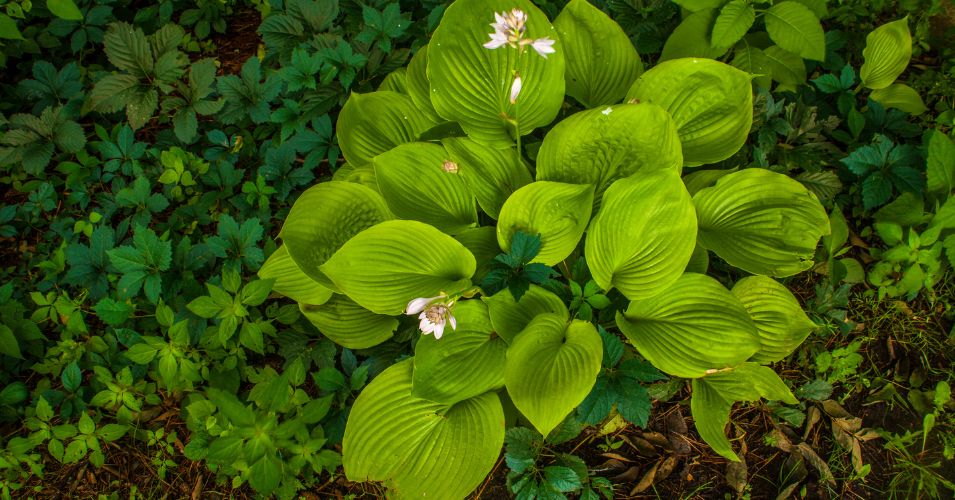
Hostas have a way of making even the shadiest corners of a garden feel full of life. Their large, leafy foliage creates a lush display from spring through summer, but by midseason, they often start to show a little wear.
A few holes from slugs, faded leaves, or spent flower stalks are all part of growing hostas. The good news is that a little careful pruning can make a big difference.
Knowing what to remove and what to leave alone will keep your plants looking healthy, encourage strong growth, and help them stay attractive until autumn arrives.
Why Summer Pruning Matters for Healthy Hostas
By the time summer arrives, hostas have usually reached their peak. Their large leaves fill empty spaces in shady borders, and many varieties send up flower stalks that attract bees and hummingbirds.
It is also the time of year when wear and tear starts to show. A few damaged leaves are completely normal, but allowing too much old or unhealthy growth to remain can leave the whole plant looking tired.
Summer pruning is not about cutting the plant back. It is about knowing which parts have done their job and can now be removed.
A yellow leaf that will never turn green again, a flower stalk that has finished blooming, or foliage badly shredded by slugs all detract from the plant’s appearance. Removing them helps the hosta look fresh without interrupting its natural growth.
There is another practical benefit. Thick clumps of leaves can trap moisture after rain or watering. When damaged foliage is left sitting in the middle of the plant, it creates a damp environment where fungal problems are more likely to develop.
Trimming away a handful of worn-out leaves allows more air to move through the clump, helping everything dry a little faster.
Regular pruning also encourages you to spend more time looking closely at your plants. That extra attention often pays off. You are more likely to notice slug damage before it becomes severe, spot leaves with unusual discoloration, or catch signs that the plant needs more or less water.
Small issues are usually much easier to deal with than problems that have been ignored for weeks.
The best part is that hostas rarely need much work. A quick trim every so often is usually enough to keep them looking their best. Instead of spending hours cutting back healthy growth, you remove what the plant no longer needs.
That small amount of effort can make a noticeable difference in the garden’s overall appearance for the rest of the season.
Signs Your Hosta Is Ready for a Trim
Hostas have a way of letting you know when they need a little maintenance. You do not need to follow a specific date on the calendar. In most cases, the plant itself provides all the clues you need if you take a few minutes to look it over every week or two.
The easiest sign to spot is fading foliage. Leaves that have turned mostly yellow or brown will not recover, even with extra water or fertilizer. They have reached the end of their life and can be cleanly clipped at the base. Once they are gone, the healthy leaves stand out much more.
Damage is another reason to get the pruners out. Hostas are well known for attracting slugs and snails, while deer and rabbits may also take a bite when given the chance.
A leaf with a few holes can stay where it is, but one that has been ripped apart or eaten down to the veins usually does little for the plant. Removing the worst leaves gives the entire clump a cleaner, healthier appearance.
Take a look at the flower stalks too. They add height and interest while the blooms are open, but once the flowers have faded, the stalks begin to dry out. Many gardeners cut them off near the base rather than leaving them standing above the foliage for the rest of summer.
It is also worth checking for anything that looks out of the ordinary. Leaves with dark spots, soft patches, or signs of rot should be removed as soon as possible. Cleaning your pruners between cuts is a good habit if disease is suspected, especially when moving from one plant to another.
A healthy hosta does not need constant trimming, and that is part of its appeal. When you remove only the leaves and stalks that have clearly finished their job, the plant keeps its full, lush shape while staying neat and vigorous through the warm summer months.
How to Prune Hostas Without Damaging the Plant
The good news is that pruning hostas is hard to get wrong if you take your time. Unlike roses or shrubs that need careful shaping, hostas only need a little attention here and there during summer.
The secret is knowing what to leave behind just as much as knowing what to remove.
Before making a single cut, have a look at the whole plant. Walk around it if you can. A hosta often looks very different from one side than the other, and taking a moment to study it helps you spot the leaves that have genuinely reached the end of their usefulness.
A clean pair of garden scissors or pruning shears is all you need. Sharp blades make neat cuts that heal quickly, while dull tools tend to crush the stems instead. If you have been working on diseased plants, wipe the blades before moving on to your hostas.
Start with the obvious candidates. Yellow leaves, brown foliage, and stems that have snapped in the wind can all be removed. Follow each leaf stem down to where it meets the crown and snip it cleanly. Pulling leaves by hand might seem quicker, but it can tear healthy tissue beneath the surface.
Do not rush to remove every leaf with a few holes. Hostas are famous for attracting slugs, and perfect foliage is not always realistic by midsummer. If a leaf is still mostly green and holding its shape, it is still contributing to the plant. Save your attention for leaves that are badly shredded or beginning to collapse.
Once the flowers have faded, the flower stalks can be cut back near the base. They have finished their display, and removing them gives the plant a fresher appearance without affecting the surrounding foliage.
When you think you are finished, take another step back. Many gardeners discover they have already removed everything that needed to go.
A hosta should still look full and leafy after pruning. If it does, you have struck the right balance.
Common Mistakes That Can Hold Your Hostas Back
It is easy to assume that more pruning will lead to a healthier plant, but hostas rarely work that way. In fact, many problems begin with good intentions rather than neglect.
A common example is getting carried away with the shears. Once you start removing damaged leaves, it is tempting to keep going until every leaf looks perfect. Before long, half the plant has disappeared. While that might satisfy the urge for a tidy garden, the hosta loses valuable foliage that it still needs to produce energy.
Another habit worth avoiding is treating every damaged leaf as a problem. A few holes from slugs or a slightly ragged edge after a summer storm are simply part of growing hostas outdoors.
Those leaves are still feeding the plant, even if they are no longer picture perfect. Chasing flawless foliage often leads to unnecessary pruning.
Timing can trip people up as well. Some gardeners leave dead leaves on the plant for weeks because they plan to deal with everything at once. Others cut the entire hosta back in midsummer, hoping a fresh flush of leaves will appear. Neither approach gives the best results. Removing worn-out growth as you notice it is usually enough.
The tools you use deserve a little attention too. Blunt blades leave rough cuts that take longer to recover, and dirty tools can carry disease from one plant to another. It only takes a minute to clean your shears before getting started, yet many people skip that step.
Perhaps the easiest mistake to avoid is forgetting that hostas are naturally relaxed plants. They are not meant to look perfectly manicured every day of summer. A few blemishes are normal and do not mean the plant is struggling.
By pruning lightly and only when there is a clear reason, you allow your hostas to keep their lush, full appearance while staying healthy until autumn.
Caring for Hostas After Summer Pruning
Once the pruning is finished, your hostas do not need any special treatment. In fact, this is usually the best time to leave them alone and let them get back to growing.
A little routine care is all it takes to help them stay healthy for the rest of summer.
Begin by clearing away everything you have removed from the plant. Old leaves and flower stalks may not look like much, but they can stay damp after rain and provide shelter for slugs and other garden pests.
If any of the trimmed foliage shows signs of disease, dispose of it with your garden waste rather than adding it to the compost.
Take a few minutes to check the soil while you are there. Hostas grow best when the soil stays consistently moist, especially during hot weather. If the ground feels dry a few inches below the surface, give the plant a slow, deep watering. That encourages the roots to grow downward rather than remain close to the surface, where the soil dries out more quickly.
Mulch is another simple way to help your hostas through the warmest weeks of the year. A layer of bark, compost, or shredded leaves helps the soil hold moisture and reduces the need for frequent watering. Just avoid piling mulch directly against the crown, as trapped moisture can sometimes lead to rot.
After pruning, resist the temptation to keep fussing over the plant. Hostas do not need constant trimming, and they certainly do not need every imperfect leaf removed. A few holes from slugs or a slightly faded leaf here and there are perfectly normal by midsummer.
Instead, get into the habit of glancing at your hostas whenever you are working in the garden. If you spot a leaf that has turned yellow or a flower stalk that has finished blooming, deal with it there and then.
Those small maintenance tasks take only a minute, but they keep the plant looking fresh without ever turning pruning into a major task.
Final Thoughts
Hostas have earned their reputation as dependable garden plants because they ask for very little in return. Summer pruning is simply one small part of keeping them at their best.
Rather than giving the plant a heavy cut, focus on removing what is no longer useful and let the healthy foliage do the rest of the work.
A few careful snips throughout the season are often all that is needed to keep a hosta looking full, tidy, and vigorous. Combined with steady watering and the occasional check for pests or disease, those small efforts can make a noticeable difference by the time autumn arrives.
The beauty of growing hostas is that they never demand perfection. Give them the basics, avoid overdoing the pruning, and they will continue rewarding you with lush, impressive foliage year after year.