
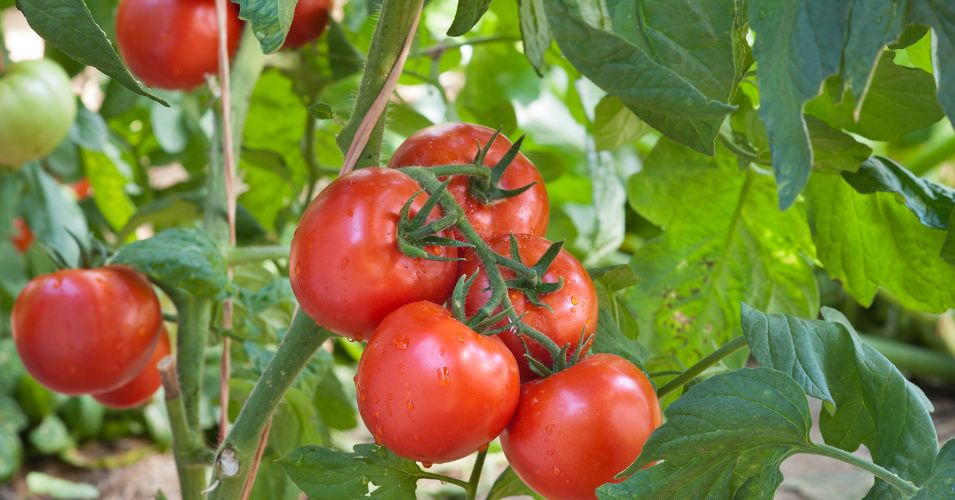
Tomatoes have a reputation for being one of the easiest vegetables to grow, but getting a plant to survive and getting one to produce baskets of flavorful fruit are two very different things.
The secret often comes down to how well you feed it. Tomatoes require many nutrients as they grow, flower, and produce fruit, so using the right fertilizer can have a noticeable impact on both yield and flavor.
Natural fertilizers are a popular choice because they nourish plants while improving the soil. In this guide, you’ll discover which options work best and how to use them successfully.
Why Tomatoes Need the Right Nutrients
Growing tomatoes is rewarding, but they ask for more from the soil than many other vegetables. A tomato plant starts as a small seedling, then quickly develops thick stems, large leaves, clusters of flowers, and eventually heavy fruit.
That kind of growth uses a surprising amount of energy, so poor soil often shows its limits before the season is over.
When nutrients are in short supply, tomato plants usually let you know. Leaves may lose their rich green color, growth slows, and flowers may drop before they have a chance to produce fruit. Even if tomatoes do develop, they are often smaller and less flavorful than expected.
The three nutrients gardeners hear about most are nitrogen, phosphorus, and potassium. Each one has a different job.
Nitrogen encourages leafy growth during the first part of the season. Phosphorus supports strong roots and helps plants produce flowers. Potassium becomes especially important once fruit begins to develop because it supports healthier plants and higher-quality tomatoes.
Those are not the only nutrients that matter. Tomatoes also need smaller amounts of calcium, magnesium, and several trace minerals. Calcium is particularly important because an inconsistent supply can contribute to blossom end rot, especially when watering is uneven.
More fertilizer is not always better. Many new gardeners assume feeding tomato plants as often as possible will lead to bigger harvests.
In reality, overfeeding can have the opposite effect. Too much nitrogen often results in tall plants with dark green leaves and very little fruit. The plants look impressive, but the harvest can be disappointing.
Healthy soil solves many of these problems before they begin. Soil rich in organic matter stores nutrients, improves drainage, and supports beneficial organisms that help make those nutrients available to plant roots.
Instead of relying on quick fixes throughout the season, it provides tomatoes with a steady supply of what they need as they grow. Once the soil is working with you instead of against you, keeping tomato plants healthy becomes much easier.
Best Natural Fertilizers for Healthy Tomato Plants
There is no single natural fertilizer that does everything a tomato plant needs. The best results usually come from combining a few different options rather than relying on a single product. Each fertilizer contributes something different, whether it is major nutrients, trace minerals, or better soil structure.
Compost is the starting point for many successful tomato gardens. It improves the soil while adding a broad mix of nutrients that become available over time. A few inches worked into the soil before planting gives tomatoes an excellent start, and adding more around the base of the plants later in the season provides an extra boost.
Well-aged manure is another reliable choice. Cow, horse, and chicken manure all contain valuable nutrients, but they should always be fully composted before use. Fresh manure is too strong and can damage roots while creating other problems in the garden.
Many gardeners also swear by worm castings. They may not look impressive, but they are packed with nutrients and beneficial microbes that help plants make better use of what is already in the soil. Mixing a handful into each planting hole is a simple way to encourage healthy growth from the beginning.
Bone meal is worth considering if your soil is low in phosphorus. Since phosphorus supports root development and flowering, adding bone meal before planting can give tomatoes a stronger foundation during the first few weeks of growth.
Fish emulsion is popular because it works quickly. It supplies nitrogen in a form plants can absorb without waiting weeks for it to break down. That makes it especially useful while young tomato plants are putting on new growth, although it is usually best to reduce nitrogen once flowering becomes the priority.
Seaweed products, including kelp meal and liquid seaweed, are often used alongside other fertilizers rather than by themselves. They supply trace minerals that support overall plant health and can help tomatoes cope with environmental stress during the hottest part of summer.
Rather than searching for one perfect fertilizer, think about building healthy soil. Compost can provide the foundation, while products like worm castings, bone meal, fish emulsion, and seaweed fill in the gaps. Together they create a steady source of nutrients that supports strong plants and a more productive harvest.
How to Feed Tomatoes Throughout the Growing Season
A tomato plant does not need the same type of feeding from spring until harvest. As it grows, its priorities change, and your fertilizer routine should change with them.
Matching your feeding schedule to each growth stage helps keep plants healthy without encouraging unnecessary foliage.
Start by preparing the soil before planting. Mixing plenty of compost into the bed gives tomato roots access to nutrients from day one while also improving drainage and moisture retention. If you use worm castings or bone meal, this is the ideal time to work them into the soil because they release nutrients gradually.
After planting, resist the urge to fertilize heavily.
Young tomato plants spend their first few weeks settling into their new home. A small amount of balanced organic fertilizer or diluted fish emulsion is usually enough to support fresh growth. Giving too much nitrogen this early often produces impressive-looking plants that later struggle to set plenty of fruit.
Once flower buds begin forming, it is worth changing your routine. Instead of chasing leafy growth, focus on keeping the plant healthy while it directs energy toward flowering and fruit production. A layer of compost around the base of each plant works well, especially when watered in regularly.
Liquid seaweed is another popular choice because it supplies trace minerals without adding excessive nitrogen.
As the first tomatoes begin to swell, consistency becomes more important than frequent feeding. Large doses of fertilizer are rarely necessary at this stage. Healthy soil should already be supplying a steady flow of nutrients, with occasional top-ups when growth begins to slow.
The plants themselves are often the best guide. Deep green leaves, steady growth, and new flowers appearing regularly usually mean everything is on track. If growth stalls or the foliage starts losing its color, a light feeding may be enough to get the plants moving again.
There is no universal timetable that suits every garden. Weather, soil type, and the fertilizer you choose all influence how often tomatoes need feeding. A flexible approach almost always produces better results than sticking to a rigid schedule.
Natural Fertilizers vs Synthetic Fertilizers
Choosing between natural and synthetic fertilizers is not always as straightforward as it seems. Both can grow healthy tomato plants, but they work in very different ways and produce different results over time.
Natural fertilizers feed both the plant and the soil. Compost, aged manure, worm castings, and similar materials gradually release nutrients while encouraging earthworms, beneficial bacteria, and other organisms that keep the soil productive.
The improvements are not limited to one growing season. With regular use, the soil often becomes easier to work and better at holding water and nutrients.
Synthetic fertilizers focus on speed. Their nutrients are available almost immediately, making them useful when tomato plants need a quick boost or when a specific nutrient deficiency has been identified. That rapid response is one reason they are widely used by commercial growers and gardeners looking for fast results.
For young tomato plants, a balanced fertilizer with an NPK ratio such as 10-10-10 or 5-5-5 is a good choice because it supports root development and healthy foliage.
Once flowering begins, many gardeners switch to a formula with less nitrogen and higher levels of phosphorus and potassium, such as 5-10-10 or 3-4-6. This encourages the plant to allocate more energy to producing flowers and tomatoes rather than excessive leafy growth.
Speed, however, comes with trade-offs. Because synthetic fertilizers act quickly, it is much easier to apply more than the plant actually needs.
Excess nitrogen can lead to vigorous leafy growth with fewer tomatoes, while repeated heavy applications may cause nutrients to wash through the soil before plants have a chance to use them.
Natural fertilizers tend to release nutrients more slowly, which makes them easier to manage. They are less likely to overwhelm tomato plants, and they steadily improve the soil instead of simply feeding the current crop. The downside is that they require patience. Gardeners expecting dramatic changes within a few days are often disappointed.
For most home gardens, building fertile soil is usually the smarter long-term strategy. Compost can provide the foundation, while products such as bone meal, fish emulsion, or seaweed can be added as needed for extra nutrients.
Synthetic fertilizers still have a place, particularly for quickly correcting deficiencies, but they work best as an occasional tool rather than as the entire feeding plan. Healthy soil remains the biggest advantage a tomato grower can have, and natural fertilizers do more to create that foundation year after year.
Common Tomato Feeding Mistakes to Avoid
Feeding tomatoes is fairly simple once you understand what the plants need, but a few common mistakes can undo a lot of your hard work.
Most of them are easy to avoid, especially if you pay attention to how your plants are growing instead of sticking to the same routine all season.
Using too much fertilizer is probably the biggest mistake. It seems logical that more nutrients would lead to more tomatoes, but plants do not work that way.
Overfed tomatoes often become large, leafy, and deep green while producing surprisingly little fruit. If your plants look impressive but the harvest is disappointing, excessive feeding could be the reason.
Timing matters as much as the amount. Young plants need support while they establish roots and produce healthy foliage. Once flowers begin to appear, the focus should shift toward fruit production. Continuing to apply large amounts of nitrogen after that point usually encourages more leaves instead of more tomatoes.
Another mistake is treating fertilizer as a substitute for healthy soil. Even the highest-quality product cannot perform well if the soil is compacted, low in organic matter, or unable to retain moisture.
Compost improves growing conditions in ways that bottled fertilizers simply cannot, making it one of the best long-term investments for any vegetable garden.
Many gardeners also overlook the importance of watering. Roots absorb nutrients through moisture in the soil, so allowing the ground to swing between very dry and soaking wet can make feeding far less effective.
Consistent watering helps plants use the nutrients already available, rather than putting them under unnecessary stress.
Finally, remember that natural fertilizers are designed to work gradually. They are not meant to produce overnight results, and that is part of their appeal.
A steady supply of nutrients encourages balanced growth throughout the season instead of short bursts followed by periods of slow development. Patience usually leads to healthier plants and a much more satisfying harvest.
Final Thoughts
Choosing the best natural fertilizer for tomatoes is less about finding one miracle product and more about creating the right growing conditions from the start.
Healthy soil, regular watering, and a balanced feeding routine will usually make a bigger difference than constantly trying new fertilizers.
Compost is an excellent place to begin because it improves the soil while supplying a broad range of nutrients. From there, products such as worm castings, bone meal, fish emulsion, and seaweed can be added whenever your plants need extra support during different stages of growth.
There is no perfect formula that suits every garden. Climate, soil type, and growing conditions all play a part, so it is worth paying attention to how your tomato plants respond throughout the season. A few small adjustments are often all it takes to produce healthier plants and a harvest full of flavorful, homegrown tomatoes.