
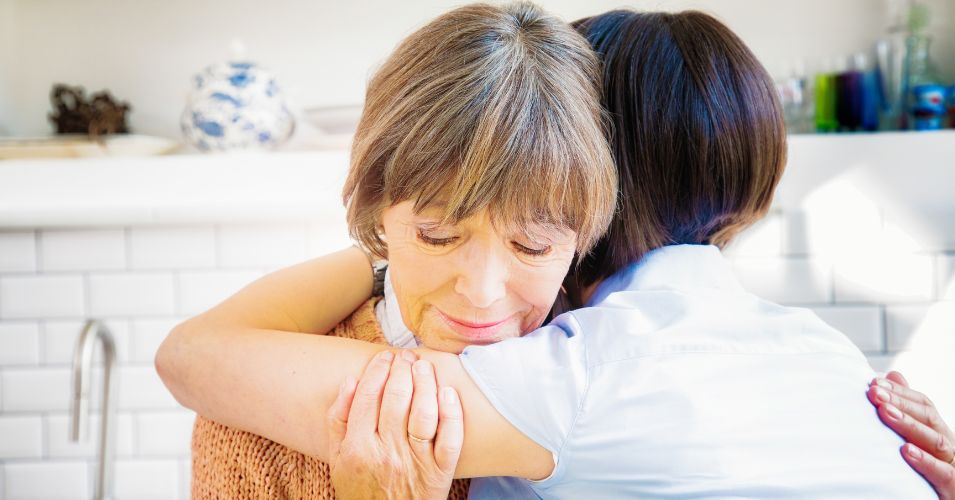
Losing someone you love in your 70s can feel different than any loss before. The world keeps moving, but your days feel slower and quieter.
You may feel like others expect you to be strong, but inside, your heart aches in ways you cannot explain.
Grief at this age often brings silence, not because there is nothing to say, but because there is no one who fully understands.
This article gently explores the hidden struggles that come with loss in your 70s and offers guidance to help you feel seen, supported, and steady again. You are not alone in this pain.
Why Grief Feels Heavier with Age
Grieving in your 70s does not just touch your heart, it presses on your entire world. At this stage in life, loss feels deeper, not just because of love, but because of time. You have shared years, memories, routines, and quiet moments that no one else fully understands.
The person you lost may have been by your side for decades. They were part of your daily rhythm, part of every plan, and part of every silence. Now, that rhythm is broken, and the silence feels much louder.
Grief in your younger years may have come with more distraction. There were children to raise, jobs to manage, and endless things pulling your attention forward. But in your 70s, life has slowed. That slowness gives grief more room to settle in.
It is not just the emotional pain that makes grief feel heavier. It is the changes that come with it. There is no one there to pour coffee for in the morning, no one to remind you of appointments or laugh at the same old jokes.
The nights feel longer. The days feel less full. You may find yourself staring at a favorite chair that no one sits in anymore.
Your support system may feel smaller than it once did. Friends may be far away or dealing with their own losses. It can feel like the world around you expects you to already know how to cope, when inside, you are still struggling to breathe.
And yet, you are still here. That matters. Your life, though changed, still holds meaning. You still have love to give, stories to tell, and moments worth living for.
It is okay to cry. It is okay to feel lost. And it is okay to admit that this hurts in a way nothing else ever has.
Grief is not a weakness. It is proof of deep love.
The Long Days No One Talks About
After the funeral, after the phone calls slow down, after the cards are tucked away, the hardest part often begins. The long days. The ones where nothing happens and no one calls. The days that stretch far too wide with no place to rest your sadness.
These are the days people forget to mention. They may check in during the first week, maybe even the first month. But after that, many go back to their lives. Meanwhile, you are left trying to figure out how to fill hours that used to be shared.
Breakfast feels quiet. You reach for two cups, then remember you only need one. You talk aloud, forgetting for a moment that no one will answer. The television plays in the background, but it does not fill the space.
Time becomes different. It moves slowly when you want it to pass, and rushes by when you wish you could hold a moment longer.
You may look at the clock and wonder how it is still only noon. You may pace the room, unsure of what to do next.
And the worst part is, you feel like you should be doing better. You tell yourself not to complain, not to cry, not to let others worry. But these long days are not just about boredom. They are about emptiness.
You miss having someone to share small things with. The sound of another voice. The feeling of being needed. The comfort of knowing someone was always there, even in silence.
There is no easy fix for these days. But you can take small steps. Set a gentle routine. Write your thoughts in a notebook. Call a friend, even just to say hello.
You do not need to fill every hour with activity. But you can let a little light into each one.
Even one small joy in a long day can remind you that life, though quieter, still has meaning.
When Others Move On and You Are Still Hurting
One of the hardest parts of grief in your 70s is watching the world move on without you. People mean well, but their lives do not stop. They go back to work, to errands, to smiling with others. You, however, are still standing in the middle of your pain.
You might smile when they do. You might say you are doing okay. But inside, there is still a weight pressing on your chest, a sadness that never really leaves.
Friends may stop calling as often. They assume you are healing or that you need space. But sometimes, that space becomes too wide, and the silence turns painful.
Even family members may shift their focus. They get caught up in their own lives. They do not mean to forget, but their days are busy and full. Yours are quiet and long.
It can feel like you are stuck in one season while everyone else has stepped into another. You see them laugh, make plans, and carry on. You wonder if they ever feel the same ache that stays with you.
This part of grief is not talked about enough. You begin to question your own feelings. Should you be better by now? Are you grieving too slowly?
But there is no timeline for sorrow. Healing does not follow a schedule. You loved deeply, so you hurt deeply. That is not something to be ashamed of.
Let yourself feel. Let yourself remember. And most of all, let yourself speak. Find someone who will listen without rushing you. That could be a friend, a counselor, or someone at a support group.
You are not behind. You are simply still healing.
You do not have to match the pace of others. Your grief has its own rhythm, and it is allowed to move slowly.
Finding Peace in a Different Kind of Life
After loss, the life you once knew feels unfamiliar. The routines are different, the house feels emptier, and the future feels uncertain. You are still living, but it does not feel the same anymore.
There is a quiet space that remains where your loved one used to be. You can feel it in the mornings when no one stirs beside you. You can feel it in the evenings when the house settles into silence.
This new life may feel like something you did not ask for. It was not part of your plan. It can feel like you are starting over, but with more questions than answers.
And yet, within this new space, peace can begin to grow. It does not come all at once. It comes in small moments, like light slipping through a curtain.
You may find peace in routine. A favorite meal cooked slowly. A walk at the same hour each day. A quiet hobby that keeps your hands moving and your mind focused.
You may find peace in remembering. Looking through photos, telling stories, or even talking aloud to the one you lost. These acts do not hold you back. They help you stay connected.
You can also find peace in doing something new. Join a group. Learn a skill. Travel somewhere close or far. This is your time to shape a different kind of life. Not better or worse. Just different.
You do not have to forget to move forward. You can carry your memories with you and still make room for new ones.
This new life will never look the same, but it can still hold beauty. It can still bring you peace.
You are still here. And there is still more life to live.
Steps Toward Hope, Healing, and Holding On
Grief does not disappear, but over time, you can learn how to live beside it. At first, the pain takes up all the space in your heart. But little by little, if you let it, hope can begin to take root again.
The first step is to give yourself permission to feel everything. Some days you may cry. Other days you may feel numb. There might even be days you smile and then feel guilty about it. Let those feelings come and go. Each one has its place.
Start with the smallest things. Wake up and open the curtains. Sit with your morning tea. Write a few words in a journal. These moments are not signs that you are moving on too quickly. They are signs that you are learning how to keep going.
Talk to someone you trust. You do not have to explain everything perfectly. You only need to speak from your heart. Grief feels lighter when it is shared.
Allow yourself to return to the world slowly. Go to the store. Sit in a park. Visit with a friend. The world will feel strange at first, but with time, your steps will feel more sure.
Find something meaningful to focus on. That could be helping others, creating something with your hands, or simply being present with your family. Purpose brings light into the darkest places.
Let your loved one stay with you in your memories. Think of the things they taught you, the strength they gave you, and the love that still surrounds you.
You do not let go by forgetting. You let go by holding on differently.
Healing does not mean erasing the past. It means building a future where grief sits quietly beside joy. Both can exist together.
You are still standing. That alone is a quiet victory.
Final Thoughts
Losing someone in your 70s can feel like losing a piece of yourself. Life becomes quieter, slower, and sometimes harder to understand.
But within your grief, there is strength. Within your sorrow, there is still love.
You are not meant to face this alone. You are still here, and your story is not finished.
There is comfort ahead, one gentle day at a time.