
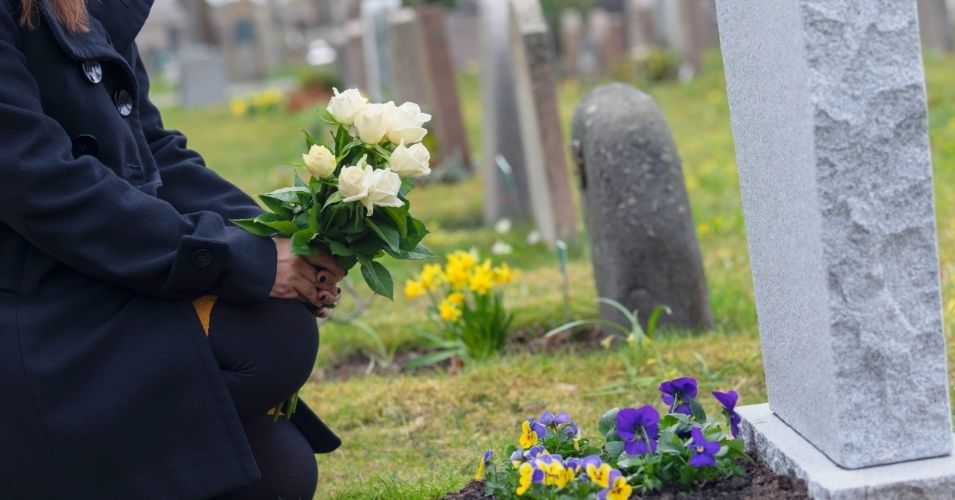
Visiting the grave of a loved one can be a deeply emotional experience.
Many people feel a sense of closeness when standing near the resting place of someone they miss, and it often raises the question of whether the deceased know when we are there.
The Bible does not speak directly about graveside visits in the way we practice them today, but it does give us guidance on life after death, the awareness of those in heaven, and God’s comfort for the grieving.
By looking at Scripture, we can find assurance about where our loved ones are and how God calls us to remember them.
What the Bible Teaches About Life After Death
When we ask if loved ones know when we visit their graves, the first step is to understand what the Bible says about life after death.
Scripture makes it clear that death is not the end, but it also emphasizes that the soul moves into eternity rather than remaining tied to earthly places. The consistent message is that those who belong to Christ are safe and alive in His presence.
Paul writes in 2 Corinthians 5 that to be absent from the body is to be present with the Lord. This shows that when believers die, they immediately enter into fellowship with God.
Their souls are not asleep in the ground, waiting in darkness, but alive with Christ, free from the pain and limitations of earthly life. This truth gives comfort to families, because it assures us that our loved ones are not lingering in their graves.
Jesus also gave this assurance when He spoke to the thief on the cross. In Luke 23, He promised, “Today you will be with me in paradise.” His words confirm that death for believers leads directly into God’s presence, not into uncertainty or waiting apart from Him. The grave holds only the body, while the soul is taken to be with the Lord.
The book of Revelation offers another picture. In Revelation 7, John describes a multitude of believers standing before the throne of God, worshiping Him day and night. This vision is meant to give us hope. It tells us that those who have died in faith are not distant or unaware, but active in worship and joy, living in the fullness of God’s promises.
Understanding this helps us see that the grave is a place of remembrance for the living, but it is not the place where the soul dwells. Our loved ones are alive with Christ, and that reality is far greater than any awareness they might have of earthly rituals. Their hope and joy are found in the presence of God.
Do the Dead Have Awareness of Earthly Events?
The next question is whether the Bible suggests that those in heaven have awareness of what happens on earth. While Scripture does not give a direct answer about loved ones knowing when we visit their graves, it does provide glimpses that the saints in heaven may have some awareness of earthly life.
One important passage comes from Hebrews 12:1, which describes believers as being surrounded by a great cloud of witnesses.
This follows the listing of faithful men and women in Hebrews 11, whose lives testify to God’s promises. Some interpret this verse to mean that those who have gone before us may, in some way, witness our journey of faith. While the focus is on their example, it leaves open the possibility of heavenly awareness.
In Revelation 6, John sees the souls of martyrs under the altar, crying out to God and asking when justice will be done on earth. This vision shows that they are aware of ongoing events and care deeply about God’s work among the living. They are not distant or detached, but engaged in the unfolding of His plan.
Another passage comes from Luke 15, where Jesus says that there is joy in the presence of the angels over one sinner who repents. While the verse highlights the angels, it raises the question of whether the redeemed in heaven also share in that joy, suggesting some awareness of what happens here.
The story of the rich man and Lazarus in Luke 16 also points to a kind of awareness. Though the account is a parable, the rich man in the afterlife remembers his family and wishes someone could warn them. This story does not focus on visiting graves, but it does show that death does not erase knowledge of earthly life.
Taken together, these glimpses suggest that loved ones in heaven may indeed know about events on earth.
However, the Bible does not describe them watching us in sorrow or tied to graves. Instead, their awareness is filtered through God’s presence, and their focus is on His glory and His plan. They are safe in His care, rejoicing in His victory, and waiting for the day when all things are made new.
Visiting Graves as a Way of Mourning and Remembering
The Bible does not forbid visiting the graves of loved ones, nor does it teach that such visits are meaningless. Instead, it shows that mourning and remembrance are natural and important parts of love.
Visiting a grave is not about communicating with the dead, but about expressing grief, honoring memories, and finding space to reflect on life and faith.
In Genesis, Abraham mourned and wept for Sarah, then carefully arranged her burial. His actions show that caring for the body and remembering the dead are ways of honoring them. Later, Jacob mourned the death of Rachel and set up a pillar over her tomb.
These examples reveal that memorials and physical places connected to loved ones have long been a part of human grief and remembrance.
When Jesus Himself died, those who loved Him came to the tomb. The women who had followed Him brought spices to anoint His body. Though they could not change what had happened, their presence at the grave was an act of devotion and remembrance. While they did not know He would rise, their actions show that visiting a place of burial can be a way to express love.
For us today, standing by the grave of a loved one is not about whether they know we are there, but about our need to mourn and remember. It is a way to process loss, to speak words we could not say before, and to acknowledge the depth of our love. A grave becomes a place where sorrow and gratitude meet.
Visiting graves also reminds us of the hope of resurrection. The place of death becomes a place of promise, where we remember that the body rests for now, but that God will raise it in glory. In this way, visiting a grave is not just about looking back, but also about looking forward with hope.
God’s Presence with Us in Places of Grief
While the Bible does not say that our loved ones are aware when we visit their graves, it does make one truth absolutely clear.
God Himself is always present with us, even in the loneliest and hardest moments of grief. His presence is greater than the comfort of memory, and His Spirit gives peace when sorrow feels overwhelming.
David expressed this in Psalm 34 when he wrote that the Lord is close to the brokenhearted and saves those who are crushed in spirit. This verse shows that in places of grief, God draws near. When we stand by a grave with tears in our eyes, He is there, listening to our prayers and strengthening our hearts.
Psalm 23 also offers reassurance. Even in the valley of the shadow of death, the psalmist says he will not fear, for God is with him. Graves remind us of death’s shadow, but they also remind us that we do not face that shadow alone. The Shepherd walks with us, guiding us through sorrow and leading us toward peace.
Jesus Himself promised in Matthew 28 that He would be with His followers always, even to the end of the age. This promise includes moments of mourning, when we feel the emptiness of loss. His presence is not limited to churches or sacred places. It is with us wherever we go, including the cemetery where we kneel in silence.
God’s presence in grief also brings hope. He does not only comfort us in sorrow but points us toward the future. Isaiah 25 describes the day when God will swallow up death forever and wipe away tears from every face.
When we feel grief at a grave, we can remember that God is already preparing a future without death or sorrow.
This truth assures us that though we may not know whether loved ones see us, we can be certain that God sees us. He knows the weight of our hearts, and His presence is enough to carry us through grief into hope.
Hope of Reunion Beyond the Grave
One of the strongest assurances the Bible offers to grieving hearts is the hope of reunion beyond the grave. While we may not know if loved ones can see us when we visit their graves, we do know that separation is not forever for those who belong to Christ. Death, while painful, is temporary in the light of eternity.
Paul speaks directly to this hope in 1 Thessalonians 4. He tells believers that when Christ returns, the dead in Christ will rise first, and those still alive will be caught up together with them to meet the Lord. He adds, “And so we will be with the Lord forever.”
The emphasis on being “together” reveals that heaven is not only about being with God but also about reunion with those who trusted Him.
Jesus also gave comfort in John 14, promising His disciples that He was preparing a place for them and would come again to bring them to Himself. This place is not a lonely existence but a household, filled with God’s family. The bonds of love that are rooted in Christ will not be broken by death, but perfected in eternity.
The resurrection of Jesus stands as the greatest assurance of this truth. When He rose, He showed that death does not have the final word. Just as He was recognized by His disciples after His resurrection, so too will we recognize and be reunited with those who have gone before us. The grief of separation will give way to the joy of restoration.
This hope transforms how we view graves today. They are not merely places of loss but reminders of a greater promise. The body rests for a time, but the soul is alive with God, and the day is coming when both will be made whole.
Visiting a grave can stir sorrow, but it can also stir faith, reminding us that the story is not over. The promise of reunion brings comfort and strength until that day arrives.
Final Thoughts
The Bible does not tell us if our loved ones know when we visit their graves, but it does give us truths that are far more comforting.
It assures us that they are alive in God’s presence, free from pain and sorrow, and that one day we will see them again.
While graves may serve as places of remembrance for us, our hope does not rest in their awareness but in God’s promises. His presence comforts us now, and His plan guarantees eternal reunion.
In Christ, death is not the end. It is the beginning of everlasting life, where love is restored and families of faith are gathered forever.